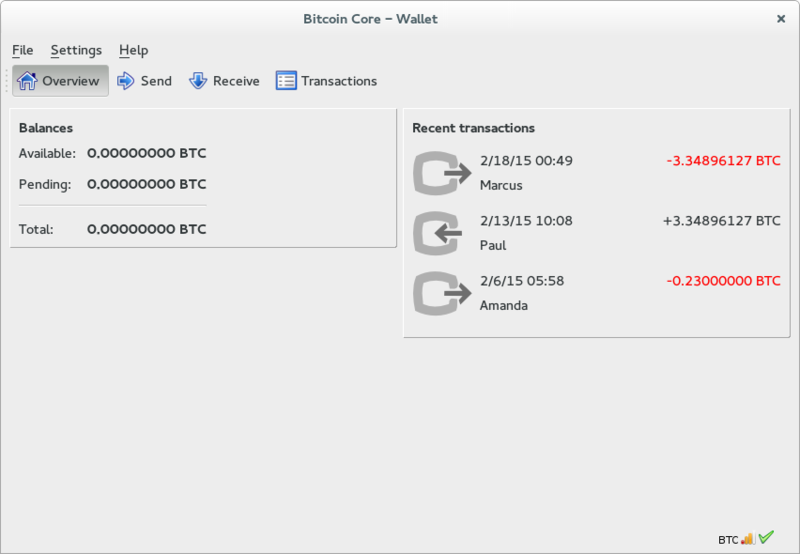
File:Bitcoin-core-v0.10.0.png · Wikimedia Commons · See Wikimedia Commons
bitcoin
Sign in to savecriptovaluta decentralizzata
Bitcoin is a decentralized digital currency created in 2008 that operates without a central authority, allowing people to conduct transactions directly with each other. It has attracted significant regulatory scrutiny because of its pseudonymous nature, which has enabled some criminal use, leading certain countries to ban it, while El Salvador briefly adopted it as official legal tender before reversing that decision.
AI-generated from the Wikipedia summary — may contain errors.
Key facts
- Cryptocurrency.currency_name
- Bitcoin
- Cryptocurrency.image_1
- Bitcoin.svg
- Cryptocurrency.image_width_1
- 150
- Cryptocurrency.image_width_2
- 110
- Cryptocurrency.image_title_1
- Commonly used logo of bitcoin
- Cryptocurrency.alt1
- Prevailing bitcoin logo
- Cryptocurrency.precision
- 10−8
- Cryptocurrency.subunit_name_1
- millibitcoin
- Cryptocurrency.subunit_name_2
- microbitcoin
- Cryptocurrency.plural
- bitcoins
- Cryptocurrency.symbol
- ₿(Unicode: )
- Cryptocurrency.code
- BTC
- Cryptocurrency.implementations
- Bitcoin Core
- Cryptocurrency.initial_release_version
- 0.1.0
- Cryptocurrency.status
- Active
- Cryptocurrency.latest_release_version
- 30.2.0
- Cryptocurrency.programming_languages
- C++
- Cryptocurrency.author
- Satoshi Nakamoto
via Wikipedia infobox
Source code
Bitcoin Core connects to the Bitcoin peer-to-peer network to download and fully validate blocks and transactions. It also includes a wallet and graphical user interface, which can be optionally built. The master branch is regularly built (see doc/build- .md for instructions) and tested, but it is not guaranteed to be completely stable. Tags are created regularly from release branches to indicate new official, stable release versions of Bitcoin Core. The repository is used exclusively for the development of the GUI. Its master branch is identical in all monotree repositories. Release branches and tags do not exist, so please do not fork that repository unless it is for development reasons. The contribution workflow is described in CONTRIBUTING.md and useful hints for developers can be found in doc/developer-notes.md. Testing and code review is the bottleneck for development; we get more pull requests than we can review and test on short notice. Please be patient and help out by testing other people's pull requests, and remember this is a security-critical project where any mistake might cost people lots of money. Developers are strongly encouraged to write unit tests for new code, and to submit new unit tests for old code. Unit tests can be compiled and run (assuming they weren't disabled during the generation of the build system) with: ctest . Further details on running and extending unit tests can be found in /src/test/README.md. There are also regression and integration tests, written in Python. These tests can be run (if the test dependencies are installed) with: build/test/functional/test runner.py (assuming build is your build directory). The CI (Continuous Integration) systems make sure that every pull request is tested on Windows, Linux, and macOS. The CI must pass on all commits before merge to avoid unrelated CI failures on new pull requests. Translations are periodically pulled from Transifex and merged into the git repository. See the translation process for details on how this works. Important : We do not accept translation changes as GitHub pull requests because the next pull from Transifex would automatically overwrite them again.
Excerpt from the source-code README · 3,488 chars · not written by Vinony
Wikidata facts
- Instance of
- payment system
- Subclass of
- investment
- Has part
- bitcoin protocol
- Named after
- coin
- Country
- Central African Republic
- Stock exchange
- KuCoin Exchange
- Developer
- Satoshi Nakamoto
- Official website
- bitcoin.org
- Significant event
- Bitcoin Law in El Salvador
Show 27 more facts
- uses
- proof of work
- derivative work
- Bitcoin Gold
- Stack Exchange site URL
- bitcoin.stackexchange.com
- time of earliest written record
- 2008-10-31
- Commons category
- Bitcoin
- topic's main category
- Category:Bitcoin
- history of topic
- history of bitcoin
- hashtag
- BTC
- Stack Exchange tag
- stackoverflow.com/tags/bitcoin
- short name
- BTC
- publication date
- 2009-01-03
- unit symbol
- ₿
- price
- 103331.32
- inception
- 2009-01-03
- cryptocurrency code
- XBT
- topic has template
- Template:Bitcoin
- power consumed
- 18.4
- conversion to standard unit
- 100000000
- has goal
- decentralization
- applies to jurisdiction
- Central African Republic
- market capitalization
- 712696504252
- name
- ꠛꠤꠐꠇꠄꠘ
- port
- 8333
- Unicode character
- ₿
- copyright license
- MIT License
- Lemmy instance URL
- realbitcoin.cash
- source code repository URL
- github.com/bitcoin/bitcoin
Sources (15)
via Wikidata · CC0
Article · Italiano
Il Bitcoin (simbolo: ₿, codice: BTC o XBT) è una criptovaluta e un sistema di pagamento valutario internazionale creato nel 2009 da un anonimo inventore (o gruppo di inventori), noto con lo pseudonimo di Satoshi Nakamoto, che sviluppò un'idea da lui stesso presentata su Internet a fine 2008. Per convenzione se il termine Bitcoin è utilizzato con l'iniziale maiuscola si riferisce alla tecnologia e alla rete, mentre se minuscola (bitcoin) si riferisce alla valuta in sé. Dagli esperti di finanza il Bitcoin non viene classificato come una moneta, ma come una riserva di valore attualmente molto volatile. A differenza della maggior parte delle valute tradizionali, il Bitcoin non fa uso di un ente centrale né di meccanismi finanziari sofisticati, il valore è determinato unicamente dalla leva domanda e offerta: esso utilizza un database distribuito tra i nodi della rete che tengono traccia delle transazioni, ma sfrutta la crittografia per gestire gli aspetti funzionali, come la generazione di nuova moneta e l'attribuzione della proprietà dei bitcoin. La rete Bitcoin consente il possesso e il trasferimento pseudo-anonimo delle monete; i dati necessari a utilizzare i propri bitcoin possono essere salvati su uno o più personal computer o dispositivi elettronici quali smartphone, sotto forma di "portafoglio" digitale, o mantenuti presso terze parti che svolgono funzioni simili a una banca. Il wallet bitcoin ha un indirizzo identificato da un codice alfanumerico che possiede tra i 25 e i 36 caratteri tra numeri e lettere; è l'unico dato da comunicare per ricevere un pagamento che godrà di un certo grado di anonimato, ma sarà allo stesso tempo pubblicamente e immutabilmente visibile sulla blockchain per sempre. Occorre fare molta attenzione nella trasmissione del codice alfanumerico in quanto eventuali errori non consentono di annullare l'operazione e causano la perdita del denaro. È possibile ricevere pagamenti più semplicemente attraverso la scansione di codici QR. In ogni caso, i bitcoin possono essere trasferiti attraverso Internet verso chiunque disponga di un "indirizzo bitcoin". La struttura peer-to-peer della rete Bitcoin e la mancanza di un ente centrale rende impossibile a qualunque autorità, governativa o meno, il blocco dei trasferimenti, il sequestro di bitcoin senza il possesso delle relative chiavi o la svalutazione dovuta all'immissione di nuova moneta. Il Bitcoin è una delle prime implementazioni di un concetto definito come criptovaluta, descritto per la prima volta nel 1996 da su una mailing list.
Abstract from DBpedia / Wikipedia · CC BY-SA
Gallery (17)
Available in 139 languages
- Español
- Français
- Deutsch
- 中文
- 日本語
- Русский
- Português
- Italiano
- العربية
- हिन्दी
- Afrikaans
- Albanian
- Albanian
- Amharic
- Aragonese
- Armenian
- Assamese
- Asturian
Show 120 more
- azb
- Azerbaijani
- Bahasa Indonesia
- Balinese
- Bangla
- Bashkir
- Basque
- Bavarian
- be_x_old
- Belarusian
- Bhojpuri
- blk
- Breton
- Bulgarian
- Burmese
- Catalan
- Central Kurdish
- Croatian
- Czech
- Danish
- Egyptian Arabic
- Esperanto
- Estonian
- Faroese
- Filipino
- Finnish
- Fula
- Galician
- Georgian
- Greek
- Hausa
- Hebrew
- Hungarian
- hyw
- Iban
- Icelandic
- Ido
- Inari Sami
- Interlingua
- Interlingue
- Irish
- Kannada
- Kazakh
- Kurdish
- Kyrgyz
- Latvian
- Limburgish
- Lingua Franca Nova
- Lithuanian
- Lombard
- Luxembourgish
- Macedonian
- Malay
- Malayalam
- Maltese
- Manipuri
- Marathi
- Mazanderani
- Mongolian
- Moroccan Arabic
- nds_nl
- Nederlands
- Nepali
- Northern Sami
- Northern Sotho
- Norwegian
- Norwegian Nynorsk
- Nyanja
- Occitan
- Odia
- Papiamento
- Pashto
- Piedmontese
- Polski
- ppl
- Punjabi
- Romanian
- Scots
- Serbian
- Serbian (Latin)
- simple
- Sinhala
- Slovak
- Slovenian
- Southern Sotho
- Svenska
- Swahili
- syl
- szy
- Tajik
- Tamil
- Taroko
- Tatar
- tay
- Telugu
- Tiếng Việt
- Türkçe
- Turkmen
- Ukrainian
- Urdu
- Uyghur
- Uzbek
- Venetian
- Volapük
- Waray
- Welsh
- West Flemish
- Western Frisian
- Western Panjabi
- Wu Chinese
- Yakut
- Yiddish
- Zaza
- Zeelandic
- zh_classical
- zh_min_nan
- zh_yue
- فارسی
- ไทย
- 한국어
via Wikidata sitelinks · CC0