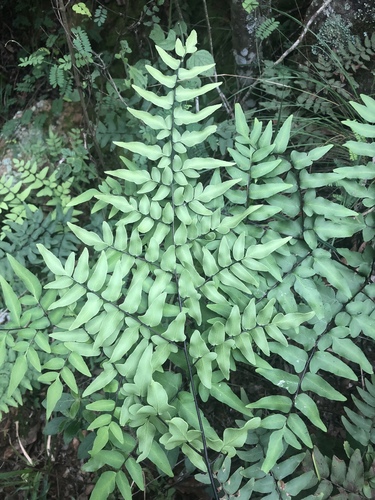
(c) Troos van der Merwe, some rights reserved (CC BY-NC), uploaded by Troos van der Merwe · cc-by-nc
Bongardia
Sign in to saveBongardia is a very small genus of plants belonging to the family Berberidaceae, and first described in 1831. There are only two known species, Bongardia chrysogonum C.A.Mey., native to North Africa, Greece, and the Middle East and B. margalla R.R.Stewart ex Qureshi & Chaudhri, native to Pakistan. The genus was monotypic until 1996, when the Pakistani populations were recognised by Govaerts as belonging to a second, distinct species.
Species
Green Cliff Brake
GENUS
- KingdomPlantae
- PhylumTracheophyta
- ClassMagnoliopsida
- OrderRanunculales
- FamilyBerberidaceae
via GBIF · Kew POWO
Museum specimens
- Specimen records
- 6
- With media
- 6
- Family
- Berberidaceae
- Collections
- B, UCONN, VT, MNHN, BG
- Recorded in
- Syria, Syrian Arab Republic, Israel, Pakistan
Wikidata facts
- Instance of
- taxon
- Parent taxon
- Berberideae
- Image
- Bongardia chrysogonum - Flickr - peganum.jpg
Show 6 more facts
- taxon name
- Bongardia
- taxon rank
- genus
- topic's main category
- Category:Bongardia
- has fruit type
- capsule
- Commons category
- Bongardia
Sources (1)
via Wikidata · CC0
~1 min read
Encyclopedic overview
2 sectionsContents
- Cultivation
- References
Bongardia is a very small genus of plants belonging to the family Berberidaceae, and first described in 1831. There are only two known species, Bongardia chrysogonum C.A.Mey., native to North Africa, Greece, and the Middle East and B. margalla R.R.Stewart ex Qureshi & Chaudhri, native to Pakistan. The genus was monotypic until 1996, when the Pakistani populations were recognised by Govaerts as belonging to a second, distinct species.
The species are tuberous, herbaceous plants with a large rounded tuber and attractive pinnate leaves. The flowers are hermaphrodite (have both male and female organs). These rare plants are native to rocky mountain slopes and cultivated fields where summers are dry and winters are spent under snow. The genus was named in honour of Gustav Heinrich von Bongard (1786–1839), a German botanist, professor at St. Petersburg Imperial University. Leaves and roots are edible.
Excerpted from Wikipedia’s “Bongardia” article, available under the CC BY-SA 4.0 licence.