
Image by JillWellington on Pixabay · Pixabay License
Bootsie Barnes
Sign in to saveAlso known as Robert "Bootsie" Barnes, Robert Barnes
American saxophonist (1937–2020)
Music · MusicBrainz
- Type
- Person
- Gender
- Male
- Origin
- United States
- Active from
- 1937
- Active to
- 2020
Discography
via MusicBrainz · CC0
Listeners · Last.fm
- Listeners
- 77
- Total plays
- 859
Tags
Premier jazz saxophonist Robert “Bootsie” Barnes has been proclaimed a Philadelphia treasure. “Bootsie” began his musical career at age 6 on piano switching to drums at 10. His grandmother gave him a saxophone at age 19 and he knew he had found his niche. In school, classmates included drummers, Lex Humphries, Bill Cosby, Al “Tootie” Heath; bassist “Spanky” DeBrest, trumpeter Lee Morgan, and a host of Philadelphia giants who went on to help shape the maturing sound of jazz music. <a href
Described at
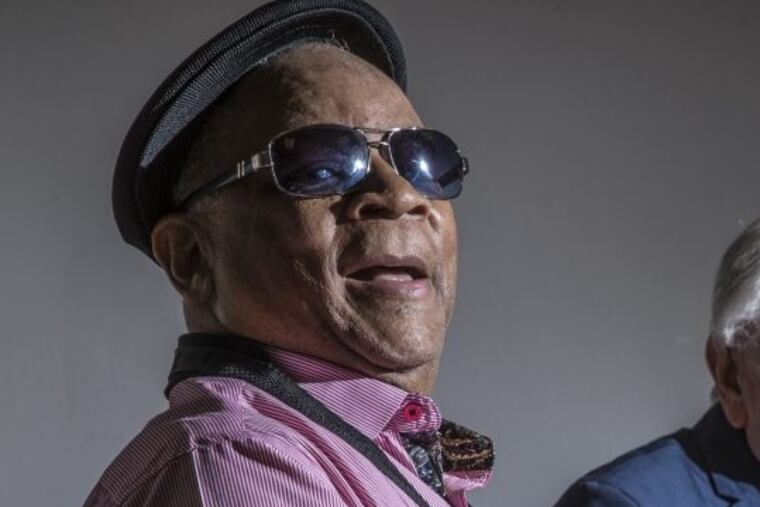
Bootsie Barnes, Philadelphia tenor sax great, has died of coronavirus at 82
Mr. Barnes had a formidable reputation in the jazz world as a rigorously disciplined and adventurous musician.
inquirer.com →Robert “Bootsie” Barnes, 82, the widely respected tenor saxophone player whose hard-driving sound and restless creative spirit become synonymous with Philadelphia jazz over a six-decade career, died Wednesday, April 22. His wife said he died from the coronavirus. Mr. Barnes died at Lankenau Medical Center in Wynnewood. His wife. Sandra Turner-Barnes. said he had been hospitalized for 22 days. Mr. Barnes had a formidable reputation in the jazz world as a rigorously disciplined and adventurous musician. “If you went to another city and they knew you were from Philadelphia,” said Larry McKenna, a friend and fellow sax player. “the first thing they asked you was: ‘Do you know Bootsie Barnes?’” “I met him around 1970, and I just fell in love with the very robust, masculine sound that he had. A couple of notes and you could tell it was Bootsie Barnes. Right off the bat.” “Bootsie Barnes was the consummate Philadelphia musician,” said Lovett Hines, the artistic director of the Philadelphia Clef Club of Jazz and Performing Arts. “Globally, he could play with anybody. His musicianship was impeccable. He was meticulous," Hines said. "But he was also a product and a part of the community. You didn’t have to be a musician to know Bootsie. Everybody knew Bootsie, all over the city. He was the ultimate corner boy.” Mr. Barnes grew up in the Richard Allen Homes in North Philadelphia. One of four brothers, he came from a musical family, Turner-Barnes said. His uncle Jimmy Hamilton played clarinet for Duke Ellington, and mentored Mr. Barnes. His father played trumpet in the Air Force jazz band. Mr. Barnes traveled the world, but remained rooted in Philadelphia. Organists in the great Philadelphia jazz tradition, from Jimmy Smith and Shirley Scott to Brother Jack McDuff and Papa John DeFrancesco, had one thing in common: Bootsie Barnes played sax in their bands. Turner-Barnes, who was married to Mr. Barnes for 35 years, first met him on a Sunday afternoon a North Philly speakeasy and first heard him play at the Downingtown Inn in Chester County. Turner-Barnes said her husband could "brighten up a room with his smile and his music and his kindness. A little bit crazy, but that’s OK.” She recited a poem she wrote after they met: “I heard the music of your soul, before I heard you play / One glance at the twinkle in your eye, and I could not turn away.” “Bootsie never let me forget that I’m four months older,” McKenna said with a laugh. “He was a funny guy. He called himself the baby of the group.” The album was the product of a 30-year friendship that began when Mr. Barnes had a gig at a Center City club called T&T Monroe’s and persuaded the owner to hire McKenna, who was playing weddings and bar mitzvahs. Both players came up on bebop, “influenced by Charlie Parker, Dizzy Gillespie, those guys,” McKenna said. “You could tell us apart instantly, though. Bootsie had a harder sound. That’s not derogatory, it’s actually a compliment. His sound was more gutsy than mine. But we made a perfect pairing. Some guys, you just start playing with and you know you’ve met your partner.” “When it came to any jazz event in the Philly area, he was always there,” said Maureen Malloy, jazz program director at WRTI. “He and Larry are like the patriarchs of the Philly jazz scene.” Mr. Barnes always took an interest in mentoring younger musicians. Hines recalled playing with him in Atlantic City venues like Club Harlem and the Wonder Bar in the 1970s, where musicians played nearly around the clock, including matinee and breakfast shows. “Bootsie was always the one taking you aside and explaining how to pace yourself.” Though Mr. Barnes could have attained greater exposure on the national and international circuit, “he established himself in Philadelphia, and he was comfortable with it,” Hines said. “It you take certain things out of Philadelphia, it feels like there’s something missing,” he said. "If you take the Liberty Bell out of Philadelphia, then
Excerpt from a page describing this subject · 40,000 chars · not written by Vinony
Wikidata facts
- Instance of
- human
- Given name
- Robert
- Family name
- Barnes
- Gender
- male
- Citizenship
- United States
- Place of birth
- Philadelphia
- Place of death
- Philadelphia
- Genre
- jazz
- Instrument
- tenor saxophone
- Residence
- Philadelphia
Show 7 more facts
- date of birth
- 1937-11-27
- date of death
- 2020-04-22
- cause of death
- COVID-19
- name in native language
- Bootsie Barnes
- manner of death
- natural causes
- medical condition
- COVID-19
Sources (6)
via Wikidata · CC0
Available in 7 languages
via Wikidata sitelinks · CC0