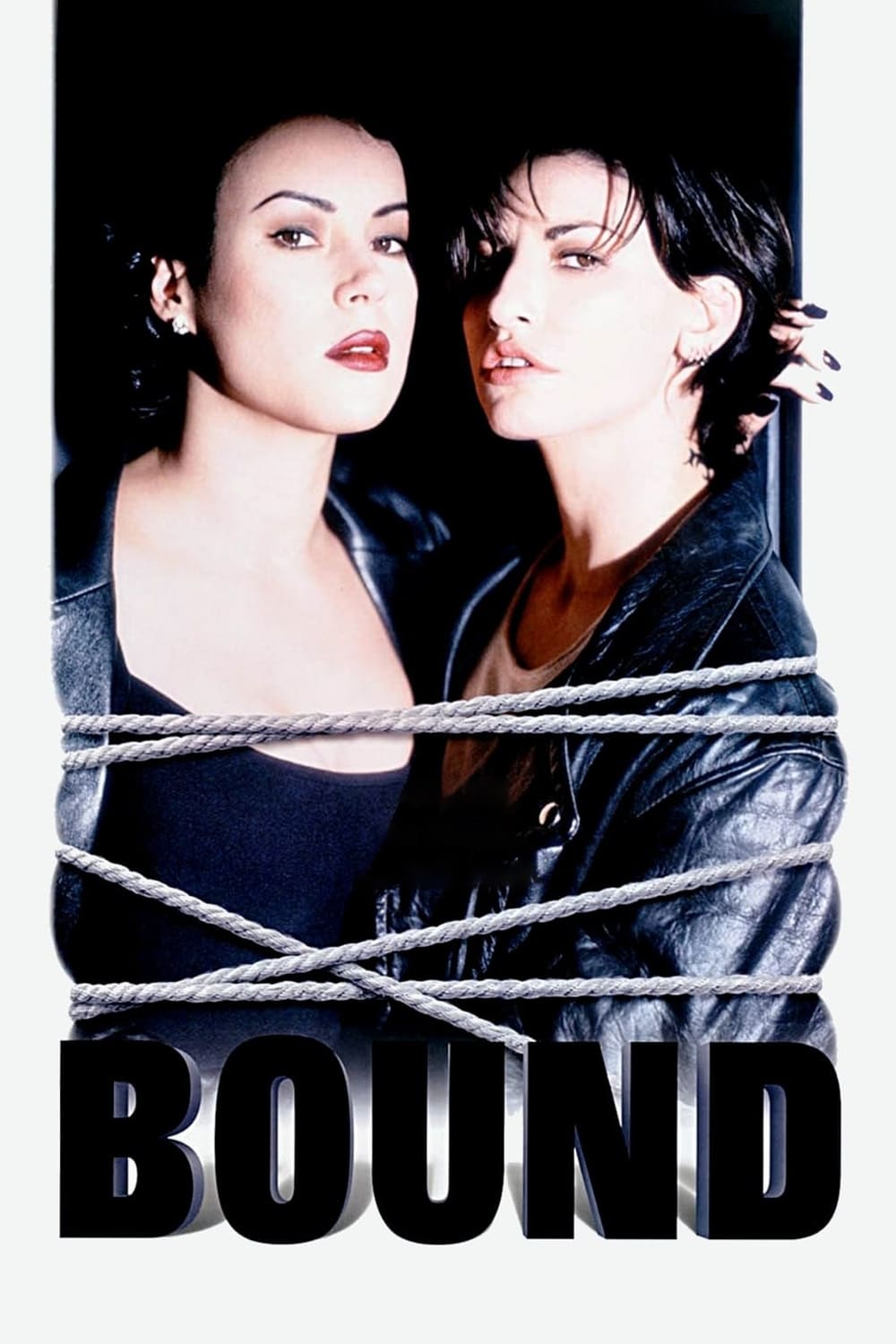
Poster from TMDB
Bound
Sign in to save1996 film directed by The Wachowskis
OverviewAI-generated
Bound is a 1996 American film directed by Lana Wachowski and Lilly Wachowski, who also wrote the screenplay. The cast includes Gina Gershon, Jennifer Tilly, Joe Pantoliano, and Christopher Meloni. Produced by Andrew Lazar and the Dino De Laurentiis Company, the movie was filmed in Los Angeles and Vernon. It is an English-language heist film, neo-noir, and erotic thriller centered on organized crime.
The film has a runtime of 105 or 109 minutes and features a tagline: "For money. For murder. For each other." Keywords associated with the plot include infidelity, money laundering, plumber, and crime boss. Don Davis composed the score, Bill Pope served as director of photography, and Zach Staenberg edited the film. It was distributed by Gramercy Pictures and Netflix via video on demand.
Bound received review scores of 7.9/10, 64/100, and 87%, with an IMDb rating of 7.3. The production budget was $4,500,000. Box office figures vary, with reports of $3,800,000 or $7,011,317 in revenue. The film has been assessed under the Bechdel test.
Synthesized by Vinony from 38 facts across 3 sources: Wikidata, TMDb, IMDb. Generated from structured data (not the Wikipedia text) and checked against those facts — may still contain errors.
In the Vinony graph
Within Vinony's link graph, Bound is referenced by 146 other articles, and connects out to lesbian, The Criterion Collection and LGBTQ people.
Vinony files it under 1990s erotic thriller films, 1990s feminist films and 1990s heist films.
Its subject is documented across 32 Wikipedia language editions.
Film · TMDB
7.2Corky, a tough female ex-convict working on an apartment renovation in a Chicago building, meets a couple living next door, Caesar, a paranoid mobster, and Violet, his seductive girlfriend, who is immediately attracted to her.
Cast
- Gina Gershon as Corky
- Jennifer Tilly as Violet
- Joe Pantoliano as Caesar
- John P. Ryan as Mickey Malnato
- Christopher Meloni as Johnnie Marzzone
- Richard C. Sarafian as Gino Marzzone
Themes
- infidelity
- money laundering
- plumber
- crime boss
- heist
- lesbian relationship
- mafia
- love affair
- ex-con
- neo-noir
This product uses the TMDB API but is not endorsed or certified by TMDB.
Wikidata facts
- Instance of
- film
- Genre
- erotic film
- Country of origin
- United States
- Original language
- English language
- Main subject
- organized crime
- Director
- Lilly Wachowski
- Screenwriter
- Lilly Wachowski
- Cast member
- Susie Bright
- Composer
- Don Davis
- Producer
- Andrew Lazar
- Production company
- Dino De Laurentiis Company
- Cinematographer
- Bill Pope
- Filming location
- Vernon
- Duration
- 108
- FilmAffinity ID
- 890820
- Distribution format
- video on demand
- Official website
- www.spo-k2.co.jp/title/BUD/bound.html
Show 6 more facts
- publication date
- 1996-10-31
- title
- Bound
- distributed by
- Netflix
- review score
- 87%
- capital cost
- 4500000
- box office
- 3800000
Sources (14)
via Wikidata · CC0
Article · Português
Bound (bra: Ligadas pelo Desejo; prt: Bound - Sem Limites) é um filme estadunidense de 1996 dos gêneros crime e suspense dirigido pelas irmãs Wachowski em sua estréia na direção de longas-metragens. O filme segue Violet, uma sedutora mulher que deseja escapar de seu relacionamento com seu namorado mafioso Ceasar, tendo um caso amoroso com a ex-presidiária Corky; as duas mulheres traçam um plano para roubar dois milhões de dólares em dinheiro de Ceasar, quantia esta oriunda da própria máfia. Bound conta com Jennifer Tilly, Gina Gershon e Joe Pantoliano nos papéis principais. Foi o primeiro filme dirigido pelas irmãs Wachowskis, a qual se inspiraram em Billy Wilder para contar uma história ao estilo noir cheia de sexo e violência. Financiado por Dino De Laurentiis, o longa foi feito com um orçamento apertado. Os diretores inicialmente lutaram para escalar as personagens lésbicas de Violet e Corky antes de garantir Tilly e Gershon no elenco; para coreografar as cenas de sexo entre as duas, os diretores contrataram a educadora sexual Susie Bright, que também fez uma aparição no filme. Bound recebeu críticas positivas dos críticos de cinema que elogiaram o humor e o estilo dos diretores, bem como o retrato realista de um relacionamento lésbico em um filme convencional. Já os contestadores do filme consideraram sua trama superficial e criticaram sua "violência excessiva".
Abstract from DBpedia / Wikipedia · CC BY-SA