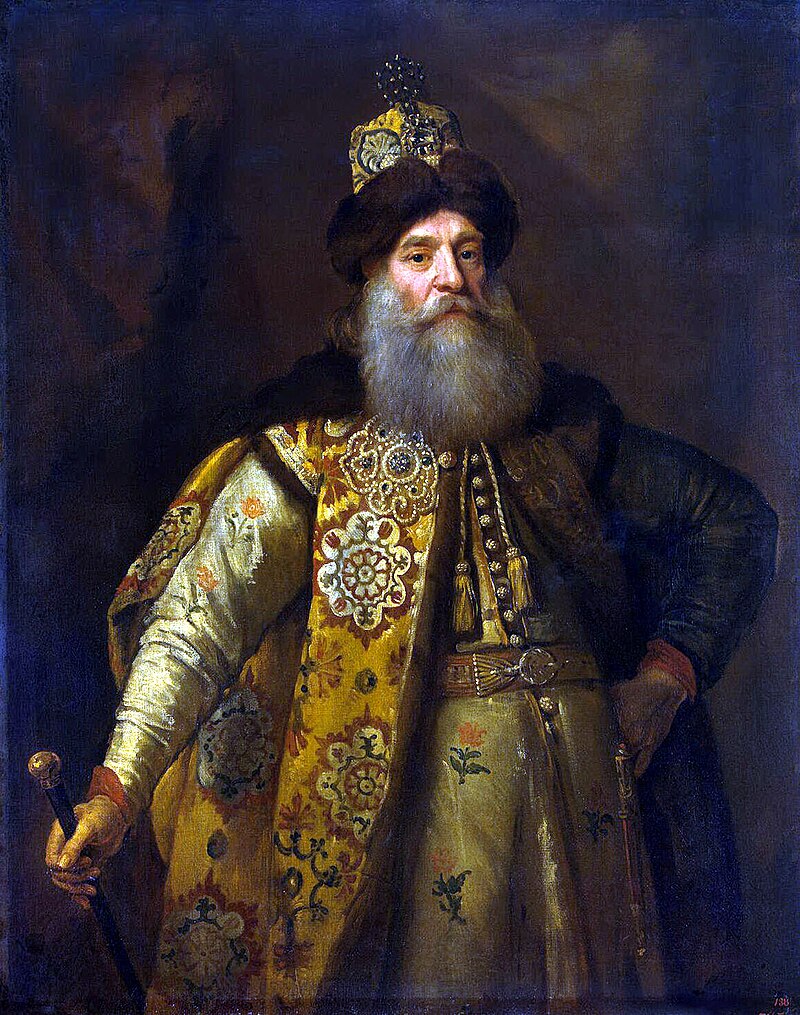
File:Godfrey_Kneller_-_Portrait_of_P.Potemkin_(1682,_Hermitage)_-_contrast.jpg · Wikimedia Commons · See Wikimedia Commons
بويار
Sign in to saveAlso known as boyars
thumb|Portrait of Russian boyar Pyotr Potemkin by [[Godfrey Kneller]] thumb|Russian boyars in the 16th–17th centuries
A boyar was a member of the highest rank of feudal Russian nobility, below the royal family, who held significant landholdings and political power from medieval times through the 17th century. They mattered because they formed the core aristocratic class that wielded influence over Russian territories and governance during this crucial period of the nation's development.
AI-generated from the Wikipedia summary — may contain errors.
Wikidata facts
- Instance of
- noble title
- Country of origin
- First Bulgarian Empire
Show 6 more facts
- Commons category
- Boyars
- described by source
- Granat Encyclopedic Dictionary
- topic's main category
- Category:Boyars
- female form of label
- bojarinja
- on focus list of Wikimedia project
- Wikipedia:Vital articles/Level/4
- start time
- 0901-00-00
Sources (1)
via Wikidata · CC0
Article · العربية
إن البويار أو البوليار ((بالبلغارية: боляр or болярин); (بالأوكرانية: буй or боярин); (بالرومانية: boier) ; (باليونانية: βογιάρος)) هو أعلى الأفراد رتبة في الأرستقراطيات الإقطاعية البلغارية والنبلاء في «كييف روس» وصربيا والأفلاق ومولدوفا الأرستقراطية؛ حيث لم يكن يعلوه مكانة إلا الأمراء (في بلغاريا، القياصرة) من القرن العاشر وحتى القرن السابع عشر. وقد استمرت تلك الرتبة كلقب في روسيا وفنلندا، حيث كانت تُنطق «باجاري».
Abstract from DBpedia / Wikipedia · CC BY-SA
Gallery (17)
Available in 58 languages
- Español
- Français
- Deutsch
- 中文
- 日本語
- Русский
- Português
- Italiano
- العربية
- हिन्दी
- Afrikaans
- Asturian
- Azerbaijani
- Bahasa Indonesia
- Bashkir
- Basque
- be_x_old
- Belarusian
Show 39 more
- Breton
- Bulgarian
- Catalan
- Croatian
- Czech
- Danish
- Esperanto
- Estonian
- Finnish
- Galician
- Georgian
- Greek
- Hebrew
- Hungarian
- Latin
- Latvian
- Macedonian
- Nederlands
- Norwegian
- Norwegian Nynorsk
- Occitan
- Polski
- Romanian
- Scots
- Serbian
- Serbian (Latin)
- simple
- Slovak
- Slovenian
- Svenska
- Tiếng Việt
- Türkçe
- Ukrainian
- Uzbek
- Western Frisian
- Wu Chinese
- zh_yue
- فارسی
- 한국어
via Wikidata sitelinks · CC0