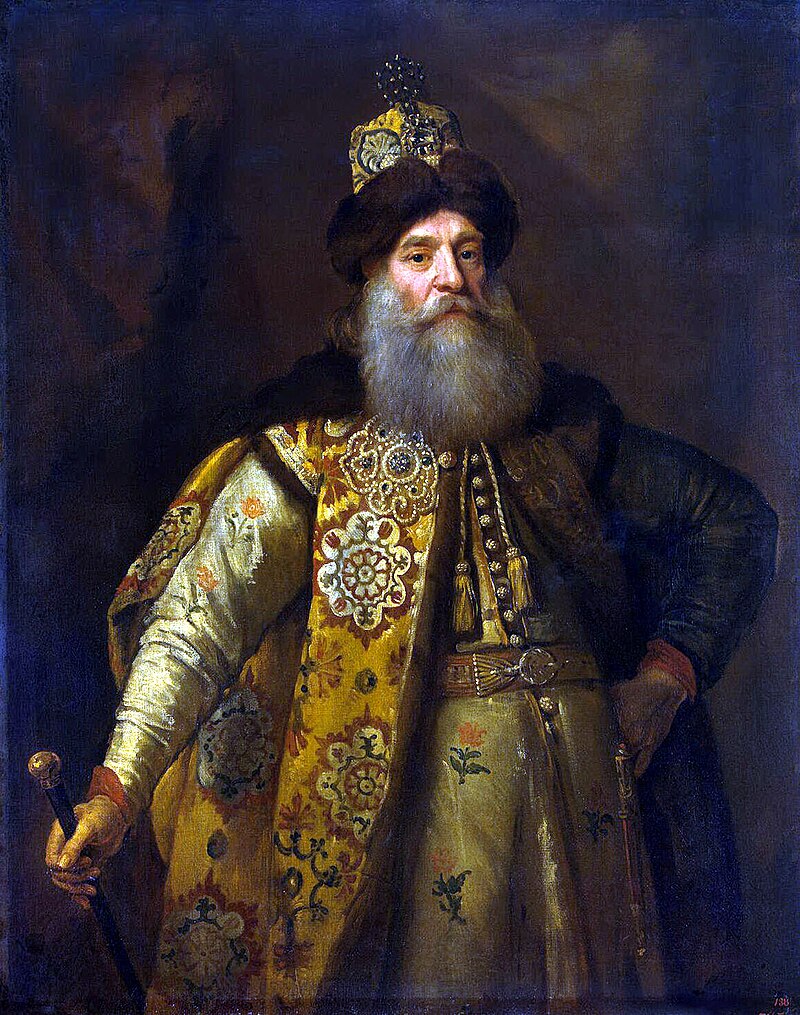
File:Godfrey_Kneller_-_Portrait_of_P.Potemkin_(1682,_Hermitage)_-_contrast.jpg · Wikimedia Commons · See Wikimedia Commons
A boyar was a member of the highest rank of feudal Russian nobility, below the royal family, who held significant landholdings and political power from medieval times through the 17th century. They mattered because they formed the core aristocratic class that wielded influence over Russian territories and governance during this crucial period of the nation's development.
AI-generated from the Wikipedia summary — may contain errors.
Wikidata facts
- Instance of
- noble title
- Country of origin
- First Bulgarian Empire
Show 6 more facts
- Commons category
- Boyars
- described by source
- Granat Encyclopedic Dictionary
- topic's main category
- Category:Boyars
- female form of label
- bojarinja
- on focus list of Wikimedia project
- Wikipedia:Vital articles/Level/4
- start time
- 0901-00-00
Sources (1)
via Wikidata · CC0
Article · Español
Boyardo (en búlgaro, боляр o болярин; en ucraniano, буй o боярин; en ruso, боя́рин; en rumano, boier) es el título de los nobles terratenientes eslavos, aunque se emplea sobre todo en el ámbito ruso, serbio, búlgaro y rumano (incluyendo Moldavia). El rango ha vivido como un apellido en Rusia y Rumania, Finlandia y Letonia, donde se escribe Pajari o Bajāri. Posteriormente, en Rusia se asocian a una nobleza rural que se caracterizaba por su indumentaria particular: abrigos largos de brocado y terciopelo, forrados de pieles, llegando hasta los pies, altos gorros de marta cibelina y largas barbas.
Abstract from DBpedia / Wikipedia · CC BY-SA
Gallery (17)
Available in 58 languages
- Español
- Français
- Deutsch
- 中文
- 日本語
- Русский
- Português
- Italiano
- العربية
- हिन्दी
- Afrikaans
- Asturian
- Azerbaijani
- Bahasa Indonesia
- Bashkir
- Basque
- be_x_old
- Belarusian
Show 39 more
- Breton
- Bulgarian
- Catalan
- Croatian
- Czech
- Danish
- Esperanto
- Estonian
- Finnish
- Galician
- Georgian
- Greek
- Hebrew
- Hungarian
- Latin
- Latvian
- Macedonian
- Nederlands
- Norwegian
- Norwegian Nynorsk
- Occitan
- Polski
- Romanian
- Scots
- Serbian
- Serbian (Latin)
- simple
- Slovak
- Slovenian
- Svenska
- Tiếng Việt
- Türkçe
- Ukrainian
- Uzbek
- Western Frisian
- Wu Chinese
- zh_yue
- فارسی
- 한국어
via Wikidata sitelinks · CC0