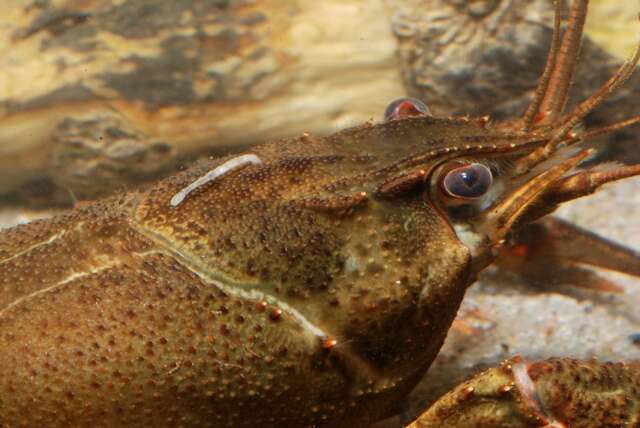
Encyclopedia of Life · EOL (see source)
Branchiobdellida
Sign in to saveBranchiobdellida is an order of freshwater leech-like clitellates that are obligate ectosymbionts or ectoparasites, mostly of astacoidean crayfish. They are found in the Northern Hemisphere and have a holarctic distribution in East Asia, the Euro-Mediterranean region and North and Central America, with the greatest species diversity being in North and Central America.
Species
ORDER
- KingdomAnimalia
- PhylumAnnelida
- ClassClitellata
- OrderBranchiobdellida
ヒルミミズ類 ウチダザリガニの鋏に付着するヒルミミズ類(ワシントン) 分類 界 : 動物界 Animalia 門 : 環形動物門 Annelida 綱 : 環帯綱 Clitellata 目 : ヒルミミズ目 Branchiobdellida 科 : ヒルミミズ科 Branchiobdellidae 学名 Branchiobdellida 和名 ヒルミミズ科 英名 crayfish worm ヒルミミズ類 Branchiobdellida はヒルとミミズの中間的な姿の環形動物。ザリガニを中心とする淡水甲殻類に共生する小型の動物である。 目次 1 特徴 2 生態など 2.1 宿主との関係 3 種と分布 4 分類 5 経緯 6 日本の状況 7 出典 8 参考文献 特徴[編集] 体は15節からなり、1節に2つの体環がある。環帯は9-10節にあり、1-2対の精巣と1対の卵巣がある[1]。頭部とはっきりと体節が見て取れる胴部とが区別され、体先方の4節が癒合して頭部を構成し、残りの11節が胴部になり、その最後の数節は時に密着して見分けが難しいことがある[2]。剛毛を全く持たない。体の後端には吸盤があり、前端部は一般的には口を囲んで発達し、2葉か、あるいは数葉に分かれた口唇を形成する。口腔の内部には腹背に位置する対をなす顎板がある。生殖巣は対をなすが、その開口は1つで、いずれも腹面正中線上にある[3]。雌雄同体である[4]。 生きている時は透明か、またはピンクや褐色を帯びた半透明をしており、固定すると白くなる。体長は孵化直後は1mm以下であるが、成長すると多くは数mm程度になり、野外で肉眼でも確認出来る[5]。北アメリカでは大きいものは12mmに達するものがある[6]。 和名はヒルに似たミミズとの意味と思われる。英語での通称は crayfish worm (ザリガニの虫)であるようだ[7]。 生態など[編集] ウチダザリガニの全身 あちこちに本群の個体が見える。 大部分の種が北半球の淡水生のザリガニ類の体表に生息しており、これは共生生活であると考えられている。生息部位としては体表と、それに鰓室内に生息する例もある。例外的にエビ、カニ、等脚類に生息する例も知られている。生きている時は宿主の体表をシャクトリムシのように動き回る。卵包は球形から紡錘形で透明、柄がついている[8]。餌としてはごく小さな無脊椎動物、動物プランクトンなどを食べる。その口器は本体よりずっと小さなものなら広範囲に摂食出来るようになっている[9]。 体が分断された場合の再生能力はないと見られる[10]。 宿主との関係[編集] 本群と宿主との関係については幾つかの説がある。宿主は特に利益も被害も受けず、本群の方もさほどの利益を宿主から得ていない、とする判断は元来は観察の情報に基づいたものである。実験的には本群の
via GBIF
Wikidata facts
- Instance of
- taxon
- Parent taxon
- Clitellata
- Image
- Signal crayfish branchiobdellid crop 2.jpg
Show 4 more facts
- Commons category
- Branchiobdellida
- taxon name
- Branchiobdellida
- taxon rank
- order
- topic's main category
- Category:Branchiobdellida
Sources (1)
via Wikidata · CC0
~3 min read
Encyclopedic overview
5 sectionsContents
- Taxonomy
- Description
- Diversity
- Ecology
- References
Branchiobdellida is an order of freshwater leech-like clitellates that are obligate ectosymbionts or ectoparasites, mostly of astacoidean crayfish. They are found in the Northern Hemisphere and have a holarctic distribution in East Asia, the Euro-Mediterranean region and North and Central America, with the greatest species diversity being in North and Central America.
==Taxonomy== The exact relationship of this group of clitellates with other groups has been the subject of debate for a century or more. The American zoologist Perry C. Holt wrote his doctoral thesis on branchiobdellids and devoted his 45 years of research to the taxon. With his colleague, the American zoologist Richard L. Hoffman, he described 8 new genera and 75 new species, and re-described various other species. In 1965, he came to the conclusion that the group should be raised from a family to an order, a sister group to the oligochaetes and leeches.
Excerpted from Wikipedia’s “Branchiobdellida” article, available under the CC BY-SA 4.0 licence.