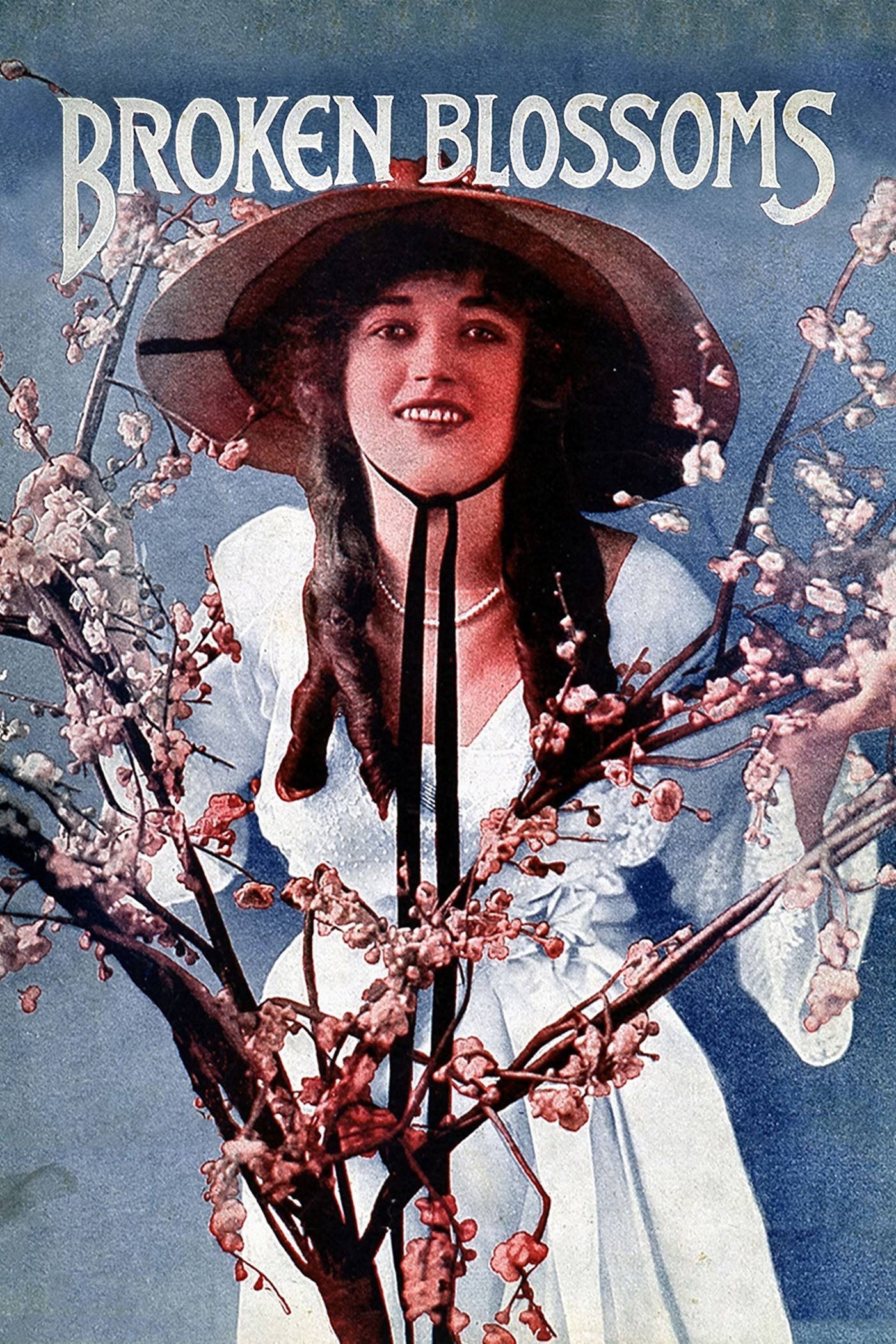
Poster from TMDB
Broken Blossoms
Sign in to saveAlso known as Broken Blossoms or The Yellow Man and the Girl
1919 film by D. W. Griffith
OverviewAI-generated
Broken Blossoms, also known as The Yellow Man and the Girl, is a 1919 American silent romance drama film. Directed, produced, and written by D. W. Griffith, the movie features Lillian Gish, Richard Barthelmess, Donald Crisp, and Edward Peil in the cast. Griffith also composed the music, while Billy Bitzer served as the director of photography. The production was handled by Paramount Pictures and D.W. Griffith Productions.
The narrative is set in London and explores themes including suicide, boxing, and Buddhism. The film was released in 1919, with specific dates including May 13, October 20, and January 1. It is presented in black-and-white with a 4:3 aspect ratio and has a runtime of approximately 89 to 90 minutes. The work is in the public domain and has been distributed by United Artists and Netflix. It is part of the National Film Registry.
Synthesized by Vinony from 38 facts across 3 sources: Wikidata, TMDb, IMDb. Generated from structured data (not the Wikipedia text) and checked against those facts — may still contain errors.
Film · TMDB
6.9The love story of an abused English girl and a Chinese Buddhist in a time when London was a brutal and harsh place to live.
Cast
- Lillian Gish as Lucy Burrows
- Richard Barthelmess as Cheng Huan
- Donald Crisp as Battling Burrows
- Arthur Howard as Burrows' Manager
- Edward Peil Sr. as Evil Eye
- George Beranger as The Spying One
Themes
- suicide
- london, england
- china
- boxer
- buddhist
- murder
- racism
- black and white
- alcoholic
- silent film
This product uses the TMDB API but is not endorsed or certified by TMDB.
Key facts
- Directed by
- D. W. Griffith
- Screenplay by
- D. W. Griffith
- Based on
- "The Chink and the Child", by Thomas Burke
- Produced by
- D. W. Griffith
- Starring
- Lillian Gish Richard Barthelmess Donald Crisp
- Cinematography
- G.W. Bitzer
- Edited by
- James Smith
- Distributed by
- United Artists
- Release dates
- May 13, 1919 ( 1919-05-13 ) ( New York City , premiere) October 20, 1919 ( 1919-10-20 ) (U.S.)
- Running time
- 90 minutes
- Country
- U.S.
- Language
- Silent (English intertitles )
- Budget
- $88,000 or $115,000
- Box office
- $600,000 (U.S.) or $1.25 million
via Wikipedia infobox
Wikidata facts
- Instance of
- film
- Part of
- National Film Registry
- Genre
- drama film
- Country of origin
- United States
- Director
- D. W. Griffith
- Screenwriter
- D. W. Griffith
- Cast member
- Kid McCoy
- Composer
- D. W. Griffith
- Producer
- D. W. Griffith
- Production company
- Paramount Pictures
- Cinematographer
- Billy Bitzer
- Narrative location
- London
- Duration
- 90
- FilmAffinity ID
- 469437
- Distribution format
- video on demand
- Image
- Gish and Barthelmess Broken Blossoms.jpg
Show 9 more facts
- publication date
- 1919-01-01
- Commons category
- Broken Blossoms
- title
- Broken Blossoms
- distributed by
- Netflix
- color
- black-and-white
- aspect ratio (W:H)
- 4:3
- copyright status
- public domain
- assessment
- Bechdel test
- review score
- 95%
via Wikidata · CC0
~11 min read
Encyclopedic overview
Broken Blossoms or The Yellow Man and the Girl, often referred to simply as Broken Blossoms, is a 1919 American silent melodrama film directed by D. W. Griffith. It was distributed by United Artists and premiered on May 13, 1919. It stars Lillian Gish, Richard Barthelmess, and Donald Crisp, and tells the story of a young girl, Lucy Burrows, who is abused by her alcoholic prizefighting father, Battling Burrows, and meets Cheng Huan, a kind-hearted Chinese man who falls in love with her. It was the first film distributed by United Artists. It is based on Thomas Burke's short story "The Chink and the Child" from the 1916 collection Limehouse Nights. In 1996, Broken Blossoms was included in the annual selection of 25 motion pictures to be added to the National Film Registry of the Library of Congress.
Plot
Excerpted from Wikipedia’s “Broken Blossoms” article, available under the CC BY-SA 4.0 licence.