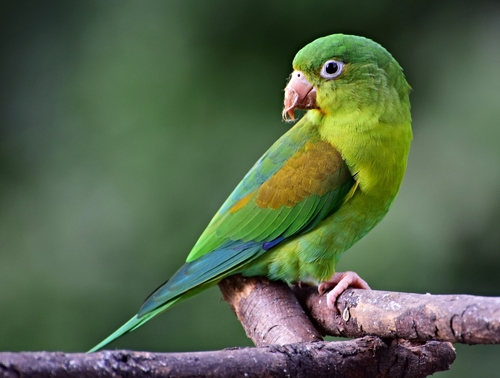
(c) Alejandro Bayer Tamayo, some rights reserved (CC BY-SA) · cc-by-sa
Brotogeris
Sign in to saveBrotogeris is a genus of small parrots endemic to Central and South America. Their closest relatives are the monk parakeet and the cliff parakeet in the genus Myiopsitta. They eat seeds and fruit. The word brotogeris means "having the voice of a human". In the language of their native countries, which is mostly Spanish, they are called pericos – the translation of which is "parakeet". Their average lifespan is 15 years, although some have been reported to have lived up to 35 years. Also, the bird was found in Rio Grande do Sul in South America.
Species
Orange-chinned Parakeet
GENUS
- KingdomAnimalia
- PhylumChordata
- ClassAves
- OrderPsittaciformes
- FamilyPsittacidae
via GBIF
Museum specimens
- Specimen records
- 360
- With media
- 19
- Family
- Psittacidae
- Collections
- RBINS-SCIENTIFIC HERITAGE, ABS, UCLA, UNSM, ROM, YPM
- Recorded in
- Brazil, United States, Guyana, Suriname, French Guiana, Puerto Rico
Wikidata facts
- Instance of
- taxon
- Parent taxon
- New World parrots
- Image
- Plain Parakeet (Brotogeris tirica)4.jpg
Show 6 more facts
- taxon range
- Brazil
- taxon rank
- genus
- taxon name
- Brotogeris
- Commons category
- Brotogeris
- topic's main category
- Category:Brotogeris
- Commons gallery
- Brotogeris
Sources (1)
via Wikidata · CC0
~3 min read
Encyclopedic overview
5 sectionsContents
- Taxonomy
- Phylogeny
- Gallery
- References
- Further reading
Brotogeris is a genus of small parrots endemic to Central and South America. Their closest relatives are the monk parakeet and the cliff parakeet in the genus Myiopsitta. They eat seeds and fruit. The word brotogeris means "having the voice of a human". In the language of their native countries, which is mostly Spanish, they are called pericos – the translation of which is "parakeet". Their average lifespan is 15 years, although some have been reported to have lived up to 35 years. Also, the bird was found in Rio Grande do Sul in South America.
==Taxonomy== The genus Brotogeris was introduced in 1825 by Irish zoologist Nicholas Aylward Vigors with Psittacus pyrrhopterus Latham, the grey-cheeked parakeet, as the type species. The genus name is from the Ancient Greek brotogērus meaning "with human voice".
Excerpted from Wikipedia’s “Brotogeris” article, available under the CC BY-SA 4.0 licence.