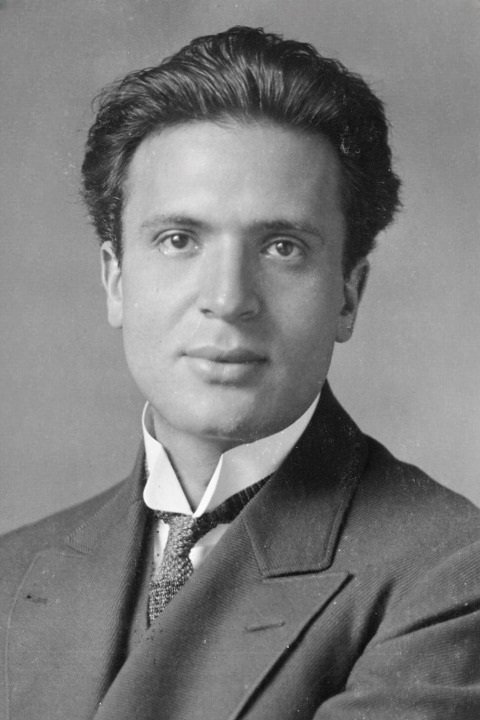
Profile via TMDB · Courtesy of TMDB
Bruno Walter
Sign in to saveGerman-born conductor, pianist, and composer (1876-1962)
OverviewAI-generated
Bruno Walter, born Bruno Schlesinger in Berlin in 1876, was a German and French conductor, pianist, composer, and autobiographer. He studied at the Stern Conservatory and Berlin University of the Arts under Ludwig Bussler. His professional career began in 1894, and he was a member of the Vienna Philharmonic. He also taught at the University of Music and Performing Arts Vienna, where his archives are held, and instructed students such as Paul Ben-Haim.
Walter recorded for Deutsche Grammophon and Columbia Records, focusing on symphony works. He received the Ring of Honour of the City of Vienna, the Austrian Decoration for Science and Art, and a star on the Hollywood Walk of Fame. He spoke German and died in Beverly Hills in 1962.
Synthesized by Vinony from 33 facts across 6 sources: Wikidata, MusicBrainz, Last.fm, Europeana Sparql, TMDb, Vinony collections. Generated from structured data (not the Wikipedia text) and checked against those facts — may still contain errors.
Film & TV
Berlin, Germany
Known for
- The Art of Conducting: Great Conductors of the Past — Self1993
- Omnibus — Self1967
- Bruno Walter: The Maestro, the Man — Self1958
- Botschafter der Musik — Self1952
- Carnegie Hall — Bruno Walter1947
via TMDB
Listeners · Last.fm
- Listeners
- 12,181
- Total plays
- 1,107,546
Tags
Bruno Walter (Sept 15, 1876 – Feb 17, 1962) was a German-born conductor and composer. One of the most famous conductors of the 20th century, he was born in Berlin, but moved to several countries between 1933 and 1939, finally settling in the United States in 1939. He was born Bruno Schlesinger, but began using Walter as his surname in 1896, and officially changed his surname to Walter upon becoming naturalised in Austria in 1911. In 1896 Schlesinger took a conducting position at the opera house
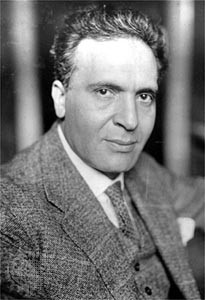
Key facts
- Born
- Bruno Schlesinger , ( 1876-09-15 ) September 15, 1876, Berlin , Kingdom of Prussia , German Empire
- Died
- February 17, 1962 (1962-02-17) (aged 85), Beverly Hills , California, U.S.
- Occupations
- Composer , conductor , pianist
via Wikipedia infobox
Wikidata facts
- Instance of
- human
- Given name
- Bruno
- Gender
- male
- Citizenship
- Germany
- Place of birth
- Berlin
- Place of death
- Beverly Hills
- Occupation
- music director
- Educated at
- Berlin University of the Arts
- Languages spoken
- German
- Student of
- Ludwig Bussler
- Genre
- symphony
- Instrument
- piano
- Record label
- Columbia Records
- Image
- Bruno Walter Wien 1912.jpg
Show 9 more facts
- Commons category
- Bruno Walter
- date of birth
- 1876-09-15
- date of death
- 1962-02-17
- Commons gallery
- Bruno Walter
- student
- Paul Ben-Haim
- member of
- Vienna Philharmonic
- start of work period
- 1894-00-00
- birth name
- Schlesinger
- has works in the collection
- Anne Frank House
Sources (7)
via Wikidata · CC0
Works in European collections
22 objects attributed to Bruno Walter, held across European museums, libraries & archives · via Europeana

La Walkyrie: (1er acte), scène III; Manner Sippe sass here in the hall (Tous nos parents groupés autour de nous)/(Wagner)

La Walkyrie: (1er acte), scène III; what’s gliding there bright in a glimmer’s light? (Une épée est là sous les yeux)/(Wagner)

“Die Wal” e“: 1st act, 3rd scene; Siegmund”ich/(Wagner)

“The Valkyrie” : 1. Nude, 2. Still; Miracle and Wild Mar you announce/(Wagner)

La walkyrie: (1er acte), scène III; Siegmund heiss ich (Siegmund suis-je)/(Wagner)

“Die Wal” e": 1st act, orchestra prelude and 1st scene; Wess' Herd this too sei/(Wagner)

“The Valkyrie” : 1. Nude, 2. Still; I know a wild sex/(Wagner)

“Die Wal” e": 1st act, 3rd scene; the man Sippe sat here in the hall/(Wagner)

“Die Wal” e": 1st act, 3rd scene; the friend now holds her blessed wife; Winterstorms gave way to the Wonnemond/(Wagner)

The Rosenkavalier: Acte 2, Finale scene (with waltzes); Part1; Part 2/(Richard Strauss)

La Walkyrie: (1er acte), scène III; You are the Lenz (Ah! c “esttoi le printemps qu” invoquait ma tendresse)/(Wagner)

“The Valkyrie” : 1. Nude, 2. Still; The so suffering Los dir denied/(Wagner)

La walkyrie: (1er acte), scène III; How the forehead is so open (Ce front oirin es front si pur)/(Wagner)

“The Valkyrie” : 1. Nude, 2. Still; Do you worry about getting me to contract 'n/(Wagner)

“Die Wal” e": 1st act, 3rd scene; you are the Lenz/(Wagner)

“The Valkyrie” : 1. Nude, 2. and 3rd scene; the man resists with weapons

“The Valkyrie” : 1. Nude, 2. Still; Müd 'am Herd I found the man/(Wagner)

“Die Wal” e": 1st Nude, 1st Scene; Cooling Labung gave me the quell/(Wagner)

Untitled

Untitled

Untitled

Untitled
~22 min read
Encyclopedic overview
Bruno Walter (born Bruno Schlesinger, September 15, 1876 – February 17, 1962) was a German-born conductor, pianist, and composer. Born in Berlin, he left Nazi Germany in 1933, was naturalised as a French citizen in 1938, and settled in the United States in 1939. He worked closely with Gustav Mahler, conducting the premieres of his Ninth Symphony and Das Lied von der Erde. He held major positions with the Leipzig Gewandhaus Orchestra, New York Philharmonic, Concertgebouw Orchestra, Salzburg Festival, Vienna State Opera, Bavarian State Opera, Staatsoper Unter den Linden and Deutsche Oper Berlin, among others, made recordings of historical and artistic significance, and is widely considered to be one of the great conductors of the 20th century.
Biography
Excerpted from Wikipedia’s “Bruno Walter” article, available under the CC BY-SA 4.0 licence.