Encyclopedia of Life · EOL (see source)
Calyceraceae
Sign in to saveCalyceraceae is a plant family in the order Asterales. The natural distribution of the about sixty species belonging to this family is restricted to the southern half of South America. The species of the family resemble both the family Asteraceae and the Dipsacaceae.
Species
FAMILY
- KingdomPlantae
- PhylumTracheophyta
- ClassMagnoliopsida
- OrderAsterales
- FamilyCalyceraceae
属 参见正文 头花草科(又名萼角花科或萼角科),共有6属约40种,分布在南美洲南部。 本科植物为一年或多年生草本;单叶互生,叶有裂;花小,排成头状花序,花瓣5,肉质,萼管具棱;果实为瘦果。 属 Acarpha Griseb. Acicarpha Juss. Boopis Juss. Calycera Cav. Gamocarpha DC. Moschopsis Phil. 1981年的克朗奎斯特分类法单独列出一个头花草目,放在菊亚纲下面,1998年根据基因亲缘关系分类的APG 分类法认为可以直接放到菊目下。 外部链接 在L. Watson和M.J. Dallwitz (1992年)《有花植物分科》中的头花草科 APG网站中的头花草科 NCBI中的头花草科 取自“https://zh.wikipedia.org/w/index.php?title=头花草科&oldid=44950142” 分类: 头花草科 植物科名 隐藏分类:本地相关图片与维基数据不同
via GBIF · Kew POWO
Museum specimens
- Specimen records
- 93
- With media
- 9
- Family
- Calyceraceae
- Collections
- MEL, MO, UFRGS, UEFS, UNESP-FCA
- Recorded in
- Argentina, Bolivia, Chile, Guyana, Peru, Brasil, Paraguay
Wikidata facts
- Instance of
- taxon
- Image
- Calycera crassifolia 1.jpg
Show 7 more facts
- Commons category
- Calyceraceae
- taxon rank
- family
- taxon name
- Calyceraceae
- topic's main category
- Category:Calyceraceae
- taxon common name
- 萼角花科
- taxonomic type
- Calycera
Sources (1)
via Wikidata · CC0
~5 min read
Encyclopedic overview
5 sectionsContents
- Description
- Differences with related families
- Genera
- Distribution
- References
Calyceraceae is a plant family in the order Asterales. The natural distribution of the about sixty species belonging to this family is restricted to the southern half of South America. The species of the family resemble both the family Asteraceae and the Dipsacaceae.
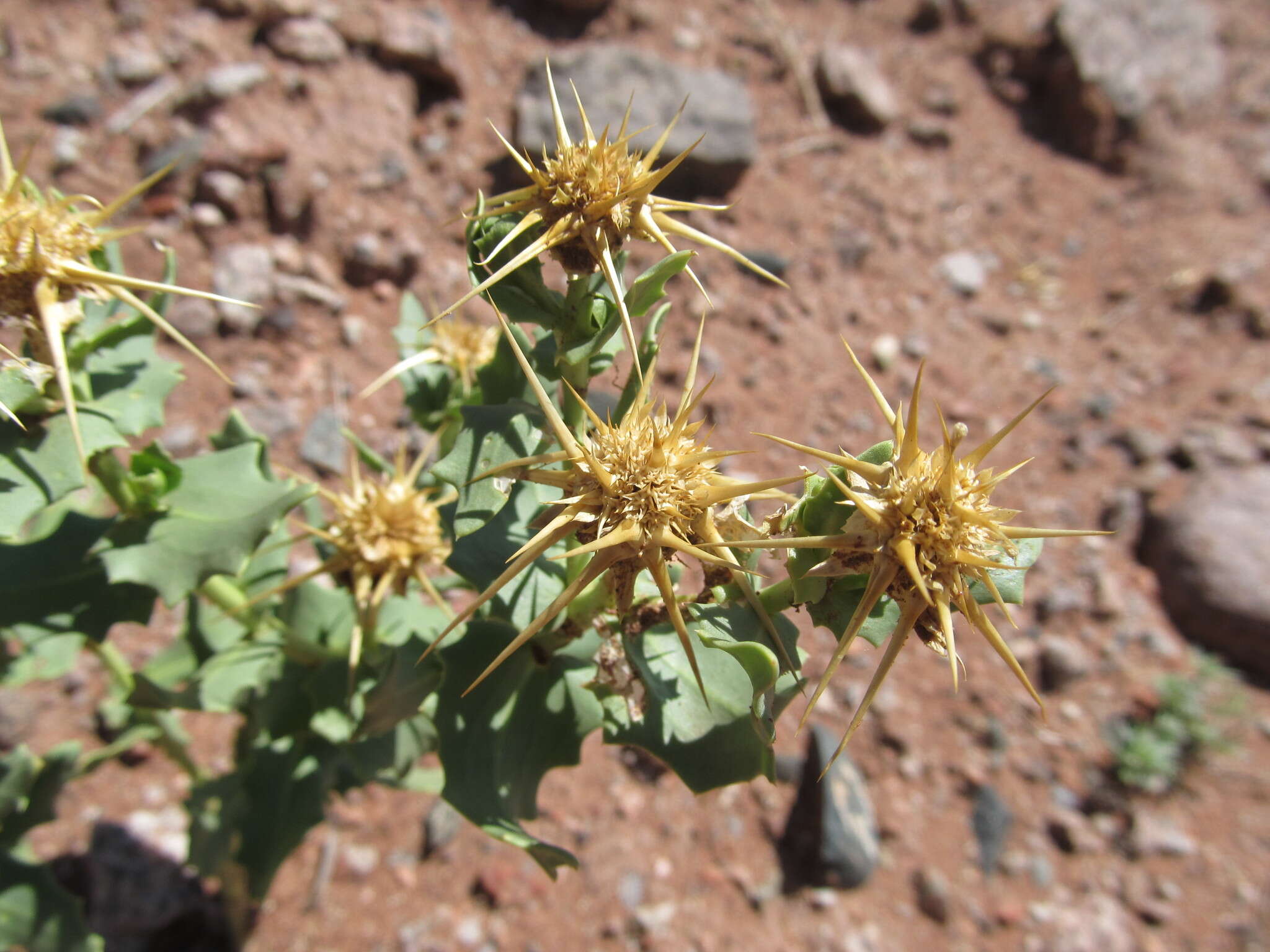
== Description == Calyceraceae are perennial or annual herbs. There may be a few or many branched stems that may be without hair or with soft silky hairs. The leaves may be in a rosette at the base of the stems or set alternately along the stems. Stipules are lacking. The blade of the leaf is simple, but may be lobed to pinnatisect. The margin of the leaves may be entire or toothed. The inflorescences are flowerheads comparable to those in the sunflower family. They are at the top of the stems or opposite leaves, and may have a flower stem or be seated, while each flowerhead may be on its own or in a cyme. Each individual flowerhead is surrounded by an involucre, consisting of one or two rows of bracts that are often leaf-like and usually not merged. The base of the flowerhead may be conical, convex or sometimes almost spheroidal. On the base of the flowerhead, at the base of each individual flower, are linear to narrowly lanceolate, green, chaffy scales (or paleae) that become woody when seeds are ripening. Each flowerhead may contain a few or up to over one hundred hermaphrodite or unisexual, star-symmetric or mirror-symmetric flowers. The petals are fused to form a funnel-shaped or sometimes cylinder-shaped corolla that is split into four to six lobes at the top. The corolla's remains stay on the top of the one-seeded dry fruit at maturity. Four or five stamens alternate with the corolla lobes. The lower third of these filaments are fused with the corolla tube, while sometimes filaments may also be attached to their neighbors. Filaments carry nectaries. The anthers stand upright, with pollen freed from a slit at the top. The style is thread-like without hairs, sticking out above the corolla tube, while the stigma at its tip is club-shaped or split in two. The ovary consists of two carpels with only one ovule, which is pendulous and anatropous. The fruit is an achene, with a persistent calyx which may consists of spines, contains one seed that is only enclosed by a thin pericarp and has fleshy endosperm. The sepals may be free or fused calyx lobes, sometimes spine-like and woody on the outside. Fruits may be dispersed separately when ripe or can remain on the floral base that breaks free of the plant.
Excerpted from Wikipedia’s “Calyceraceae” article, available under the CC BY-SA 4.0 licence.