Calyptrocalyx · Kew POWO · Kew Plants of the World Online
Calyptrocalyx
Sign in to saveAlso known as Awa palm
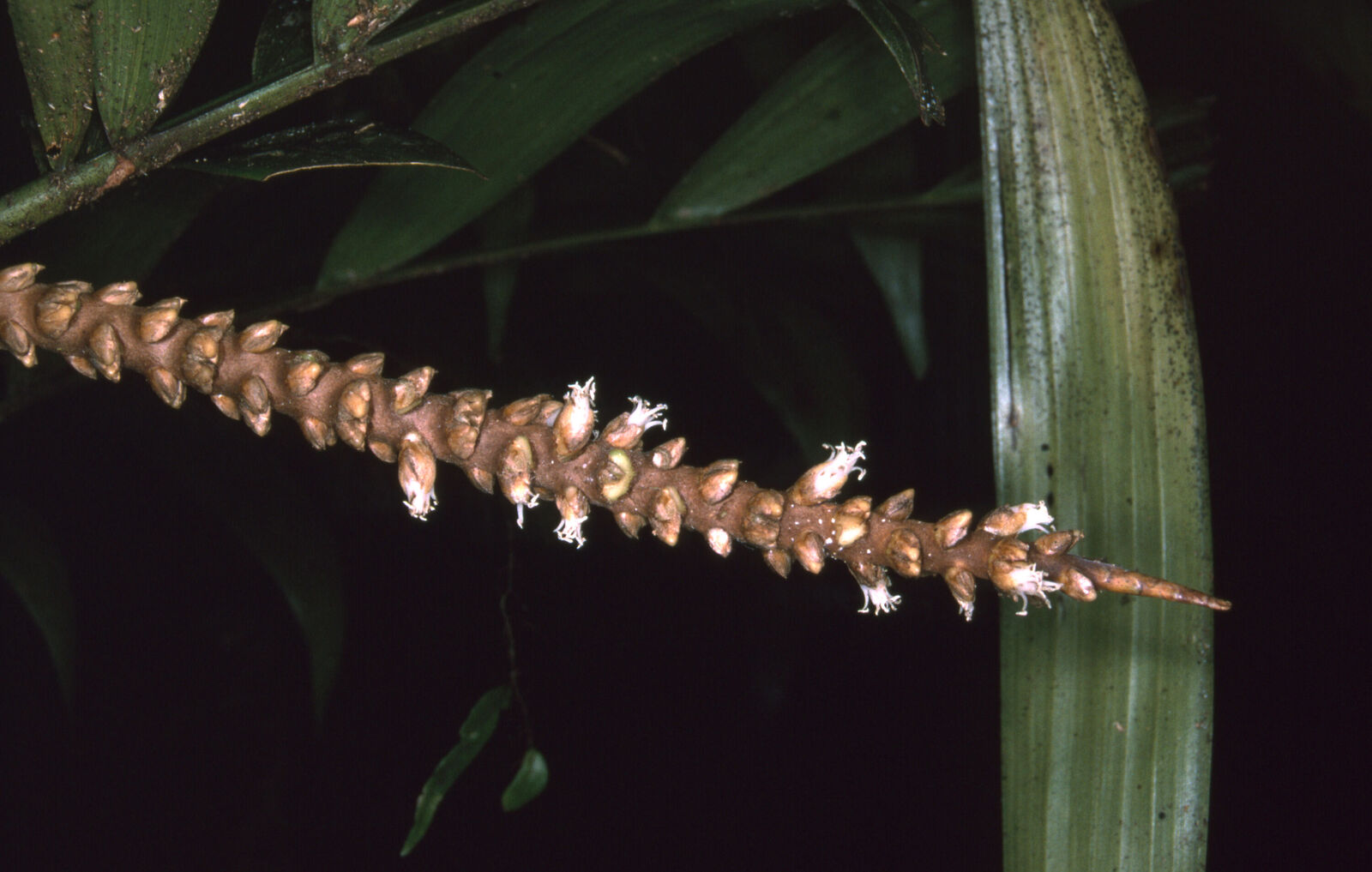
Calyptrocalyx is a genus of plants in the palm family Arecaceae, native to New Guinea and the nearby Maluku Islands. Ranging from small to large, the palms in this genus are increasingly found in cultivation owing largely to their purple, red, and orange colored, new foliage. At least 26 species have been described while others, known only by local names, have not yet received a taxonomic account. Palms formerly classified within Paralinospadix have been incorporated into this genus. It is named from two Greek words meaning 'covered' and 'calyx'.
Species
GENUS
- KingdomPlantae
- PhylumTracheophyta
- ClassLiliopsida
- OrderArecales
- FamilyArecaceae
General: Calyptrocalyx species are small understorey to moderately
via GBIF · Kew POWO
Museum specimens
- Specimen records
- 231
- With media
- 222
- Family
- Arecaceae
- Collections
- A, MICH, NY, US, USF
- Recorded in
- Papua New Guinea, Malaysia
Wikidata facts
Show 6 more facts
- taxon rank
- genus
- topic's main category
- Category:Calyptrocalyx
- taxon name
- Calyptrocalyx
- Commons category
- Calyptrocalyx
- taxon common name
- 隐萼椰属
Sources (1)
via Wikidata · CC0
~2 min read
Encyclopedic overview
7 sectionsContents
- Description
- Distribution and habitat
- Cultivation
- Species
- Gallery
- References
- External links
Calyptrocalyx is a genus of plants in the palm family Arecaceae, native to New Guinea and the nearby Maluku Islands. Ranging from small to large, the palms in this genus are increasingly found in cultivation owing largely to their purple, red, and orange colored, new foliage. At least 26 species have been described while others, known only by local names, have not yet received a taxonomic account. Palms formerly classified within Paralinospadix have been incorporated into this genus. It is named from two Greek words meaning 'covered' and 'calyx'.
== Description == Most Calyptrocalyx species are clustering while a few grow from solitary trunks, all being conspicuously ringed by leaf scars. Trunk diameters range from 1 cm in C. arfakiensis to 25 cm in C. spicatus, spanning heights of 1 to 12 m. The leaves may be pinnate, bifid, or undivided on adaxially channeled, abaxially rounded petioles. While the foliage of these palms matures to various shades of green it is often brightly colored when emergent.
Excerpted from Wikipedia’s “Calyptrocalyx” article, available under the CC BY-SA 4.0 licence.