
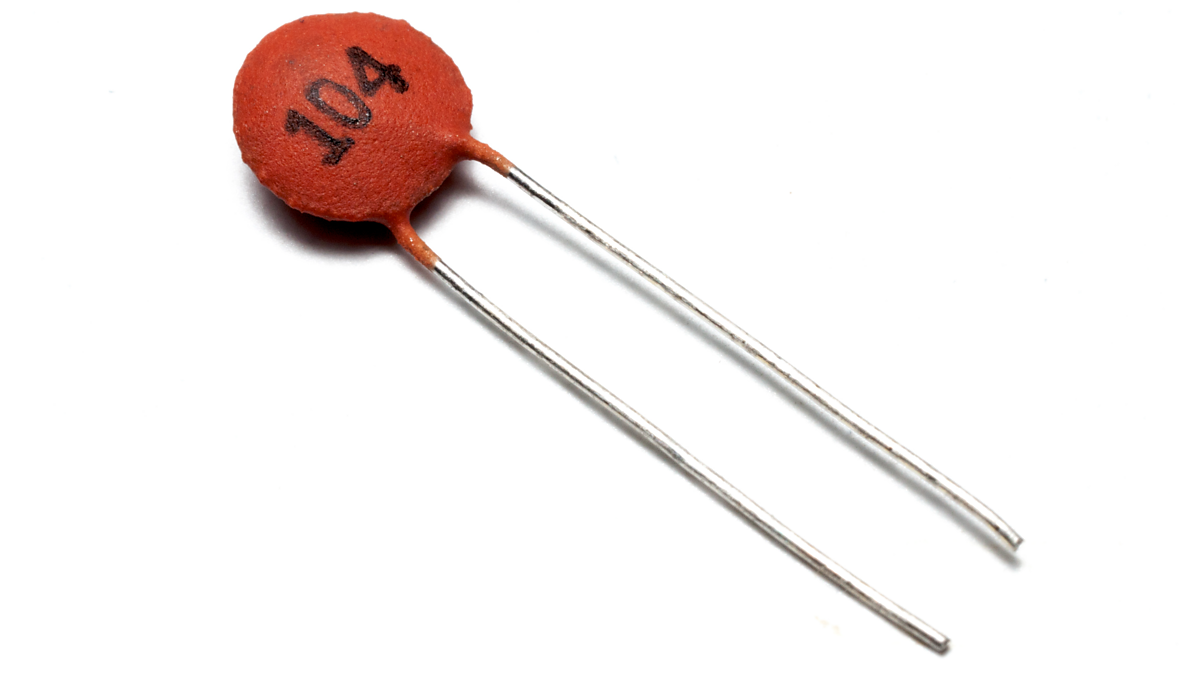
File:Capacitors_(7189597135).jpg · Wikimedia Commons · See Wikimedia Commons
OverviewAI-generated
A capacitor is an electronic component described in educational resources such as BBC Bitesize and Electronics Club. It is the subject of articles on websites including Modelling Electronics and Electronics Tutorials. The topic is categorized under "Capacitors" on Commons and tagged on Stack Exchange.
The concept is referenced by 1,480 other encyclopedia articles. A specific article titled "Capacitors and Ohm's law" from BBC Bitesize contains 5,767 characters. This source is grounded and linked via property P973.
Synthesized by Vinony from 8 facts across 3 sources: Wikidata, Firecrawl, Vinony graph. Generated from structured data (not the Wikipedia text) and checked against those facts — may still contain errors.
Key facts
- Electronic component.name
- Capacitor
- Electronic component.image
- Capacitors (7189597135).jpg
- Electronic component.type
- Passive
- Electronic component.working_principle
- Capacitance
- Electronic component.terminal_number
- 2
- Electronic component.symbol
- 50px
via Wikipedia infobox
Described at
Capacitors and Ohm's law - BBC Bitesize
Identify, explain, and select capacitors; understand capacitance units; grasp current, voltage, and resistance relationships; and perform Ohm’s law calculations.
bbc.co.uk →Add subjects, save guides and continue where you left off with your BBC account. 1. Electrolytic capacitors – these are polarised, so they have a positive and a negative leg. Usage : applications requiring large capacitance values, such as timing circuits and power supplies. 2. Ceramic capacitors – these are non-polarised. Usage : applications like signal smoothing. Choose capacitors based on the required capacitance, voltage rating, and whether the circuit requires a polarised or non-polarised capacitor. Stage 1 : The 9V battery sends electrical charge to the capacitor's plates, allowing it to store energy (like filling a tank). The capacitor continues charging until it's full. Stage 2: When the SPDT switchcloseSingle pole, double throw (SPDT) switchA type of electrical switch that allows you to connect a single input to one of two outputs. It has has one input terminal (the pole) and two output terminals (the throws). is manually pressed, the battery is now cut off from the rest of the circuit. However, the stored energy from the capacitor can now flow through the circuit, making the LED light up briefly. The resistor will control the discharge rate of the capacitor by limiting the flow of current through the circuit. If you know any two of these quantities, you can calculate the third.
Excerpt from a page describing this subject · 5,767 chars · not written by Vinony
Wikidata facts
- Subclass of
- one-port circuit
- Image
- JVC MX-J950R - power module-1112 (cropped) - Elna Silmic electrolytic capacitors.jpg
Show 8 more facts
- described at URL
- www.electronics-notes.com/articles/electronic_components/capacitors/capacitor-types.php
- topic's main category
- Category:Capacitors
- Commons category
- Capacitors
- Stack Exchange tag
- electronics.stackexchange.com/tags/capacitor
- on focus list of Wikimedia project
- Wikipedia:Vital articles/Level/4
- short name
- C
- different from
- condenser
- has characteristic
- capacitance
via Wikidata · CC0
Gallery (32)
Available in 126 languages
- Español
- Français
- Deutsch
- 中文
- 日本語
- Русский
- Português
- Italiano
- العربية
- हिन्दी
- abstract
- Afrikaans
- Albanian
- Albanian
- Aragonese
- Armenian
- Assamese
- Asturian
Show 107 more
- azb
- Azerbaijani
- Bahasa Indonesia
- Bangla
- Bashkir
- Basque
- bat_smg
- Bavarian
- be_x_old
- Belarusian
- Bhojpuri
- Bosnian
- Bulgarian
- Burmese
- Catalan
- Chechen
- Chuvash
- Croatian
- Czech
- Danish
- Egyptian Arabic
- Esperanto
- Estonian
- Fiji Hindi
- Filipino
- Finnish
- Galician
- Gan Chinese
- Georgian
- Greek
- Haitian Creole
- Hausa
- Hebrew
- Hungarian
- Icelandic
- Ido
- Interlingua
- Irish
- Jamaican Creole English
- Javanese
- Kashmiri
- Kazakh
- Kurdish
- Kyrgyz
- Latin
- Latvian
- Lithuanian
- Lombard
- Low German
- Macedonian
- Malagasy
- Malay
- Malayalam
- Marathi
- Mazanderani
- Minangkabau
- Mongolian
- Moroccan Arabic
- Nederlands
- Nepali
- Newari
- Northern Frisian
- Norwegian
- Norwegian Nynorsk
- Occitan
- Oromo
- Ossetic
- Pashto
- Piedmontese
- Polski
- Punjabi
- Romanian
- Rusyn
- Saterland Frisian
- Scots
- Serbian
- Serbian (Latin)
- simple
- Sindhi
- Sinhala
- Slovak
- Slovenian
- Sundanese
- Svenska
- Swahili
- Tachelhit
- Tajik
- Tamil
- Tatar
- Tiếng Việt
- Türkçe
- Ukrainian
- Urdu
- Uyghur
- Uzbek
- Veps
- Waray
- Welsh
- Western Panjabi
- Wolof
- Wu Chinese
- Yiddish
- zh_min_nan
- zh_yue
- فارسی
- ไทย
- 한국어
via Wikidata sitelinks · CC0