Encyclopedia of Life · EOL (see source)
OverviewAI-generated
The Cape Gannet, scientifically named *Morus capensis*, is a species of bird within the family Sulidae and order Pelecaniformes. It belongs to the genus *Morus* and is classified under the class Aves and phylum Chordata. The species was described by Lichtenstein in 1823 and holds an accepted taxonomic status. Common names for this bird include Kaptölpel, Alcatraz de El Cabo, and Fou du Cap.
This marine species has a range that includes Brazil, South America, and Africa. Its mass is recorded as 105, and it has a litter size of 1. The Cape Gannet is currently listed as Endangered on the IUCN Red List, a status assigned in 2018.
Synthesized by Vinony from 24 facts across 5 sources: Wikidata, WoRMS, IUCN Red List, Encyclopedia of Life, Vinony graph. Generated from structured data (not the Wikipedia text) and checked against those facts — may still contain errors.
Species
EndangeredCape gannet
Species
- PhylumChordata
- ClassAves
- OrderPelecaniformes
- FamilySulidae
ケープシロカツオドリ (学名:Morus capensis)は、ペリカン目カツオドリ科に分類される鳥類の一種。
via IUCN
Wikidata facts
Show 8 more facts
- taxon rank
- species
- IUCN conservation status
- Endangered status
- Commons category
- Morus capensis
- taxon name
- Morus capensis
- Commons gallery
- Morus capensis
- litter size
- 1
- taxon common name
- ganso-patola-do-cabo
- taxon range
- Africa
via Wikidata · CC0
~10 min read
Encyclopedic overview
The Cape gannet (Morus capensis) is a large seabird of the gannet family, Sulidae.
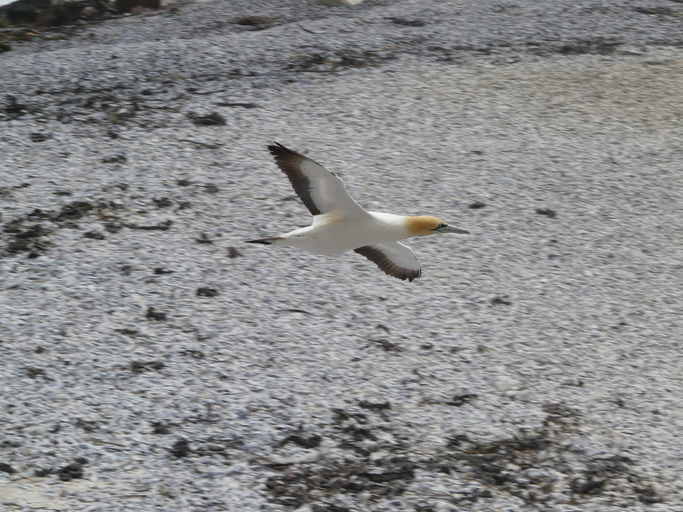
They are easily identified by their large size, black and white plumage and distinctive yellow crown and hindneck. The pale blue bill is pointed with fine serrations near the tip; perhaps because of the depth and speed of the gannet's dive when fishing (depending on altitude, gannets hit the water at speeds of between 40 and 86 km/h (25 and 53 mph)), its beak has no external nostrils into which the water might be forced. The widely mentioned maximum speed of 120 km/h has never been measured and published.
Excerpted from Wikipedia’s “Cape Gannet” article, available under the CC BY-SA 4.0 licence.