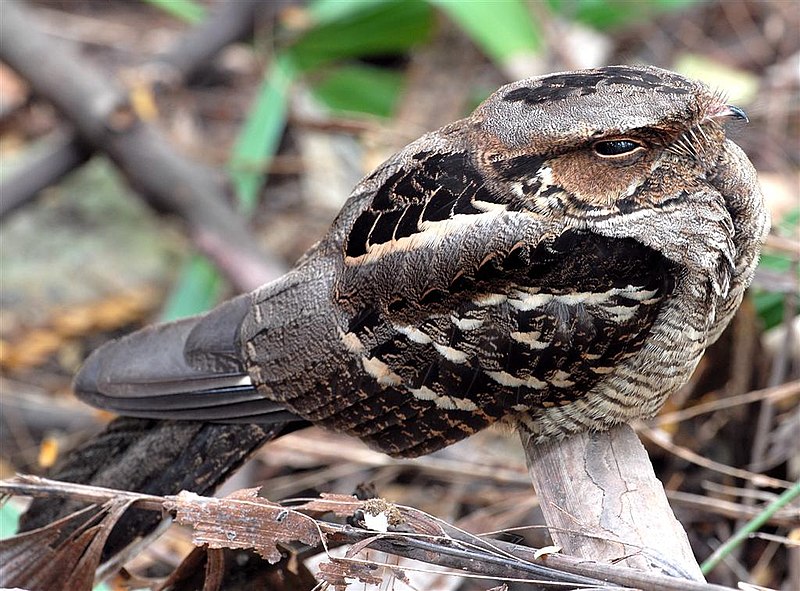
File:Caprimulgus_macrurus.jpg · Wikimedia Commons · See Wikimedia Commons
Caprimulgus
Sign in to saveCaprimulgus is a large and very widespread genus of nightjars, medium-sized nocturnal birds with long pointed wings, short legs and short bills. Caprimulgus is derived from the Latin capra, "nanny goat", and mulgere, "to milk", referring to an old myth that nightjars suck milk from goats. The common name "nightjar", first recorded in 1630, refers to the nocturnal habits of the bird, the second part of the name deriving from the distinctive churring song.
OverviewAI-generated
Caprimulgus is a genus of birds within the family Caprimulgidae. It belongs to the order Caprimulgiformes, class Aves, phylum Chordata, and kingdom Animalia. The taxon was described by Linnaeus in 1758 and is currently accepted. Its parent taxon is Caprimulginae.
The genus has a recorded range in Brazil. Occurrence records from various institutions, including RBINS-SCIENTIFIC HERITAGE, ANWC, CMNH, CUMV, and FMNH, document specimens from Brazil, French Guiana, Madagascar, Mexico, and Uganda. A total of 681,059 occurrences have been logged, with 93 specific records and 28 media items available in one dataset.
Synthesized by Vinony from 30 facts across 6 sources: Wikidata, GBIF, Gbif Occ, WoRMS, iDigBio, Vinony graph. Generated from structured data (not the Wikipedia text) and checked against those facts — may still contain errors.
Species
GENUS
- KingdomAnimalia
- PhylumChordata
- ClassAves
- OrderCaprimulgiformes
- FamilyCaprimulgidae
via GBIF
Museum specimens
- Specimen records
- 93
- With media
- 28
- Family
- Caprimulgidae
- Collections
- RBINS-SCIENTIFIC HERITAGE, ANWC, CMNH, CUMV, FMNH, USNM
- Recorded in
- French Guiana, Madagascar, Brazil, Mexico, Uganda, Puerto Rico, Honduras, Peru
Wikidata facts
- Instance of
- taxon
- Parent taxon
- Caprimulginae
- Image
- Caprimulgus aegyptius.jpg
Show 7 more facts
- taxon rank
- genus
- Commons category
- Caprimulgus
- taxon name
- Caprimulgus
- topic's main category
- Category:Caprimulgus
- Commons gallery
- Caprimulgus
- different from
- basket
- taxon range
- Brazil
Sources (2)
via Wikidata · CC0
~5 min read
Encyclopedic overview
3 sectionsContents
- Taxonomy
- Species
- References
Caprimulgus is a large and very widespread genus of nightjars, medium-sized nocturnal birds with long pointed wings, short legs and short bills. Caprimulgus is derived from the Latin capra, "nanny goat", and mulgere, "to milk", referring to an old myth that nightjars suck milk from goats. The common name "nightjar", first recorded in 1630, refers to the nocturnal habits of the bird, the second part of the name deriving from the distinctive churring song.
Caprimulgus nightjars are found around Afro-Eurasia and Australasia, and like other nightjars they usually nest on the ground. They are mostly active in the late evening and early morning or at night, and feed predominantly on moths and other large flying insects.
Excerpted from Wikipedia’s “Caprimulgus” article, available under the CC BY-SA 4.0 licence.