Encyclopedia of Life · EOL (see source)
Species
Near Threatenedbignose shark
SPECIES
- KingdomAnimalia
- PhylumChordata
- ClassElasmobranchii
- OrderCarcharhiniformes
- FamilyCarcharhinidae
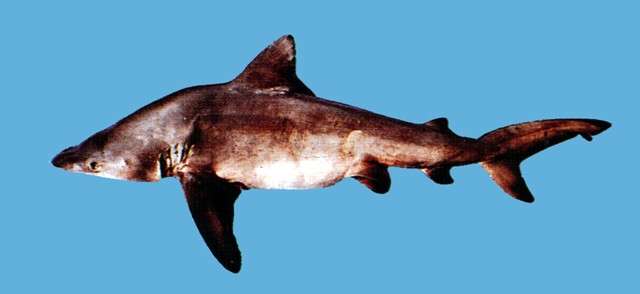
二名法 Carcharhinus altimusSpringer, 1950[1] 高翅真鲨(学名:Carcharhinus altimus,又名大鼻白眼鲛、大鼻真鯊)为軟骨魚綱板鰓亞綱真鯊目真鲨科真鲨属的其中一種鱼类。 目录 1 分布 2 生活水深 3 特徵 4 生態 5 經濟價值 6 参考文献 7 扩展阅读 分布 本魚分布全球各大洋亞熱帶及熱帶海域,比如說佛罗里达、巴哈马、古巴、尼加拉瓜、哥斯达黎加、委内瑞拉沿海、塞内加尔、甘比亚、狮子山、象牙海岸、加纳、地中海海域、南非、马达加斯加以及大陆沿海、台湾东北部海域等。该物种的模式产地在美国佛罗里达。[1] 生活水深 25至500公尺。 特徵 體修長,吻短鈍,前鼻瓣呈三角形。上頷齒寬且具明顯鋸齒邊緣,下頷齒具窄而直立之齒,尖而具鋸齒邊緣。背鰭兩枚且明顯隆起,胸鰭大型,鉤狀,外角窄圓。體背呈淡灰色,腹部白色,除腹鰭外,各鰭鰭尖漆黑。脊椎骨194至206枚,體長可達3公尺。 生態 棲息於大陸棚及大陸坡交界處,小魚通常發現於淺水域,屬肉食性,以魚類、頭足類等為食。卵胎生,每次生產約3至15條仔魚。 經濟價值 食用魚,魚肉可製成沙魚煙,魚肝可製成魚油。 参考文献 ^ 1.0 1.1 中国科学院动物研究所. 大鼻真鲨. 中国动物物种编目数据库. 中国科学院微生物研究所. [2009-04-11]. (原始内容存档于2016-03-05). Froese, Rainer & Daniel Pauly, eds. (2011). Carcharhinus altimus in FishBase. 2011年12月版本 台灣魚類資料庫 扩展阅读 維基物種中有關高翅真鲨的數據 取自“https://zh.wikipedia.org/w/index.php?title=高翅真鯊&oldid=49523220” 分类: IUCN数据缺乏物种 食用鱼 真鯊屬 隐藏分类: TaxoboxLatinName 本地相关图片与维基数据相同 含有拉丁語的條目 FishBaseLatinName WikispeciesLatinName
via GBIF · IUCN
Museum specimens
- Specimen records
- 97
- With media
- 31
- Family
- Carcharhinidae
- Collections
- MHN-UABCS, IGL-UNAM, SIO, UF
- Recorded in
- Mexico, United States
Wikidata facts
- Instance of
- taxon
- Parent taxon
- Carcharhinus
- Image
- Carcharhinus altimus nefsc.jpg
Show 9 more facts
- taxon rank
- species
- IUCN conservation status
- Near Threatened
- Commons category
- Carcharhinus altimus
- taxon name
- Carcharhinus altimus
- Commons gallery
- Carcharhinus altimus
- taxon common name
- 大鼻白眼鮫
- taxon range
- New Guinea
- short name
- C. altimus
- external data available at URL
- www.gbif.org/dataset/abf8082d-c179-4cb2-acc4-3cdef16c4341
Sources (2)
via Wikidata · CC0
~10 min read
Encyclopedic overview
The bignose shark (Carcharhinus altimus) is a species of requiem shark, in the family Carcharhinidae. Distributed worldwide in tropical and subtropical waters, this migratory shark frequents deep waters around the edges of the continental shelf. It is typically found at depths of 90–430 m (300–1,410 ft), though at night it may move towards the surface or into shallower water. The bignose shark is plain-colored and grows to at least 2.7–2.8 m (8.9–9.2 ft) in length. It has a long, broad snout with prominent nasal skin flaps, and tall, triangular upper teeth. Its pectoral fins are long and almost straight, and there is a ridge on its back between the two dorsal fins.
Hunting close to the sea floor, the bignose shark feeds on bony and cartilaginous fishes, and cephalopods. It is viviparous, meaning the embryos are sustained to term via a placental connection. Females bear litters of three to 15 pups after a 10-month gestation period. Despite its size, this shark lives too deep to pose much danger to humans. It is caught incidentally by commercial fisheries in many parts of its range; the meat, fins, skin, liver oil, and offal may be used. The various fishing pressures within its range are cause for concern given its slow reproductive rate, and it may have already declined in the northwestern Atlantic and elsewhere.
Excerpted from Wikipedia’s “Carcharhinus altimus” article, available under the CC BY-SA 4.0 licence.