File:Celesta_Schiedmayer_Studio.jpg · Wikimedia Commons · See Wikimedia Commons
celesta
Sign in to saveAlso known as celeste
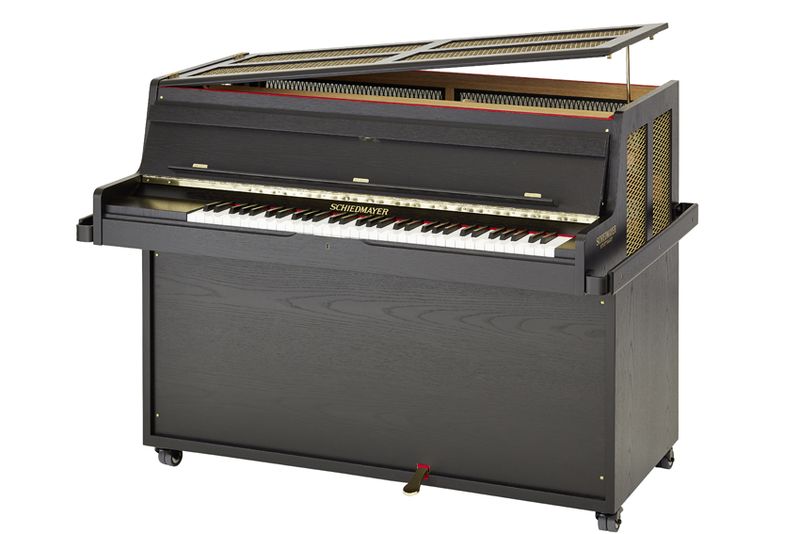
The celesta () or celeste (), also called a bell-piano, is a struck idiophone operated by a keyboard. It looks similar to an upright piano (four- or five-octave), albeit with smaller keys and a much smaller cabinet, or a large wooden music box (three-octave). The keys connect to hammers that strike a graduated set of metal (usually steel) plates or bars suspended over wooden resonators. Four- or five-octave models usually have a damper pedal that sustains or damps the sound. The three-octave instruments do not have a pedal because of their small "table-top" design. One of the best-known works
Key facts
- Instrument.name
- Celesta
- Instrument.names
- Celeste
- Instrument.image
- Celesta Schiedmayer Studio.jpg
- Instrument.background
- keyboard
- Instrument.classification
- IdiophoneMetallophone
- Instrument.hornbostel_sachs
- 111.222
- Instrument.hornbostel_sachs_desc
- sets of percussion plaques
- Instrument.range
- C3 – F8
- Instrument.related
- Glockenspiel
- Instrument.sound sample
- Excerpt from Raymonda by Alexander Glazunov, arranged for solo celesta and performed by Celia García-García
via Wikipedia infobox
Wikidata facts
- Subclass of
- keyboard instrument
- Image
- Celesta.jpg
Show 6 more facts
- Commons category
- Celestas
- Commons gallery
- Celesta
- described by source
- Brockhaus and Efron Encyclopedic Dictionary
- Hornbostel-Sachs classification
- 111.222
- on focus list of Wikimedia project
- Wikipedia:Vital articles/Level/4
- different from
- keyboard glockenspiel
Sources (1)
via Wikidata · CC0
~11 min read
Encyclopedic overview
11 sectionsContents
- History
- Use in other musical genres
- Jazz
- Rock and pop
- Soundtrack
- Manufacturers
- Substitutes
- See also
- Notes
- References
- External links
The celesta () or celeste (), also called a bell-piano, is a struck idiophone operated by a keyboard. It looks similar to an upright piano (four- or five-octave), albeit with smaller keys and a much smaller cabinet, or a large wooden music box (three-octave). The keys connect to hammers that strike a graduated set of metal (usually steel) plates or bars suspended over wooden resonators. Four- or five-octave models usually have a damper pedal that sustains or damps the sound. The three-octave instruments do not have a pedal because of their small "table-top" design. One of the best-known works that uses the celesta is Pyotr Ilyich Tchaikovskys "Dance of the Sugar Plum Fairy" from The Nutcracker.
The sound of the celesta is similar to that of the glockenspiel, but with a much softer and more subtle timbre. This quality gave the instrument its name, celeste, meaning "heavenly" in French. The celesta is often used to enhance a melody line played by another instrument or section. Its musical parts are often the duplicate of a theme played on flute, harp or piano; sometimes even a real solo part. It is also used in chamber music, but there are very few concertos written for it. The delicate, bell-like sound is not loud enough to be used in full ensemble sections.
Excerpted from Wikipedia’s “celesta” article, available under the CC BY-SA 4.0 licence.