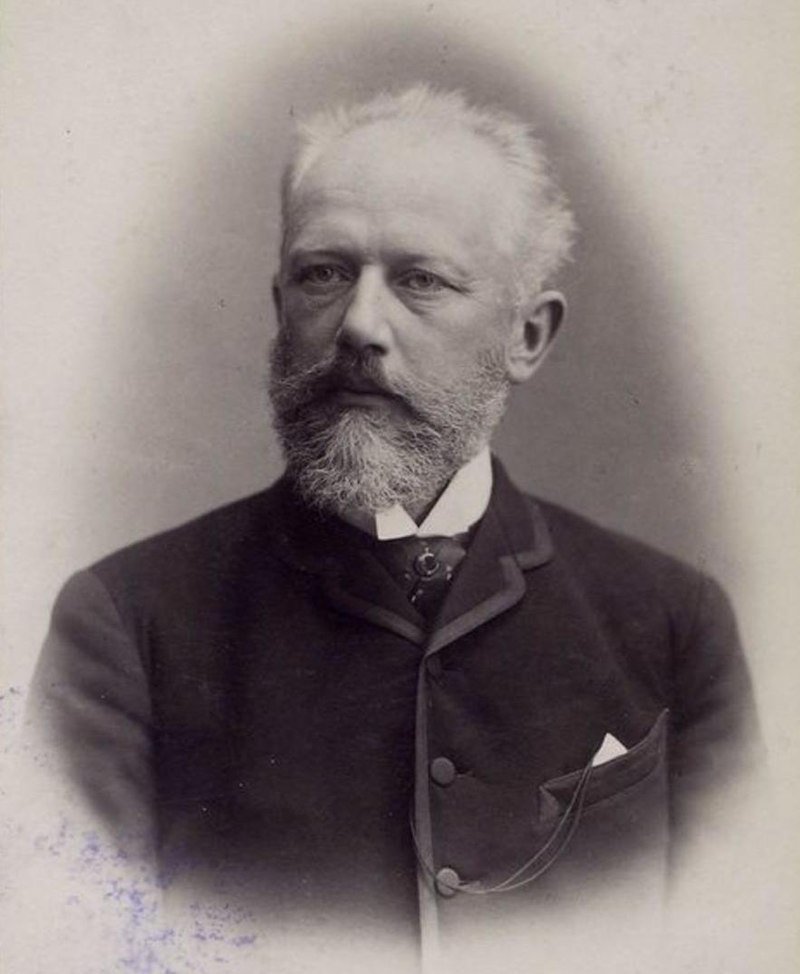
File:Tchaikovsky_by_Reutlinger_(cropped).jpg · Wikimedia Commons · See Wikimedia Commons
Pyotr Ilyich Tchaikovsky
Sign in to saveAlso known as Pyotr Il'yich Tchaikovsky, Pyotr Tchaikovsky, Peter Ilich Tchaikovsky, Tchaikovsky, Peter Tchaikovsky, Pyotr Il'ich Chaikovskiy, Tschaikowski, Tschaikowsky
Russian composer (1840–1893)
OverviewAI-generated
Pyotr Ilyich Tchaikovsky was a Russian composer, librettist, conductor, and choreographer born in Votkinsk in 1840. He studied at the Imperial School of Jurisprudence and the Saint Petersburg Conservatory, where his instructors included Nikolai Zaremba and Anton Rubinstein. His professional career involved work in Saint Petersburg and Moscow, and he was employed by the Moscow Conservatory and the University of Washington. He composed works across the genres of symphony, opera, ballet, and classical music, including notable pieces such as *Swan Lake*, *The Nutcracker*, *The Sleeping Beauty*, and *Symphony No. 6*.
Tchaikovsky received the Order of St. Vladimir and was described in sources such as the *Brockhaus and Efron Encyclopedic Dictionary* and the *Encyclopædia Britannica* 11th edition. He spoke Russian, French, and German, and played the piano. His field of work encompassed music composing, music-learning theory, music education, and music. He died in Saint Petersburg in 1893 and is buried at Tikhvin Cemetery. His siblings included Modest Tchaikovsky.
Synthesized by Vinony from 34 facts across 5 sources: Wikidata, MusicBrainz, Last.fm, TMDb, Europeana Sparql. Generated from structured data (not the Wikipedia text) and checked against those facts — may still contain errors.
Film & TV
Votkinsk, Sarapulsky Uyezd, Vyatka Governorate, Russian Empire [now Votkinsk, Russia]
Pyotr Ilyich Tchaikovsky, was a Russian composer of the romantic period, whose works are among the most popular music in the classical repertoire. He was the first Russian composer whose music made a lasting impression internationally, bolstered by his appearances as a guest conductor in Europe and the United States. He was honored in 1884 by Emperor Alexander III, and awarded a lifetime pension.…
via TMDB
Listeners · Last.fm
- Listeners
- 2,026,516
- Total plays
- 40,453,960
Tags
Similar artists
Pyotr Ilyich Tchaikovsky (Russian: Пётр Ильич Чайковский) (7th May 1840-6th November 1893; Old Style 25th April 1840–25th October 1893) was a Russian composer. He wrote some of the world's most popular concert and theatrical music in the current classical repertoire, including the ballets Swan Lake and The Nutcracker, the 1812 Overture, his First Piano Concerto, several symphonies, and the opera Eugene Onegin. His names are also transliterated Piotr <a href="https://www.last.fm/music/Pyotr+Ilyich+Tchaikovsky">Read more on Last.fm</a>
Wikidata facts
- Instance of
- human
- Given name
- Pyotr
- Gender
- male
- Citizenship
- Russian Empire
- Place of birth
- Votkinsk
- Spouse
- Antonina Miliukova
- Occupation
- university teacher
- Position held
- professor
- Educated at
- Imperial School of Jurisprudence
- Employer
- University of Washington
- Languages spoken
- German
- Native language
- Russian
- Religion
- Eastern Orthodoxy
- Notable work
- The Queen of Spades
- Academic degree
- Doctor of Music
- Student of
- Anton Rubinstein
- Field of work
- music
- Genre
- classical music
- Instrument
- piano
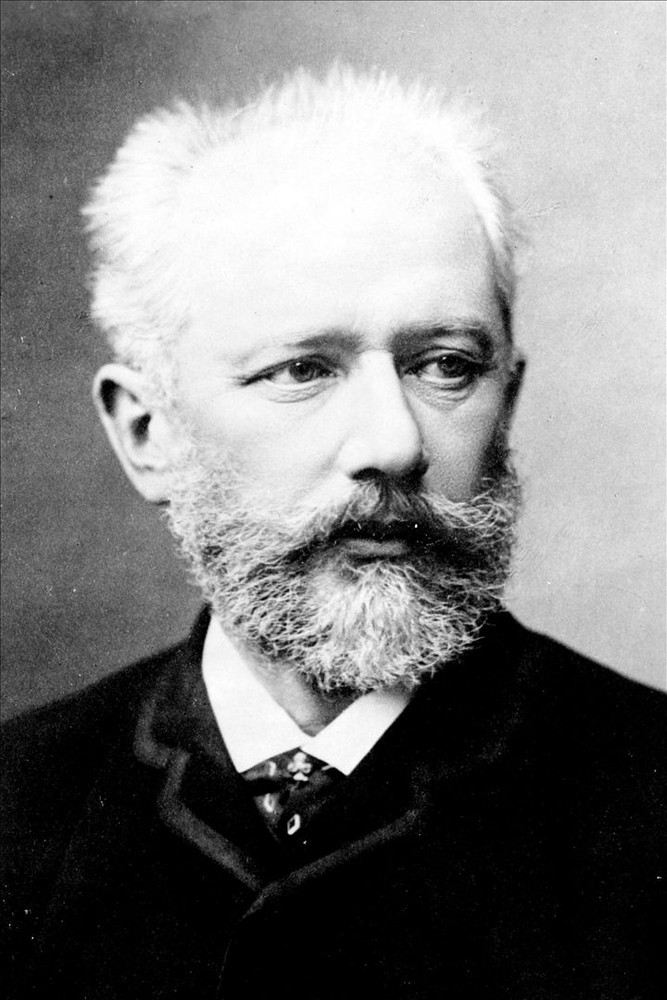
- Image
- Porträt des Komponisten Pjotr I. Tschaikowski (1840-1893).jpg
- Number of children
- 0
- Work location
- Moscow
- Residence
- Europe
Show 23 more facts
- Significant event
- baptism
- Commons category
- Pyotr Ilyich Tchaikovsky
- date of birth
- 1840-05-07
- date of death
- 1893-10-25
- topic's main category
- Category:Pyotr Ilyich Tchaikovsky
- Commons Creator page
- Pyotr Ilyich Tchaikovsky
- transliteration or transcription
- Tschaikowsky
- place of burial
- Tikhvin Cemetery
- sponsor
- Nadezhda von Meck
- cause of death
- cholera
- manner of death
- natural causes
- name in native language
- Петръ Ильичъ Чайковскій
- start of work period
- 1859-06-00
- list of works
- list of compositions by Pyotr Ilyich Tchaikovsky
- sexual orientation
- homosexuality
- medical condition
- epilepsy
- copyright representative
- American Society of Composers, Authors and Publishers
- related category
- Category:Compositions by Pyotr Ilyich Tchaikovsky
- end of work period
- 1893-10-16
- P8168
- Pierre Quinon
- P12674
- Château-Richer
- P12749
- Michelle
- archives at
- University Library of Tübingen
Sources (10)
via Wikidata · CC0
Works in European collections
36 objects attributed to Pyotr Ilyich Tchaikovsky, held across European museums, libraries & archives · via Europeana

Musical memories and feuilletons
Ouveture Solennelle [Música notada] : 1818 composée pour grand orchestre á l'occasion de l'inaguration de la cathédrale du Saint-Sauveur á Moscou
Ah! qui brula d'amour [Música notada] :]op. 6, n. 6

Eugene Onegin: Lenski 's Aria: Where are you detached (Distant echo of my youth)/(Tchaikovsky)

Duet Jolanthes with Wodemon: aus der Oper “Jolanthe” (second sequel)/Musik von P. Tschaikowski

Eugene Onegin: Tatiana 's letter scene, Op. 24; (part 1)/Tchaikovsky. (Words by Pushkin)

Sérénade de Don Juan/(Tchaikovsky)

Scena and ballada Tomskogo: iz op. “Pikovaja dama”; (okonč)/muzyka P. Čaikovskogo

“Evgenij Onegin”: Ja ljublju vas, Ol 'ga/(Chajkovskago)

Ouverture, 1812: Ouverture solennele; second part/(Peter I Tchaikovsky)

Where did you escape: (Arie des Lenski); (“Eugene Onegin”)/(Tchaikovsky)

“Evgenij Onegin”: Kuda, kuda vy udalilis/(Chajkovskago)

“Moj milen 'kij družok”: duėt iz op “Pikovaja Dama”

Evgenij Onegin: zaključitel 'naja scena 3-go akta; (prodolženie II-e)/muz. P. Čajkovskogo

Romeo i Džul 'etta: Uvertjura-fantazija (po Šekspiru); (prodolž. 4)/muz. P. Čajkovskogo

Evgenij Onegin: Scena i ariozo Onegina/muz. P. Čajkovskogo

Simfonija No. 4 (f-moll): 2 č. Andantino in modo di canzona (prodolženie)/muz. P. Čajkovskogo

They wrote to me what they deny: from “Eugene Onegin”/von Tschaikowsky

Pique Dame: It dawns/Tchaikovsky

Arija Lenskogo (ok)/P. Tchaikovsky

Duet Jolanthes with Wodemon: from the opera “Jolanthe” (1st sequel)/music by P. Tchaikovsky

Evgenij Onegin: Scena i duet Tatjany i njani/muz. P. Čajkovskogo

Concert No. 1 in B minor Op. 23: 2. Set: (I. part) Andantino simplice; (end) Prestissimo - tempo primo/(Tchaikovsky)

Eugene Onegin: 1st act, letter scene; Tatjana “Und sei 's mein Untergang”/(P. Tchaikovsky)

Kuda, kuda vy udalilis': iz op.: “Evgenij Onegin”/Čaikovskago

Eugene Onegin: Final scene part 1/(Tchaikovsky)

Evgenij Onegin: Final/muz. P. Čajkovskogo

Where did you escape: from “Eugen Onégin”/Tchaikovsky

It goes on midnight: from “Pique-Dame”/from Tchaikovsky

The queen of spades: act II: Scene and arioso (It 's near to midnight); op. 68/(Tchaikovsky)

Orleanskaja deva: Prostite vy; arija Ioanny/Čajkovskago

Eugene Onegin: from Tatjana’s letter scene, 1st act/(Tchaikovsky)

Scena pisma, Evgenij Onegin/S( Unity title)

Arioso ur “Jolanta”/af Tschaikowsky

Air des adieux/(Tchaikovsky)

Where did you escape: from “Eugen Onegin”/von Tschaikowsky
~40 min read
Encyclopedic overview
Pyotr Ilyich Tchaikovsky (/tʃaɪˈkɒfski/ chy-KOF-skee; 7 May 1840 – 6 November 1893) was a Russian composer of the Romantic period. He was the first Russian composer whose music made a lasting impression internationally. Tchaikovsky wrote some of the most popular concert and theatrical music in the classical repertoire, including the 1812 Overture, his First Piano Concerto, the Violin Concerto, the Romeo and Juliet Overture-Fantasy, several symphonies, the opera Eugene Onegin, and the ballets Swan Lake, The Sleeping Beauty and The Nutcracker.
Although musically precocious, Tchaikovsky was educated for a career as a civil servant as there was little opportunity for a musical career in Russia at the time and no public music education system. When an opportunity for such an education arose, he entered the nascent Saint Petersburg Conservatory, from which he graduated in 1865. The formal Western-oriented teaching Tchaikovsky received there set him apart from composers of the contemporary nationalist movement embodied by the Russian composers of The Five, with whom his professional relationship was mixed.
Excerpted from Wikipedia’s “Pyotr Ilyich Tchaikovsky” article, available under the CC BY-SA 4.0 licence.
Gallery (14)
Available in 165 languages
- Español
- Français
- Deutsch
- 中文
- 日本語
- Русский
- Português
- Italiano
- العربية
- abstract
- Afrikaans
- Albanian
- Albanian
- Aragonese
- Armenian
- Assamese
- Asturian
- Aymara
Show 146 more
- azb
- Azerbaijani
- Bahasa Indonesia
- Balinese
- Bangla
- Bashkir
- Basque
- bat_smg
- Bavarian
- be_x_old
- Belarusian
- Bhojpuri
- Bikol
- Bislama
- Bosnian
- Breton
- btm
- Bulgarian
- Buriat
- Burmese
- Catalan
- cbk_zam
- cdo
- Cebuano
- Central Kurdish
- Chamorro
- Chechen
- Chuvash
- Cornish
- Corsican
- Crimean Tatar
- Croatian
- Czech
- Danish
- Egyptian Arabic
- eml
- Erzya
- Esperanto
- Estonian
- Extremaduran
- Faroese
- Fiji Hindi
- Filipino
- Finnish
- Galician
- Georgian
- Greek
- Guarani
- Hakka Chinese
- Hebrew
- Hungarian
- hyw
- Icelandic
- Ido
- Iloko
- Interlingua
- Interlingue
- Irish
- Javanese
- Jju
- Kabyle
- Kalmyk
- Kanuri
- Kara-Kalpak
- Kazakh
- kbp
- Kurdish
- Kyrgyz
- Latin
- Latvian
- Lezghian
- Ligurian
- Lithuanian
- Lombard
- Low German
- Luxembourgish
- Macedonian
- Madurese
- Malagasy
- Malay
- Malayalam
- Maltese
- Manx
- Marathi
- Mari
- Minangkabau
- Mingrelian
- Mirandese
- Mongolian
- nah
- Nederlands
- Newari
- Northern Frisian
- Norwegian
- Norwegian Nynorsk
- Occitan
- olo
- Pampanga
- Pashto
- Picard
- Piedmontese
- Polski
- ppl
- Punjabi
- Quechua
- Romanian
- Rusyn
- Saterland Frisian
- Scots
- Serbian
- Serbian (Latin)
- Sicilian
- simple
- Sindhi
- Slovak
- Slovenian
- Svenska
- Swahili
- Tajik
- Tamil
- Tatar
- Tiếng Việt
- Türkçe
- Tuvinian
- Udmurt
- Ukrainian
- Urdu
- Uzbek
- Venetian
- Veps
- Volapük
- Walloon
- Waray
- Welsh
- Western Panjabi
- Wu Chinese
- Yakut
- Yiddish
- Yoruba
- Zaza
- zh_classical
- zh_min_nan
- zh_yue
- فارسی
- ไทย
- 한국어
via Wikidata sitelinks · CC0