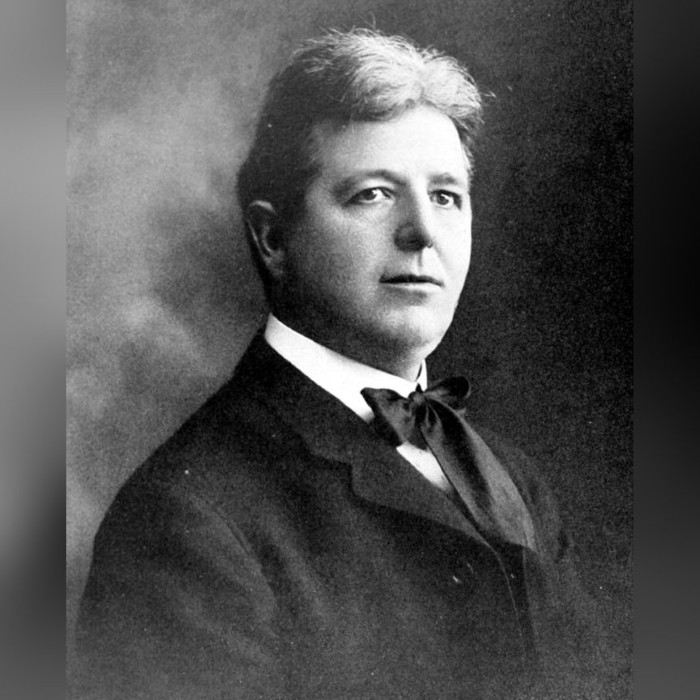
Charles Comiskey · TheSportsDB · Courtesy of TheSportsDB
Charles Comiskey
Sign in to saveAlso known as Charlie Comiskey, Charles A. Comiskey, Charles Albert Comiskey
American baseball player, manager, team owner (1859–1931)
Sports profile
- Sport
- Baseball
- Nationality
- United States
via TheSportsDB
Described at
Charles Comiskey – Society for American Baseball Research
sabr.org →One of the most influential figures in the history of the sport, Charles Comiskey had a 55-year odyssey through professional baseball that ran the gamut: captain of one of the greatest teams of the nineteenth century; league-jumper during the 1890 players’ rebellion; one of the chief architects of the American League’s emergence in 1901 as a major league; longtime owner of one of the league’s most successful franchises, the Chicago White Sox; and a central figure in the 1919 Black Sox Scandal . During his long association with the game, Comiskey was at various points regarded as a labor radical, a visionary executive, and a domineering patriarch who lavished money on his ballpark and the press while at the same time being accused of underpaying his best players. Baseball, Comiskey once wrote, “is the only game that is complicated enough to be always interesting and yet simple enough to be always understood.”1 Ultimately, the same can be said of the Old Roman himself. Charles Albert Comiskey was born in Chicago on August 15, 1859, at the corner of Union and Maxwell Streets, one of seven children of John Comiskey, an Irish immigrant, and his wife, Mary, a native New Yorker. John served at various times as county board clerk, assistant county treasurer, and representative on the Chicago City Council (including as its first president),2 a résumé that may have given young Charlie valuable experience in the ways of backdoor local politics, which he would later put to use in the halls of the American League’s offices. It wasn’t long before Charlie discovered baseball, spending as much time as he could on the old Garden City grounds on the west side of Chicago, enjoying the fledgling game with his neighborhood friends. James T. Hart recalled just before the 1917 World Series how his boyhood pal was already the unspoken leader during their sandlot days in Chicago. He “… seldom went to school more than two months a year,” Hart recalled. “He was the captain of our team. He played all positions, and when any of us were sick, or our parents kept us at home to do the chores, Charlie was ready at a moment’s notice to serve as utility man.”3 Hart also remembered how difficult it was for the team to obtain bats and balls, often using the broken castoffs of older players. “When our team played we would compete on the proposition that the losing team would forfeit a bat. … (W)hen we … were threatened with a loss, Comiskey would start a row with the umpire or the opposing players and break up the game before we lost our bats. He was the foxiest kid in Chicago.” From Father O’Neill’s Holy Family parochial school, through religious colleges in Chicago and Kansas, Comiskey never let his studies interfere with his principal outdoor recreation. He developed into a fairly skilled hurler, but the elder Comiskey objected to his son’s obsession with baseball, and quickly signed him up as an apprentice to a local plumber. Arguments ensued and in 1876, at the age of 17, Comiskey left home to play third base for an independent team in Milwaukee at $50 per month. His manager, Ted Sullivan , became a scout for Comiskey in later years.4 The following season, Comiskey moved on to pitch for Elgin, Illinois. A right-handed thrower and hitter who stood approximately 6 feet tall, Comiskey included in his repertoire a solid fastball and an assortment of curves. Elgin didn’t lose one of his starts all season, despite facing fairly tough competition from around the Chicago area.5 From there, Comiskey shifted to the Dubuque (Iowa) Red Stockings, where he was reunited with Sullivan. Once again a utilityman, he played first base, second base, and the outfield, and pitched. Possibly more importantly, Sullivan also employed Comiskey as a representative of his successful news agency, where Charlie’s 20 percent commission dwarfed his baseball salary. Comiskey stayed with Sullivan’s Dubuque club for four seasons,6 helping the team win the Northwest League pennant in 1879
Excerpt from a page describing this subject · 27,264 chars · not written by Vinony
Wikidata facts
- Instance of
- human
- Given name
- Albert
- Gender
- male
- Citizenship
- United States
- Place of birth
- Chicago
- Place of death
- Eagle River
- Occupation
- baseball manager
- Sport
- baseball
- Position played
- pitcher
- Country for sport
- United States
- Image
- Charles Comiskey.jpg
Show 5 more facts
- Commons category
- Charles Comiskey
- date of birth
- 1859-08-15
- date of death
- 1931-10-26
- described at URL
- sabr.org/bioproj/person/charles-comiskey
- owner of
- Chicago White Sox
via Wikidata · CC0
Available in 10 languages
via Wikidata sitelinks · CC0