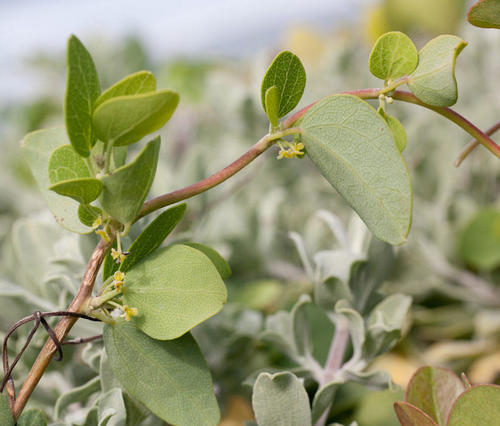
(c) Carina Lochner, some rights reserved (CC BY-NC), uploaded by Carina Lochner · cc-by-nc
Cissampelos
Sign in to saveCissampelos is a genus of flowering plants in the family Menispermaceae. Various species of this genus have a history of use in various traditions of herbal medicine. Moreover, many of these plants were used as curare applied as arrow poison during hunting.
Species
Cape Moonseed Vine
GENUS
- KingdomPlantae
- PhylumTracheophyta
- ClassMagnoliopsida
- OrderRanunculales
- FamilyMenispermaceae
via GBIF · Kew POWO
Museum specimens
- Specimen records
- 1,321
- With media
- 363
- Family
- Menispermaceae
- Collections
- IBUNAM, UCMP, IIB-UV, ECOSUR, NHMUK, CICY
- Recorded in
- Mexico, United States, Colombia, Kenya
Research
152 papers- Cissampelos pareira L.: A review of its traditional uses, phytochemistry, and pharmacology.Journal of ethnopharmacology · 2021
- Phytochemical Constituents and Biological Activities of Plants from the Genus Cissampelos.Chemistry & biodiversity · 2021
- From arrow poison to herbal medicine--the ethnobotanical, phytochemical and pharmacological significance of Cissampelos (Menispermaceae).Journal of ethnopharmacology · 2014
- Secondary Metabolites from Cissampelos, A Possible Source for New Leads with Anti-Inflammatory Activity.Current medicinal chemistry · 2017
- Cytotoxic Polyhydroxylated Oleanane Triterpenoids from Cissampelos pareira var. hirsuta.Molecules (Basel, Switzerland) · 2022
via PubMed
Wikidata facts
- Instance of
- taxon
- Image
- Cissampelos pareira Blanco2.432 edited.jpg
Show 6 more facts
- taxon name
- Cissampelos
- taxon rank
- genus
- topic's main category
- Category:Cissampelos
- taxon common name
- 锡生藤属
- Commons category
- Cissampelos
Sources (2)
via Wikidata · CC0
~2 min read
Encyclopedic overview
3 sectionsContents
- Selected species
- References
- External links
Cissampelos is a genus of flowering plants in the family Menispermaceae. Various species of this genus have a history of use in various traditions of herbal medicine. Moreover, many of these plants were used as curare applied as arrow poison during hunting.
Cissampelos pareira is used in Chinese herbology. The species is also known as abuta in Ayurvedic medicine. The Maasai people of Kenya use Cissampelos mucronata as a forage for their cattle.
Excerpted from Wikipedia’s “Cissampelos” article, available under the CC BY-SA 4.0 licence.