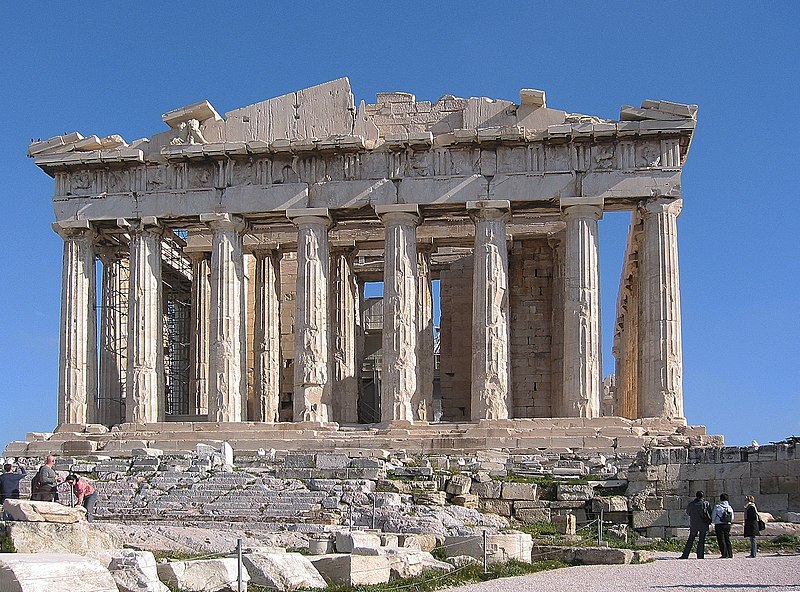
File:2006_01_21_Athènes_Parthénon.JPG · Wikimedia Commons · See Wikimedia Commons
classical antiquity
Sign in to saveAlso known as classic antiquity, classical history
age of the ancient Greeks and Romans
Classical antiquity refers to the period of ancient history dominated by Greek and Roman civilizations, which laid the foundational achievements in philosophy, government, art, and literature that profoundly shaped Western culture. It matters because the ideas, institutions, and cultural practices developed during this era continue to influence how modern societies think, govern themselves, and create art today.
AI-generated from the Wikipedia summary — may contain errors.
~27 min read
Encyclopedic overview
↓ Future v t e
Classical antiquity, also known as the classical era, classical period, classical age, or simply antiquity, is the period of cultural European history between the 8th century BC and the 5th century AD. It comprises the interwoven civilizations of ancient Greece and Rome, known together as the Greco-Roman world, which played a major role in shaping the culture of the Mediterranean basin. It is the period during which ancient Greece and Rome flourished and had major influence throughout much of Europe, North Africa, and West Asia. Classical antiquity was succeeded by late antiquity.
Excerpted from Wikipedia’s “classical antiquity” article, available under the CC BY-SA 4.0 licence.
Gallery (12)
Available in 85 languages
- Español
- Français
- Deutsch
- 中文
- 日本語
- Русский
- Português
- Italiano
- العربية
- हिन्दी
- Afrikaans
- Albanian
- Albanian
- Armenian
- Asturian
- Azerbaijani
- Bahasa Indonesia
- Bangla
Show 66 more
- Bashkir
- Basque
- Bavarian
- be_x_old
- Belarusian
- Bhojpuri
- Bosnian
- Bulgarian
- Catalan
- Central Kurdish
- Chuvash
- Croatian
- Czech
- Danish
- Egyptian Arabic
- Esperanto
- Estonian
- Finnish
- Galician
- Georgian
- Greek
- Hebrew
- Hungarian
- Icelandic
- Ido
- Interlingue
- Kazakh
- Kyrgyz
- Latin
- Latvian
- Ligurian
- Lingua Franca Nova
- Lithuanian
- lld
- Low German
- Macedonian
- Malagasy
- Malay
- Minangkabau
- Nederlands
- Norwegian
- Norwegian Nynorsk
- Occitan
- Pashto
- Romanian
- Sardinian
- Serbian
- Serbian (Latin)
- simple
- Slovenian
- Svenska
- Tajik
- Tamil
- Tiếng Việt
- Türkçe
- Ukrainian
- Urdu
- Uzbek
- Western Frisian
- Western Panjabi
- Wu Chinese
- zh_min_nan
- zh_yue
- فارسی
- ไทย
- 한국어
via Wikidata sitelinks · CC0