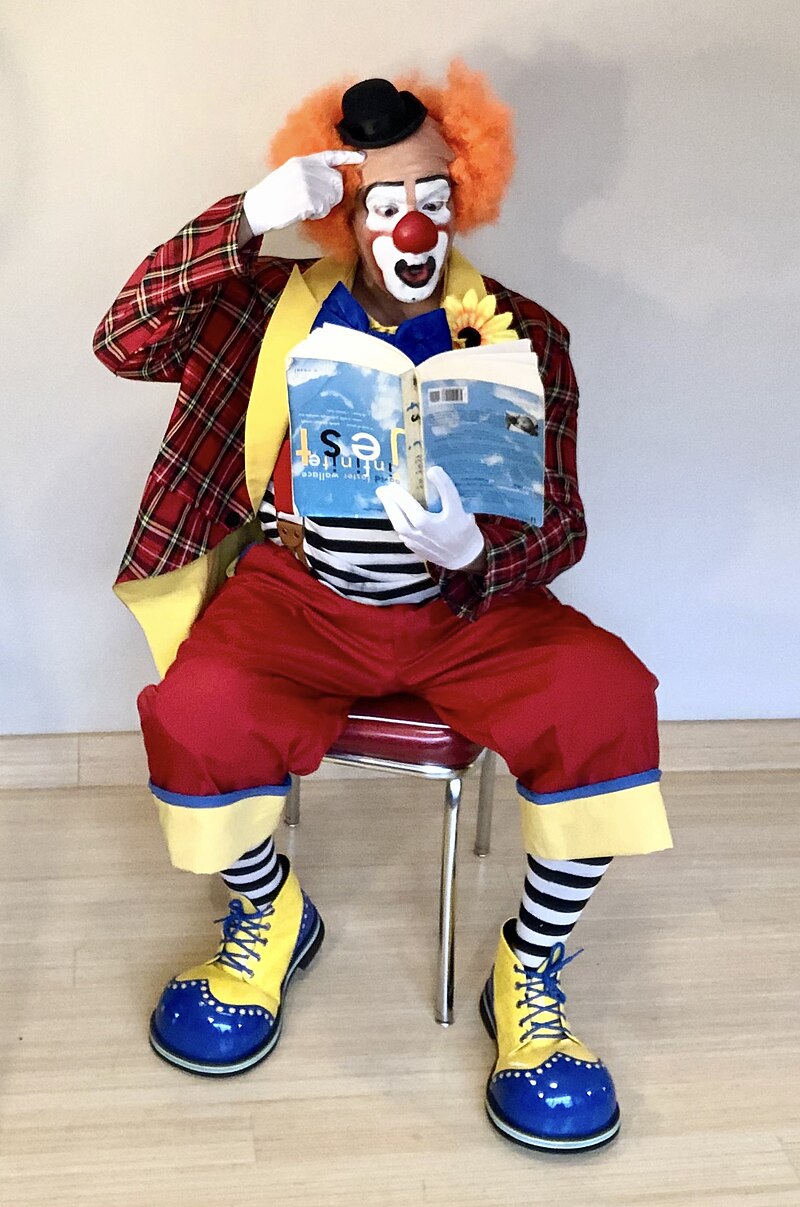
File:Auguste_clown_reading_a_book_upside-down.jpg · Wikimedia Commons · See Wikimedia Commons
pagliaccio
Sign in to saveAlso known as klaunky
personaggio che ha il compito di divertire gli spettatori, specie negli spettacoli circensi
A clown is a performer who uses physical comedy and artistic skills to entertain audiences, typically while wearing distinctive makeup or costumes and breaking social norms in deliberate ways. This type of performance, rooted in a long tradition of entertainers like jesters and fools, remains significant as a form of comedy and artistic expression that can challenge and amuse viewers through exaggeration and rule-breaking.
AI-generated from the Wikipedia summary — may contain errors.
Key facts
- Performing art.name
- Clown
- Performing art.image
- File:Auguste clown reading a book upside-down.jpg
- Performing art.caption
- A typical clown of the Western "buffoon" tradition
- Performing art.medium
- Physical comedy, acting, mime
- Performing art.types
- circus, contemporary circus, comedy, theatre, television, film
- Performing art.ancestor
- Jester
- Performing art.descendant
- Harlequinade, comedian
via Wikipedia infobox
Wikidata facts
- Subclass of
- circus performer
- Field of work
- circus
- Image
- Clown Civertan.jpg
- Work location
- circus
- Field of occupation
- clownery
Show 10 more facts
- ISCO-88 occupation class
- 3474
- described by source
- Encyclopædia Britannica 11th edition
- Commons category
- Clowns
- Commons gallery
- Clowns
- topic's main category
- Category:Clowns
- female form of label
- klounė
- Unicode character
- 🤡
- male form of label
- pallaso
- different from
- Clown
- on focus list of Wikimedia project
- Wikipedia:Vital articles/Level/4
Sources (3)
via Wikidata · CC0
Article · Italiano
Il pagliaccio (derivato di "paglia", dall'abito tradizionale che ricorda la tela grezza di rivestimento di un pagliericcio), noto anche con l'inglese clown (derivato dall'islandese klunni in italiano goffo), è quel personaggio che ha il compito di divertire gli spettatori, specie negli spettacoli circensi. È generalmente vestito in modo buffo, ma non mancano esempi di personaggi più romantici (ad esempio alcuni pagliacci hanno disegnata una lacrima sul viso e un abbigliamento relativamente più sobrio) o versioni cattive, in questo caso nel cinema o nella letteratura dell'orrore. Nel linguaggio corrente, il termine può essere riferito anche a un modo comportamentale, tipico di una persona poco credibile o avvezza a non prendere sul serio un argomento, sinonimo di buffone, in senso non necessariamente negativo, chi ama far divertire il proprio gruppo.
Abstract from DBpedia / Wikipedia · CC BY-SA
Gallery (20)
Available in 81 languages
- Español
- Français
- Deutsch
- 中文
- 日本語
- Русский
- Português
- Italiano
- العربية
- हिन्दी
- Afrikaans
- Albanian
- Albanian
- Armenian
- Asturian
- Azerbaijani
- Bahasa Indonesia
- Basque
Show 62 more
- Bavarian
- Belarusian
- Betawi
- Bulgarian
- Catalan
- Central Kurdish
- Chechen
- Cherokee
- Chuvash
- Croatian
- Czech
- Danish
- eml
- Esperanto
- Estonian
- Filipino
- Finnish
- fiu_vro
- Galician
- Greek
- Haitian Creole
- Hebrew
- Hungarian
- hyw
- Ido
- Ingush
- Irish
- Javanese
- Kazakh
- Latin
- Latvian
- Ligurian
- Lithuanian
- Macedonian
- Malay
- Malayalam
- Moroccan Arabic
- Nederlands
- Norwegian
- Norwegian Nynorsk
- Occitan
- Polski
- Romanian
- Serbian
- Serbian (Latin)
- simple
- Slovenian
- Svenska
- Tamil
- Tatar
- Tiếng Việt
- Türkçe
- Ukrainian
- Volapük
- Waray
- Welsh
- Wu Chinese
- zh_min_nan
- zh_yue
- فارسی
- ไทย
- 한국어
via Wikidata sitelinks · CC0