
File:Jacques_Humbert_-_Colette.jpg · Wikimedia Commons · See Wikimedia Commons
Colette
Sign in to saveAlso known as Sidonie-Gabrielle Colette, Sidonie Gabrielle Colette, Sidonie-Gabrielle-Claudine Colette, Colette Willy
Sidonie-Gabrielle Colette (; 28 January 1873 – 3 August 1954), known mononymously as Colette or as Colette Willy, was a French author and woman of letters. She was also a mime, actress, and journalist. Colette is best known in the English-speaking world for her 1944 novella Gigi, which was the basis for the 1958 film and the 1973 stage production of the same name. Her short story collection The Tendrils of the Vine is also famous in France.
OverviewAI-generated
Colette, born Sidonie-Gabrielle Colette on 28 January 1873 in Saint-Sauveur-en-Puisaye, Yonne, France, was a French novelist, journalist, librettist, and ghostwriter. She wrote in French and was a citizen of France. Her notable works include *Gigi*, *La Chatte*, *Chéri*, and *Green Wheat*. She was affiliated with the Académie Goncourt and the Academie Royale de Langue et de littérature Françaises, and she served as president. She was employed by *Le Figaro*.
She was nominated for the Nobel Prize in Literature and received the Knight, Officer, Grand Officer, and Commander of the Legion of Honour. Colette was married to Henry Gauthier-Villars and Henry de Jouvenel, and was unmarried partners with Mathilde de Morny and Bertrand de Jouvenel. She died on 3 August 1954 in the 1st arrondissement of Paris and was buried at Père Lachaise Cemetery. Her works are held in the collections of the Minneapolis Institute of Art and the National Gallery of Art.
Synthesized by Vinony from 43 facts across 7 sources: Wikidata, Open Library, MusicBrainz, Last.fm, Firecrawl, TMDb, Europeana Sparql. Generated from structured data (not the Wikipedia text) and checked against those facts — may still contain errors.
Person · Open Library
- Born
- 28 January 1873
- Died
- 3 August 1954
- Works
- 645
Top works
- L'éther consolateur
- ג'יג'י
- Colette
- Lettres volées
- Chéri
via Open Library + Wikidata
Film & TV
Saint-Sauveur-en-Puisaye, Yonne, France
Colette's fame extends to being probably the only female writer known by her mononym—She is always and only Colette, though in fact this most feminine of names was her surname: She was born Sidonie-Gabrielle Colette on 28 January 1873 in the French village of Saint-Sauveur-en-Puisaye. Her work—mostly at novella length, short and sharp—survives because her chief subject is one that never goes out…
Known for
- Colette, l'insoumise — Herself - Writer (archive footage)2019
- Paris Was a Woman — Self (archive footage)1996
- Colette1951
- Paris 1900 — Self (archive footage)1948
via TMDB
Music · MusicBrainz
- Type
- Person
- Gender
- Female
- Origin
- France
- Active from
- 1873
- Active to
- 1954
via MusicBrainz · CC0
Listeners · Last.fm
- Listeners
- 106,107
- Total plays
- 688,807
Tags
DJ Colette (born Colette Marino) is an American DJ, producer and classically-trained singer. Her sound is a flow of deep and pumping Chicago house music combined with her own angelic mezzo-soprano voice. She has been championed by DJs like Mark Farina, DJ Sneak and Fred Everything and has collaborated with people like the aformentioned DJ Sneak, Kaskade and Greenskeepers. Her first album is called "Hypnotized" and is a fusion of house, downtempo and pop songs, while her second album "Push" is mo
Key facts
- Writer.image
- Colette - photo Henri Manuel.jpg
- Writer.caption
- Colette, possibly in the 1910s
- Writer.birth_name
- Sidonie-Gabrielle Colette
- Writer.birth_place
- Saint-Sauveur-en-Puisaye, Burgundy, France
- Writer.death_place
- Paris, France
- Writer.resting_place
- Père Lachaise Cemetery
- Writer.children
- Colette de Jouvenel
- Writer.occupation
- Novelist
- Writer.signature
- Colette Willy (signature).svg
via Wikipedia infobox
Described at
Literary Hub » How Colette Was Inspired By Her Many Cats
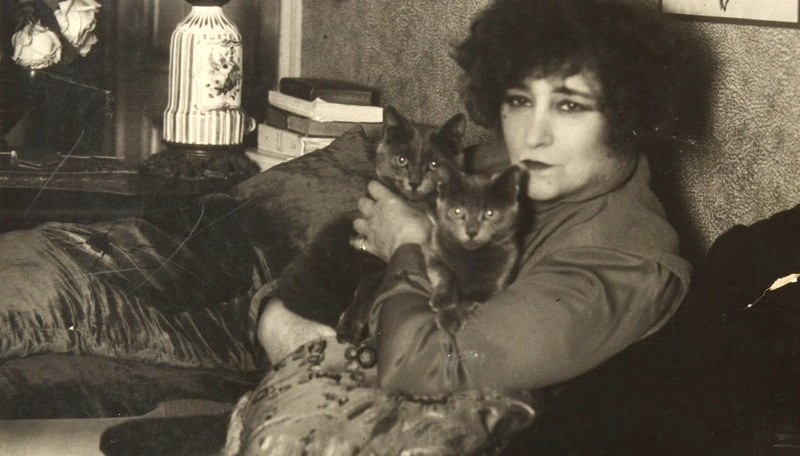
lithub.com →La Chatte condescended to live with Colette (Sidonie-Gabrielle Colette), born in Saint-Sauveur-en-Puisaye, France, in 1873, died in Paris, 1954, novelist, actress and journalist. In 1926 Colette, the famous French novelist, attended an international cat show in Paris. Such events were a relatively new phenomenon in France—the first had been held just twenty years before—and Colette, as a passionate admirer of cats, was eager to see what a cat show had to offer. The very first cat show ever held had been in London two years before Colette’s birth in 1873. This was a national cat competition at the Crystal Palace, and it attracted huge public interest (for the first time a Persian cat was seen by the British public). There is no detailed record, but it appears that somewhere between 150 and 211 cats were on display, and the public queued to admire them. Prizes were awarded for the biggest cat (he weighed 20 lb) and the fattest cat, and people saw for the first time many new, exotic breeds. Soon a second cat show was organized, this time permitting working men and women to enter their moggies for display. Two more shows were held in London, and Scotland also hosted a couple. The result of all this interest was the 1887 founding of the National Cat Club in England, a body which set standards for different breeds and chose judges to award prizes. Colette rejoiced in the sensual nature of cats, the softness of fur, their rarely bestowed gestures of affection, their grace and agility. These shows initiated a feline frenzy in Britain, which rapidly spread to Europe. Soon cat shows and competitions were being held in capital cities—Vienna had one, as did Berlin. Paris, as a city that saw itself as a leader of fashion, couldn’t possibly be left out. The first cat show in France was in 1896, and in 1913 the Cat Club de France was established. By 1924, however, there were ructions and the Cat Club de Paris became an independent body. That club established a stud book and register, the Livres des Origines . Famous people were frequently asked to be judges, to lend cachet to the events—novelists Émile Zola and Pierre Loti were two of them (both writers were cat-fanciers, so were well qualified to be judges). Most of the cat shows were held at the Jardin d’Acclimatation near the Bois de Boulogne. In the late nineteenth century, public interest grew from simply admiring cats in shows to developing new breeds and collecting exotic cats. In 1869 only eight breeds were officially listed in La Vie des animaux illustrée . The latest trend among the bourgeoisie was owning distinguished cats, and Colette was no exception.What held her riveted at the show was a Chartreux cat (an officially listed breed), and before leaving she ordered a kitten from the breeder displaying there. Chartreux are one of the oldest natural breeds in France. They are mentioned in a 1558 poem by Joachim du Bellay, “Vers français sur la mort d’un petit chat” (A small kitten’s death). They are thought to have originated in a Carthusian monastery in the Chartreuse mountains in south-eastern France. They are a large, muscular cat with relatively short limbs, orange or copper-colored eyes, and blueish fur (ranging from ash-grey to deep slate). Exceptional hunters, they were much prized by farmers. They are highly intelligent cats, which can be taught to do many tasks. Chartreux are known for their “smile”—on account of the tapered muzzle. They are calm observers of the world around them. They look rather like the Russian Blue, a breed more familiar outside of France. After World War I steps were taken to preserve the breed, to which end a “breed standard” was written. Generally, they weigh between 7 and 16 lb. It’s the tips of the fur which give the coat a blueish/silvery sheen. The Chartreux is usually a silent cat, giving little chirps or small miaows when wanting attention. They are adaptable, observant and polite animals. Charles de Gaulle admired them and named his Gri
Excerpt from a page describing this subject · 29,318 chars · not written by Vinony
Wikidata facts
- Instance of
- human
- Gender
- female
- Citizenship
- France
- Place of birth
- Saint-Sauveur-en-Puisaye
- Place of death
- 1st arrondissement of Paris
- Spouse
- Henry de Jouvenel
- Child
- Colette de Jouvenel
- Occupation
- writer
- Position held
- president
- Employer
- Le Figaro
- Languages spoken
- French
- Native language
- German
- Notable work
- Green Wheat
- Image
- Colette - photo.jpg
Show 19 more facts
- Commons category
- Colette
- date of birth
- 1873-01-28
- date of death
- 1954-08-03
- topic's main category
- Category:Colette
- birth name
- Sidonie-Gabrielle Colette
- unmarried partner
- Bertrand de Jouvenel
- nominated for
- Nobel Prize in Literature
- pseudonym
- Colette Willy
- has works in the collection
- National Gallery of Art
- writing language
- French
- name in native language
- Sidonie-Gabrielle Colette
- sexual orientation
- bisexuality
- ethnic group
- French
- handedness
- right-handedness
- Commons Creator page
- Colette
- P12749
- Denzil Douglas
- described at URL
- lithub.com/how-colette-was-inspired-by-her-many-cats
Sources (14)
via Wikidata · CC0
Works in European collections
6 objects attributed to Colette, held across European museums, libraries & archives · via Europeana
~20 min read
Encyclopedic overview
18 sectionsContents
- Early life
- Career
- Post divorce
- 1920s and 1930s
- Last years, 1940–1954
- Nobel Prize in Literature
- Journalism
- Death and legacy
- Notable works
- Filmography
- Screenwriter
- Films about Colette
- See also
- References
- Citations
- Bibliography
- Further reading
- External links
Sidonie-Gabrielle Colette (; 28 January 1873 – 3 August 1954), known mononymously as Colette or as Colette Willy, was a French author and woman of letters. She was also a mime, actress, and journalist. Colette is best known in the English-speaking world for her 1944 novella Gigi, which was the basis for the 1958 film and the 1973 stage production of the same name. Her short story collection The Tendrils of the Vine is also famous in France.
==Early life==
Excerpted from Wikipedia’s “Colette” article, available under the CC BY-SA 4.0 licence.
Gallery (15)
Available in 62 languages
- Español
- Français
- Deutsch
- 中文
- 日本語
- Русский
- Português
- Italiano
- العربية
- Afrikaans
- Armenian
- Arpitan
- azb
- Azerbaijani
- Bahasa Indonesia
- Basque
- be_x_old
- Bosnian
Show 43 more
- Breton
- Bulgarian
- Catalan
- Central Kurdish
- Croatian
- Czech
- Danish
- Egyptian Arabic
- Esperanto
- Estonian
- Finnish
- Galician
- Georgian
- Greek
- Hebrew
- Hungarian
- Irish
- Kotava
- Latvian
- Lithuanian
- Luxembourgish
- Macedonian
- Mingrelian
- Nederlands
- Norwegian
- Norwegian Nynorsk
- Piedmontese
- Polski
- Romanian
- Serbian
- Serbian (Latin)
- Slovak
- Svenska
- Tiếng Việt
- Türkçe
- Ukrainian
- Urdu
- Welsh
- Western Panjabi
- Wu Chinese
- zh_min_nan
- فارسی
- 한국어
via Wikidata sitelinks · CC0