Encyclopedia of Life · EOL (see source)
OverviewAI-generated
The common cuttlefish, scientifically named *Sepia officinalis*, is a species within the family Sepiidae. It belongs to the order Sepiida, class Cephalopoda, and phylum Mollusca. The taxon is accepted under the authority of Linnaeus, 1758, and is also referred to by the common names Aluda, Choco, and Coca.
This organism inhabits marine and brackish environments. Its IUCN conservation status is listed as Least Concern, a designation recorded in 2012.
Synthesized by Vinony from 20 facts across 4 sources: Wikidata, WoRMS, IUCN Red List, Vinony graph. Generated from structured data (not the Wikipedia text) and checked against those facts — may still contain errors.
Species
Least ConcernCommon cuttlefish
Species
- PhylumMollusca
- ClassCephalopoda
- OrderSepiida
- FamilySepiidae
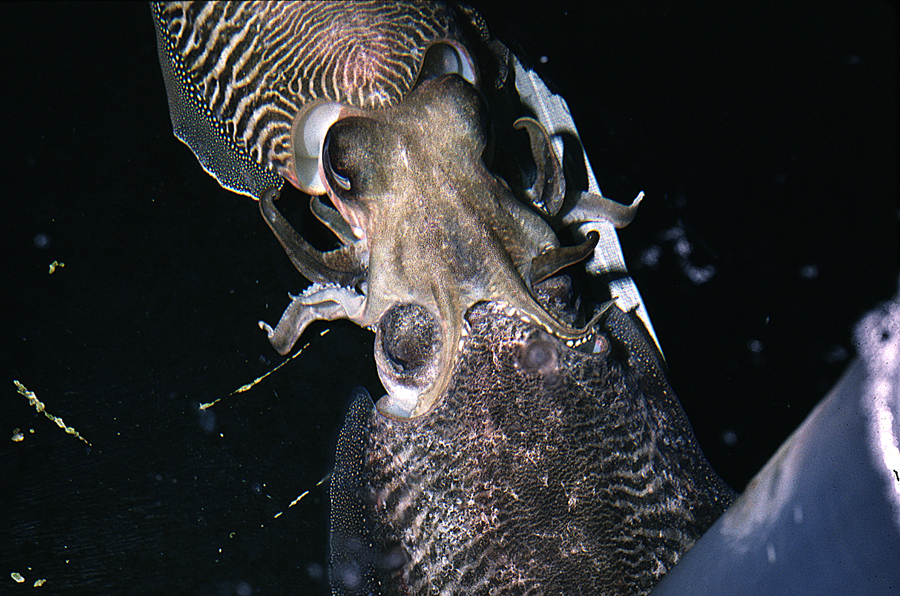
Super fast color changes, mysterious eyes and a spectacular mating ritual. The cuttlefish is an unusual animal. It has a large internal shell as backbone, which serves for improving buoyancy as well as sturdiness. You often find these cuttlebones on the beach. They are sold in pet stores as a source of calcium for caged birds. Cuttlefish are easily frightened; it is difficult to display them in a Sea Aquarium. The common cuttlefish is very common in the North Sea, down to a depth of around 150 meters. In the spring, it migrates via the English Channel to coastal waters to reproduce.
via IUCN
Wikidata facts
- Instance of
- taxon
- Parent taxon
- Sepia
- Image
- Sepia común (Sepia officinalis), Parque natural de la Arrábida, Portugal, 2020-07-21, DD 62.jpg
Show 6 more facts
- Commons category
- Sepia officinalis
- taxon rank
- species
- taxon name
- Sepia officinalis
- IUCN conservation status
- Least Concern
- taxon common name
- Gemeiner Tintenfisch
- short name
- S. officinalis
Sources (3)
via Wikidata · CC0
Article · Nederlands
De gewone zeekat (Sepia officinalis) is een van de bekendste soorten inktvissen. Het is een rondtrekkende soort die de lente en de zomer aan de kust doorbrengt om te paaien en zich vervolgens in de herfst en winter naar diepten van 100 tot 200 meter begeeft. Volwassen soorten in gematigde gebieden ontwikkelen een mantel van ongeveer 50 centimeter. Mannetjes worden niet ouder dan twee tot drie jaar, het vrouwtje leeft zelfs maar een jaar. De gewone zeekat is inheems in vrijwel alle delen van de Middellandse Zee, de Noordzee en de Oostzee. Mogelijk komen ook enkele ondersoorten voor ten zuiden van Zuid-Afrika. De soort leeft voornamelijk op zanderige bodems en kan brak water verdragen.
Abstract from DBpedia / Wikipedia · CC BY-SA