Encyclopedia of Life · EOL (see source)
Species
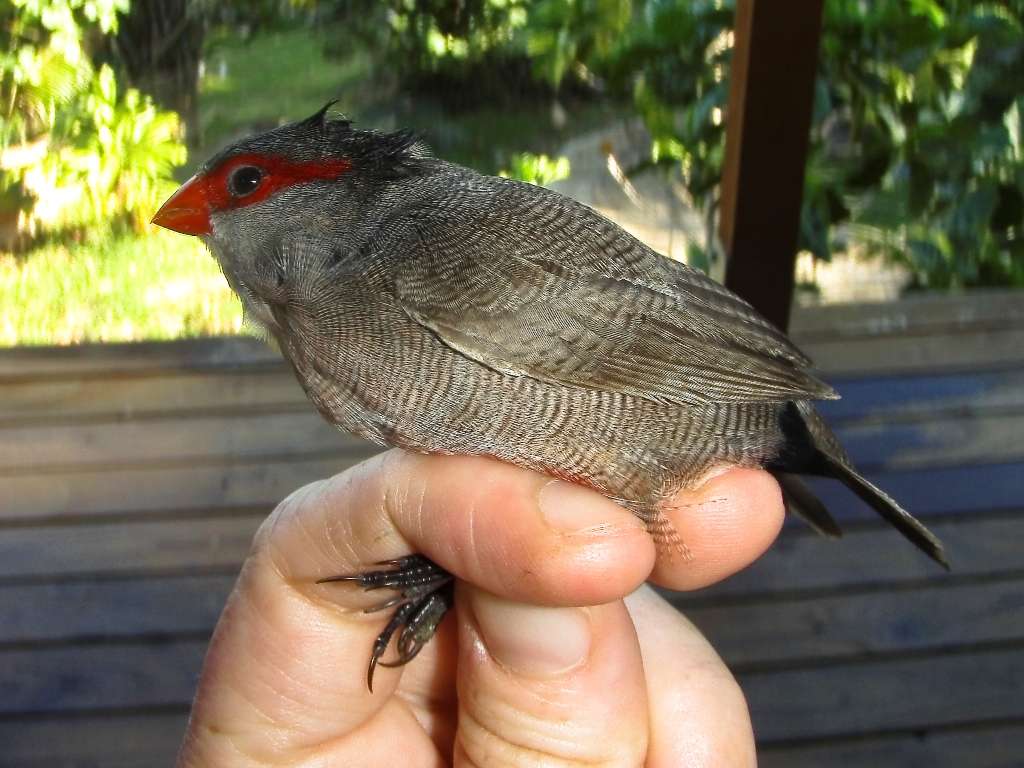
Der Wellenastrild (Estrilda astrild) ist ein Singvogel aus der Familie der Prachtfinken. Die Art bewohnt große Teile Afrikas südlich der Sahara. Für die Art werden in der Regel fünfzehn bis siebzehn Unterarten unterschieden. Diese weisen jedoch zum Teil nur geringfügige Unterscheidungsmerkmale auf und sind in vielen Fällen nur schwer voneinander abgrenzbar. Vielfach verläuft die geographische Variation der Art in Form einer nicht deutlich voneinander gestuften Kline mit zahlreichen Übergangsformen.[1] Der Wellenastrild gilt laut IUCN als häufig und nicht gefährdet. Inhaltsverzeichnis 1 Merkmale 2 Verbreitung 3 Lebensweise 4 Fortpflanzung 5 Haltung 6 Belege 6.1 Literatur 6.2 Weblinks 6.3 Einzelbelege Merkmale Der 11 bis 13 cm lange Wellenastrild erreicht eine Flügelspannweite von 12 bis 14 cm und ein Gewicht von 7 bis 10 g. Das graubraune Gefieder weist eine feine, wellenförmige Bänderung auf. Kehle und Bauch sind blasser. Je nach Unterart kann sich am Bauch auch ein verwaschen-rosa bis leuchtend-roter Streifen befinden. Das Gesicht zeigt einen breiten scharlachroten Augenstreif. Der kegelförmige Schnabel ist siegelwachs-rot gefärbt (davon leitet sich der englische Name Common Waxbi
via
Wikidata facts
- Instance of
- taxon
- Parent taxon
- Estrilda
- Mass
- 8.2
- Image
- Common waxbill (Estrilda astrild tenebridorsa) Kruger.jpg
Show 11 more facts
- taxon rank
- species
- IUCN conservation status
- Least Concern
- taxon name
- Estrilda astrild
- Commons category
- Estrilda astrild
- Commons gallery
- Estrilda astrild
- taxon common name
- bico-de-lacre-comum
- litter size
- 4.9
- egg incubation period
- 12
- taxon range
- Belém
- short name
- E. astrild
- taxon author citation
- (Linnaeus, 1758)
via Wikidata · CC0
~7 min read
Encyclopedic overview
The common waxbill (Estrilda astrild), also known as the St Helena waxbill, is a small passerine bird belonging to the estrildid finch family. It is native to sub-Saharan Africa but has been introduced to many other regions of the world and now has an estimated global extent of occurrence of 10,000,000 km. It is popular and easy to keep in captivity.
Taxonomy
Excerpted from Wikipedia’s “Common Waxbill” article, available under the CC BY-SA 4.0 licence.