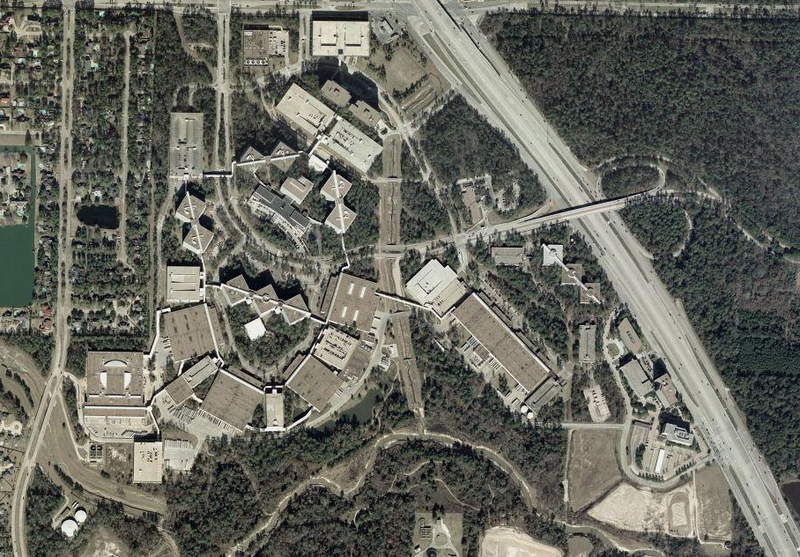
File:HewlettPackardCampusHarrisCoTX.png · Wikimedia Commons · See Wikimedia Commons
Compaq
Sign in to saveAlso known as HP Compaq
Compaq Computer Corporation was an American information technology company founded in 1982 that developed, sold, and supported computers and related products and services. Compaq produced some of the first IBM PC compatible computers, being the second company after Columbia Data Products to legally reverse engineer the BIOS of the IBM Personal Computer. It rose to become the largest supplier of PC systems during the 1990s. The company was initially based in Harris County, Texas.
Key facts
- Company.name
- Compaq Computer Corporation
- Company.type
- Public
- Company.trade_name
- Compaq
- Company.logo
- Compaq logo 1993.svg
- Company.logo_caption
- Wordmark logo used from 1993 to 2007
- Company.image
- HewlettPackardCampusHarrisCoTX.png
- Company.image_caption
- Aerial photo of Compaq's former headquarters in unincorporated Harris County, Texas (circa 2002)
- Company.genre
- Computer
- Company.successor
- Itself (as a brand of Hewlett-Packard; 2002−2013)Hewlett-Packard (2013−2015)HP Inc. (2015−present)
- Company.founders
- Rod CanionJim HarrisBill Murto
- Company.foundation
- 1982
- Company.defunct
- (as a separate company) (as a brand of HP; still active outside of North America)
- Company.location_city
- Harris County, Texas
- Company.location_country
- U.S.
- Company.industry
- Computer hardwareComputer software
- Company.products
- Desktops, laptops, servers, telecom equipment, software
- Company.fate
- Acquired by Hewlett-Packard, brand name retired by HP in 2013
- Company.subsid
- Tandem ComputersDigital Equipment Corporation
via Wikipedia infobox
Described at

History of Compaq Computer Corporation – FundingUniverse
Explore the history, profile and timeline of Compaq Computer Corporation.
fundinguniverse.com →Compaq has become one of the world's most successful companies and today leads the computer industry in market share performance and balance sheet strength. We've achieved this by consistently executing our strategic plans, delivering on our promises and striving to provide customers with the highest levels of innovation and flexibility at the lowest total cost of ownership. By continuing to do so, we believe that we will strengthen our capability to lead the future of computing. Compaq Computer Corporation is the world's largest supplier of personal computers and, as a result of its acquisition of Digital Equipment Corporation in June 1998, is the second largest computer firm in the world (trailing only IBM). In addition to designing, developing, manufacturing, and marketing portables, laptops, desktops, workstations, and servers for businesses and consumers, the company also develops and markets computer hardware, software, solutions, and services. Compaq products are marketed in more than 100 countries worldwide. When International Business Machines Corporation (IBM) introduced its first personal computer (PC) in 1982, Compaq was among dozens of other companies entering the market with IBM clones--computers that look and perform like IBM PCs, and are often less expensive. Compaq set itself apart from other clone manufacturers by becoming an innovator itself, producing IBM-compatible PCs that were faster, superior in quality, and offered additional user features. Compaq's management team also set the company apart from others in the PC industry. Made up of seasoned professionals from Texas Instruments (TI) and IBM, the team's prior experience in the volatile computer industry gave Compaq the tools necessary to survive a period of phenomenal growth in 1983. Compaq's staff also had the technical and business grounding to establish new industry standards on its own--without following IBM. Compaq was established just after an era in which PC entrepreneurs had proliferated. The technological breakthrough of the microprocessor--an extraordinarily powerful semiconductor chip&mdash-abled smaller computers to be built that were also faster, less expensive, and easier to use. Because this much less expensive microprocessor served to miniaturize computers, the demand for PCs increased, and development costs decreased significantly. As a result, many new PC companies were established. While these early companies were successful in technological leadership and often had a flair for marketing, deficiencies in inventory management and quality control eventually led many of them to fail. When Compaq arrived on the scene, venture capitalists were beginning to force many entrepreneurs to turn over control of their companies to more experienced management professionals. As Rosen--who had lost a $400,000 investment in another PC start-up--explained in Management Today in 1985, "In the early days, it was an area for flamboyant people ... who transformed their personalities into companies. Now the business requires a very different kind of manager. It has become a very unforgiving industry." Unlike most new PC companies, Compaq's management had the benefit of the experience of longtime professionals. Prior to joining Compaq, each of its original 20 employees had worked in the computer industry for 15 to 20 years. Their experience in management and engineering at such companies as TI and IBM--two pioneers in the industry&mdash′ovided Compaq with a solid foundation. Compaq's management style was of the kind that was scorned by early iconoclastic PC entrepreneurs. Compaq made decisions by a consensus approach, which allowed every division of the company a say in product development. Compaq also instituted some traditional corporate mechanisms, such as tight fiscal controls and a forecasting system. A key factor in Compaq's growth was a strong cooperative relationship with its dealers. With nearly 90 PCs on the market aimed at business professio
Excerpt from a page describing this subject · 24,311 chars · not written by Vinony
Wikidata facts
- Instance of
- technology company
- Official name
- Compaq Computer Corporation
- Country
- United States
- Headquarters
- Houston
- Owned by
- Hewlett-Packard
- Parent organization
- Hewlett-Packard
- Stock exchange
- Nasdaq
- Legal form
- privately held company
- Official website
- www.compaq.com
- Image
- Compaq Presario 1200.jpg
Show 9 more facts
- product or material produced
- computer
- Commons category
- Compaq
- inception
- 1982-02-16
- topic's main category
- Category:Compaq
- ACM Classification Code (2012)
- 10011183
- replaces
- Digital Equipment Corporation
- dissolved, abolished or demolished date
- 2002-05-07
- replaced by
- Hewlett-Packard
Sources (4)
via Wikidata · CC0
~60 min read
Encyclopedic overview
25 sectionsContents
- History
- 1982–1990
- Introduction of Compaq Portable
- Compaq Deskpro
- Compaq DeskPro 386
- Compaq SystemPro
- Compaq SLT and LTE
- 1990–1994
- Decline of IBM's offer
- Ouster of co-founders
- Introduction of Compaq Presario
- 1994–2002
- Joint ventures, partnerships and alliances
- Management shuffle, acquisitions and ouster of Pfeiffer
- Struggles
- Acquisition by Hewlett-Packard
- 2002–2013
- 2013–present
- Headquarters
- Competitors
- Sponsorship
- See also
- Notes
- References
- External links
Compaq Computer Corporation was an American information technology company founded in 1982 that developed, sold, and supported computers and related products and services. Compaq produced some of the first IBM PC compatible computers, being the second company after Columbia Data Products to legally reverse engineer the BIOS of the IBM Personal Computer. It rose to become the largest supplier of PC systems during the 1990s. The company was initially based in Harris County, Texas.
The company was formed by Rod Canion, Jim Harris, and Bill Murto, all of whom were former Texas Instruments senior managers. All three had left Compaq in 1991 due to an internal shakeup, and saw Eckhard Pfeiffer appointed as president and CEO, who served throughout the 1990s. Ben Rosen provided the venture capital financing for the fledgling company and served as chairman of the board for 17 years from 1983 until September 28, 2000, when he retired and was succeeded by Michael Capellas, who served as its last chairman and CEO until its merger.
Excerpted from Wikipedia’s “Compaq” article, available under the CC BY-SA 4.0 licence.