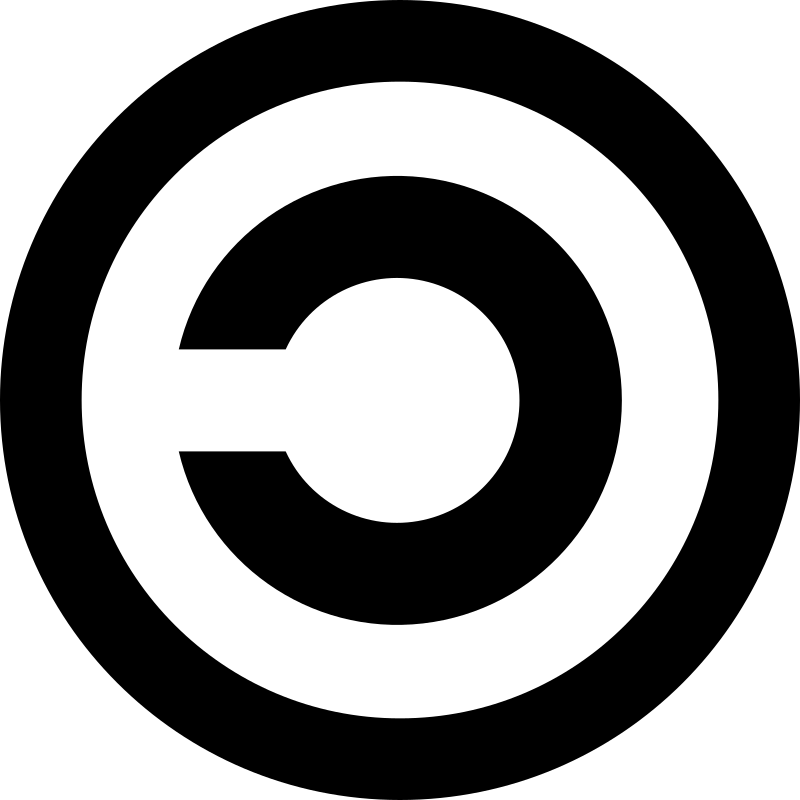
File:Copyleft.svg · Wikimedia Commons · See Wikimedia Commons
Copyleft is a licensing approach that uses copyright law to ensure software (or other creative works) remains free and open for others to use, modify, and share. It matters because it creates a legal framework that prevents people from taking these freely available works and turning them into proprietary products, keeping them accessible to everyone.
AI-generated from the Wikipedia summary — may contain errors.
Key facts
- Symbol.mark
- ©
- Symbol.name
- Copyleft symbol
- Symbol.unicode
- 🄯
via Wikipedia infobox
Wikidata facts
- Subclass of
- economics of property rights
- Named after
- left-wing
- Based on
- copyright
- Movement
- free-culture movement
- Developer
- الجميع
- Has use
- free content
Show 10 more facts
- described at URL
- [email protected]
- different from
- share-alike
- discoverer or inventor
- Richard Stallman
- topic's main category
- Category:Copyleft
- Commons category
- Copyleft
- Unicode character
- 🄯
- partially coincident with
- open educational resource
- uses
- share-alike
- opposite of
- copyright
- P13411
- Jim Clark
via Wikidata · CC0
Article · 日本語
コピーレフト(英: copyleft)は、著作権(英: copyright)に対する考え方で、著作権を保持したまま、二次的著作物も含めて、すべての者が著作物を利用・再配布・改変できなければならないという考え方である。リチャード・ストールマンがフリーソフトウェア運動の一環として熱心に広めた考えである。コンピュータプログラムの特にバイナリに変換されることを前提としたソースコードについてのものであったが、その後、CC BY-SAなどを用いてソースコード以外の著作物にも適用しようという動きがある。
Abstract from DBpedia / Wikipedia · CC BY-SA
Gallery (5)
Available in 64 languages
- Español
- Français
- Deutsch
- 中文
- 日本語
- Русский
- Português
- Italiano
- العربية
- हिन्दी
- Afrikaans
- Albanian
- Armenian
- Asturian
- Azerbaijani
- Bahasa Indonesia
- Bangla
- Basque
Show 45 more
- be_x_old
- Bulgarian
- Catalan
- Croatian
- Czech
- Danish
- Esperanto
- Estonian
- Finnish
- Galician
- Greek
- Hebrew
- Hungarian
- Icelandic
- Interlingua
- Kara-Kalpak
- Kurdish
- Latin
- Latvian
- Lithuanian
- Lombard
- Macedonian
- Malay
- Malayalam
- Mari
- Nederlands
- Norwegian
- Norwegian Nynorsk
- Polski
- Romanian
- Serbian
- Serbian (Latin)
- simple
- Slovak
- Slovenian
- Svenska
- Tamil
- Telugu
- Tiếng Việt
- Türkçe
- Ukrainian
- Wu Chinese
- فارسی
- ไทย
- 한국어
via Wikidata sitelinks · CC0