Encyclopedia of Life · EOL (see source)
Corallimorpharia
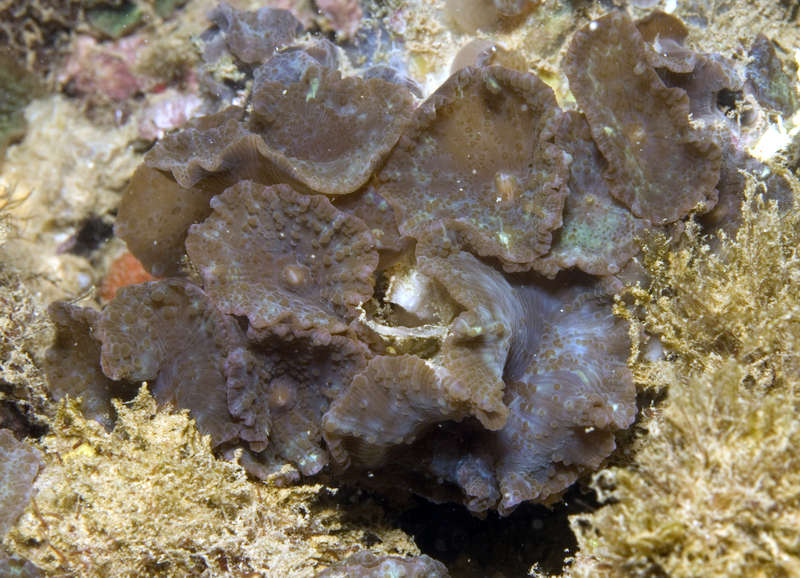
Sign in to saveCorallimorpharia is an order of marine cnidarians closely related to stony or reef building corals (Scleractinia). They occur in both temperate and tropical climates, although they are mostly tropical. Temperate forms tend to be very robust, with wide and long columns, whereas tropical forms tend to have very short columns with a wide oral disc and very short tentacles. The tentacles are usually arranged in rows radiating from the mouth. Many species occur together in large groups, although there are recorded instances of individuals. In many respects, they resemble the stony corals, except fo
Species
coral anemones
ORDER
- KingdomAnimalia
- PhylumCnidaria
- ClassAnthozoa
- OrderCorallimorpharia
Corallimorpharia (лат.) — отряд коралловых полипов (Anthozoa), насчитывающий 24 вида. Отряд близок к актиниям. Эта небольшая группа кораллов не имеет жёсткого наружного скелета. Щупальца в кольце вокруг рта часто с булавовидными концами.
via GBIF
Wikidata facts
- Image
- Mushroom Coral Morning.jpg
Show 3 more facts
- Commons category
- Corallimorpharia
- taxon name
- Corallimorpharia
- taxon common name
- 骨無珊瑚目
Sources (1)
via Wikidata · CC0
~2 min read
Article
3 sectionsContents
- Taxonomy
- References
- External links
Corallimorpharia is an order of marine cnidarians closely related to stony or reef building corals (Scleractinia). They occur in both temperate and tropical climates, although they are mostly tropical. Temperate forms tend to be very robust, with wide and long columns, whereas tropical forms tend to have very short columns with a wide oral disc and very short tentacles. The tentacles are usually arranged in rows radiating from the mouth. Many species occur together in large groups, although there are recorded instances of individuals. In many respects, they resemble the stony corals, except for the absence of a stony skeleton. Morphological and molecular evidence suggests that they are very closely related to stony corals.
Corallimorpharians occur in a wide range of marine habitats, and can be associated with phase shifts in coral reef ecosystems that result in a change from a hard-coral dominated reef to a soft-coral dominated one. They have been observed to overgrow reefs in a carpet formation. Many species are also common invertebrates kept in marine aquaria.