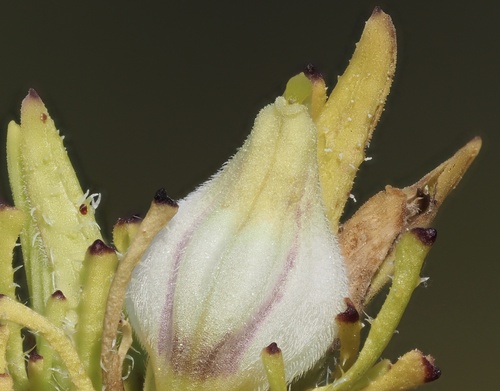
(c) nathantay, some rights reserved (CC BY-NC) · cc-by-nc
Cordylanthus
Sign in to saveCordylanthus (), commonly known as '''bird's beaks''', is a genus of parasitic plants in the broomrape family, Orobanchaceae. These western North American natives are sparse, weedy-looking annuals with long branching erect stems and little foliage, and many bear bird's-beak–shaped flowers. They are remarkable among the broomrapes for growing at searing temperatures in arid climates.
Species
Stiffbranch Bird's Beak
GENUS
- KingdomPlantae
- PhylumTracheophyta
- ClassMagnoliopsida
- OrderLamiales
- FamilyOrobanchaceae
via GBIF
Museum specimens
- Specimen records
- 211
- With media
- 97
- Family
- Orobanchaceae
- Collections
- NY, GH, CMN, RSA, CAS, CHSC
- Recorded in
- United States, Mexico
Wikidata facts
- Instance of
- taxon
- Parent taxon
- Orobanchaceae
- Image
- Chloropyron maritimum ssp palustre.jpg
Show 6 more facts
- taxon name
- Cordylanthus
- taxon rank
- genus
- topic's main category
- Category:Cordylanthus
- Commons category
- Cordylanthus
- taxon common name
- 鸢钩草属
Sources (1)
via Wikidata · CC0
~6 min read
Encyclopedic overview
8 sectionsContents
- Taxonomy
- Systematics
- Etymology
- Description
- Distribution
- Species
- External links
- References
Cordylanthus (), commonly known as '''bird's beaks''', is a genus of parasitic plants in the broomrape family, Orobanchaceae. These western North American natives are sparse, weedy-looking annuals with long branching erect stems and little foliage, and many bear bird's-beak–shaped flowers. They are remarkable among the broomrapes for growing at searing temperatures in arid climates.
==Taxonomy== The first species known was Cordylanthus rigidus, which was described as Adenostegia rigida in 1836 by the well-known English plant taxonomist George Bentham. Thomas Nuttall was another English botanist, an explorer of the former British colony, renamed the United States of America, and its recently acquired French territories to the west, as well as the Mexican and British lands of the far west, returning to England in 1841. In one of Nuttall unpublished manuscripts Bentham found another four species, which Nuttall had described using the name Cordylanthus, despite this being a junior synonym, Bentham fancied this new name more, as he found the etymology to more accurately describe the morphology of the plants, thus in 1846 Bentham published these names in Augustin Pyramus de Candolle's Prodromus Systematis Naturalis Regni Vegetabilis. Bentham also used Nuttall's specific epithet, Cordylanthus filifolius instead of C. rigidus, it took until 1911 before Willis Linn Jepson noticed this was a nomen illegitimum and corrected the name.
Excerpted from Wikipedia’s “Cordylanthus” article, available under the CC BY-SA 4.0 licence.