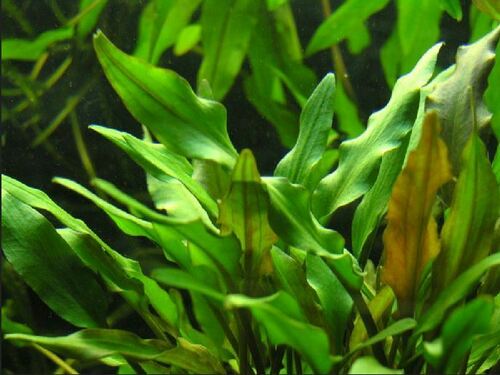
(c) Serguei Ponomarenko, some rights reserved (CC BY-NC), uploaded by Serguei Ponomarenko · cc-by-nc
Cryptocoryne
Sign in to saveCryptocoryne is a genus of aquatic plants from the family Araceae. The genus is naturally distributed in tropical regions of India, Southeast Asia and New Guinea. The English common name "water trumpet" refers to their inflorescence, a spadix enclosed by a spathe (typical for the whole family), which resembles a trumpet. The genus is commonly referred to as Crypts by aquarium hobbyists.
Species
GENUS
- KingdomPlantae
- PhylumTracheophyta
- ClassLiliopsida
- OrderAlismatales
- FamilyAraceae
via GBIF
Museum specimens
- Specimen records
- 77
- With media
- 63
- Family
- Araceae
- Collections
- NY, A, US, CAS, MO
- Recorded in
- China, Indonesia, Thailand, Malaysia, Malaysia/Malaya, Sri Lanka, Netherlands, Laos
Wikidata facts
- Instance of
- taxon
- Parent taxon
- Cryptocoryneae
- Image
- Cryptocoryne wendtii Green.jpg
Show 8 more facts
- has fruit type
- berry
- taxon rank
- genus
- taxon name
- Cryptocoryne
- Commons category
- Cryptocoryne
- topic's main category
- Category:Cryptocoryne
- taxon common name
- 水椒草属
- taxonomic type
- Cryptocoryne spiralis
Sources (1)
via Wikidata · CC0
~9 min read
Encyclopedic overview
8 sectionsContents
- Taxonomy
- Taxonomic history
- Relationship with other genera of Araceae
- Etymology
- Cultivation and uses
- Crypt melt
- Species
- References
Cryptocoryne is a genus of aquatic plants from the family Araceae. The genus is naturally distributed in tropical regions of India, Southeast Asia and New Guinea. The English common name "water trumpet" refers to their inflorescence, a spadix enclosed by a spathe (typical for the whole family), which resembles a trumpet. The genus is commonly referred to as Crypts by aquarium hobbyists.
The typical habitats of Cryptocoryne are mostly streams and rivers with not too rapidly flowing water, in the lowland forest. They also live in seasonally inundated forest pools or on river banks submerged only at high water.
Excerpted from Wikipedia’s “Cryptocoryne” article, available under the CC BY-SA 4.0 licence.