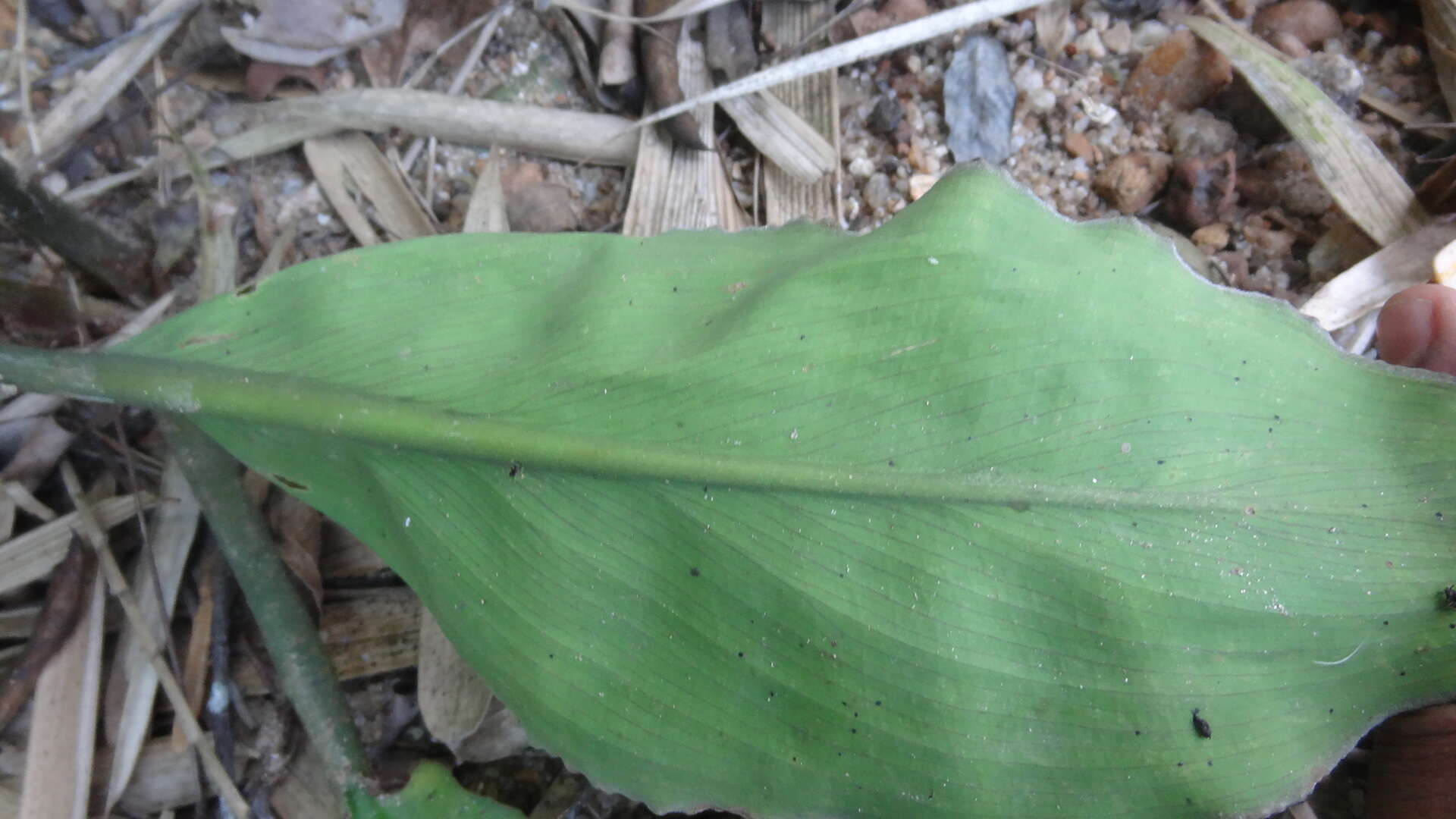
Encyclopedia of Life · EOL (see source)
Lagenandra
Sign in to saveLagenandra is a genus of aquatic (to semi-aquatic) flowering plants in the aroid family, Araceae, endemic to the Indian subcontinent (Bangladesh, India and Sri Lanka). The genus has gradually become more known through the aquascaping and aquarium hobby, in which several related Araceae genera are already highly prized and grown on a large scale (notably Anubias, Bucephalandra and Cryptocoryne); Lagenandra, however, is still relatively rare in cultivation or private collections.
Species
GENUS
- KingdomPlantae
- PhylumTracheophyta
- ClassLiliopsida
- OrderAlismatales
- FamilyAraceae
Lagenandra Dalzell – rodzaj wieloletnich, słodkowodnych helofitów, rzadziej reofitów lub geofitów, należący do rodziny obrazkowatych, liczący 15 gatunków, w większości endemicznych, pochodzących z południowo-wschodnich Indii i Sri Lanki oraz Asamu (L. undulata) i Bangladeszu (L. gomezii). Rośliny z tego rodzaju zasiedlają zacienione płycizny i brzegi rzek i stawów w wilgotnych lasach tropikalnych, a także moczary i okresowo zalewane tereny nizinne. Nazwa naukowa rodzaju pochodzi od greckich słów λάγηνος (lagenos – karafka, butelka) i άνδρός (andros – mężczyzna) i odnosi się do kształtu kwiatów męskich roślin tego rodzaju. Gatunek L. gomezii został umieszczony na Czerwonej Liście Roślin Bangladeszu i jest tam objęty ochroną gatunkową. Gatunek L. toxicaria jest chwastem upraw ryżu.
via GBIF · Kew POWO
Museum specimens
- Specimen records
- 6
- With media
- 3
- Family
- Araceae
- Collections
- MO, K
- Recorded in
- Sri Lanka
Wikidata facts
- Instance of
- taxon
- Parent taxon
- Cryptocoryneae
- Image
- Lagenandra ovata i koenigii DPR.png
Show 6 more facts
- taxon rank
- genus
- taxon name
- Lagenandra
- topic's main category
- Category:Lagenandra
- Commons category
- Lagenandra
- taxon common name
- 椒榕属
Sources (1)
via Wikidata · CC0
~2 min read
Encyclopedic overview
3 sectionsContents
- Description
- Species
- References
Lagenandra is a genus of aquatic (to semi-aquatic) flowering plants in the aroid family, Araceae, endemic to the Indian subcontinent (Bangladesh, India and Sri Lanka). The genus has gradually become more known through the aquascaping and aquarium hobby, in which several related Araceae genera are already highly prized and grown on a large scale (notably Anubias, Bucephalandra and Cryptocoryne); Lagenandra, however, is still relatively rare in cultivation or private collections.
The genus is visually-similar to (and, in places, sympatric with) the Cryptocoryne, but is distinguishable for its involute vernation (leaf growth); comparatively, Cryptocoryne tends to exhibit convolute vernation.
Excerpted from Wikipedia’s “Lagenandra” article, available under the CC BY-SA 4.0 licence.
Gallery (3)
Available in 15 languages
- Español
- 中文
- Português
- Bahasa Indonesia
- Cebuano
- Croatian
- Czech
- Egyptian Arabic
- Polski
- Svenska
- Tiếng Việt
- Türkçe
- Ukrainian
- Waray
via Wikidata sitelinks · CC0