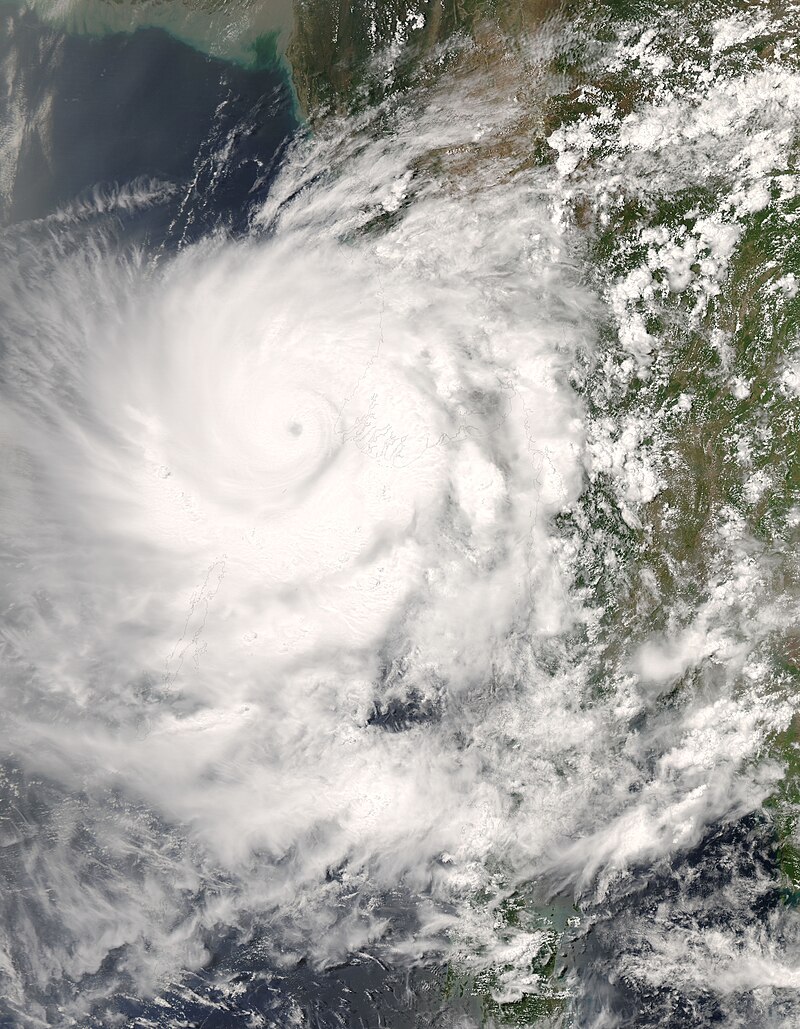
File:Nargis_2008-05-02_0645Z.jpg · Wikimedia Commons · See Wikimedia Commons
Cyclone Nargis
Sign in to saveAlso known as Extremely Severe Cyclonic Storm Nargis
North Indian cyclone in 2008
Key facts
- Formed
- 27 April 2008 ( 2008-04-27 )
- Dissipated
- 3 May 2008 ( 2008-05-03 )
- Highest winds
- 165 km/h (105 mph)
- Lowest pressure
- 962 hPa ( mbar ); 28.41 inHg
- Fatalities
- 138,373 total, (Fifth-deadliest tropical cyclone on record)
- Damage
- $15.3 billion (2008 USD ), ( Third costliest on record in the North Indian Ocean; costliest when adjusted for inflation )
- Areas affected
- Bangladesh Myanmar India Sri Lanka
via Wikipedia infobox
Wikidata facts
- Image
- Nargis 2008-05-02 0645Z.jpg
- Number of deaths
- 138373
Show 5 more facts
- Commons category
- Cyclone Nargis
- lowest atmospheric pressure
- 937
- start time
- 2008-04-25
- end time
- 2008-05-04
- maximum sustained winds
- 90
Sources (2)
via Wikidata · CC0
~40 min read
Encyclopedic overview
Extremely Severe Cyclonic Storm Nargis (Burmese: နာဂစ်) was an extremely deadly and catastrophic tropical cyclone that caused the worst natural disaster in the recorded history of Myanmar during early May 2008. The cyclone made landfall in Myanmar on 2 May 2008, sending a storm surge 40 kilometres up the densely populated Irrawaddy delta, causing catastrophic destruction and at least 138,373 fatalities. The Labutta Township alone was reported to have 80,000 dead, with about 10,000 more deaths in Bogale. There were around 55,000 people missing and many other deaths were found in other towns and areas, although the Myanmar government's official death toll may have been under-reported, and there have been allegations that government officials stopped updating the death toll after 138,000 to minimise political fallout. The feared 'second wave' of fatalities from disease and lack of relief efforts never materialised. Damage was at 13 trillion kyat (US$15.3 billion), making Nargis the costliest tropical cyclone on record in the North Indian Ocean at the time, before that record was broken by Amphan in 2020.
The first named storm of the 2008 North Indian Ocean cyclone season, Nargis developed on 27 April in the central area of Bay of Bengal. Initially, the storm tracked slowly northwestward, and encountering favourable conditions, it quickly strengthened. Dry air weakened the cyclone on 29 April, though after beginning a steady eastward motion, Nargis rapidly intensified to attain peak winds of at least 165 km/h (105 mph) on 2 May, according to IMD observations; the JTWC assessed peak winds of 215 km/h (135 mph), making it a weak Category 4 cyclone on the SSHWS. The cyclone moved ashore in the Ayeyarwady Division of Myanmar at peak intensity and, after passing near the major city of Yangon (Rangoon), the storm gradually weakened until dissipating near the border of Myanmar and Thailand.
Excerpted from Wikipedia’s “Cyclone Nargis” article, available under the CC BY-SA 4.0 licence.