
Tsjechië
Also known as Czechia
land in Centraal-Europa
AI overview
The Czech Republic is a landlocked country in Central Europe bordered by Austria, Germany, Poland, and Slovakia, with a hilly landscape and a temperate climate centered around its capital, Prague. It matters as a significant Central European nation with major cities like Brno, Ostrava, Plzeň, and Liberec that serve as important cultural and economic centers in the region.
AI-generated from the Wikipedia summary — may contain errors.
Weather now
cached 2h ago15°overcast clouds
81% 2.6 m/s OpenWeatherMap
7-day forecast
via Open-Meteo
Country
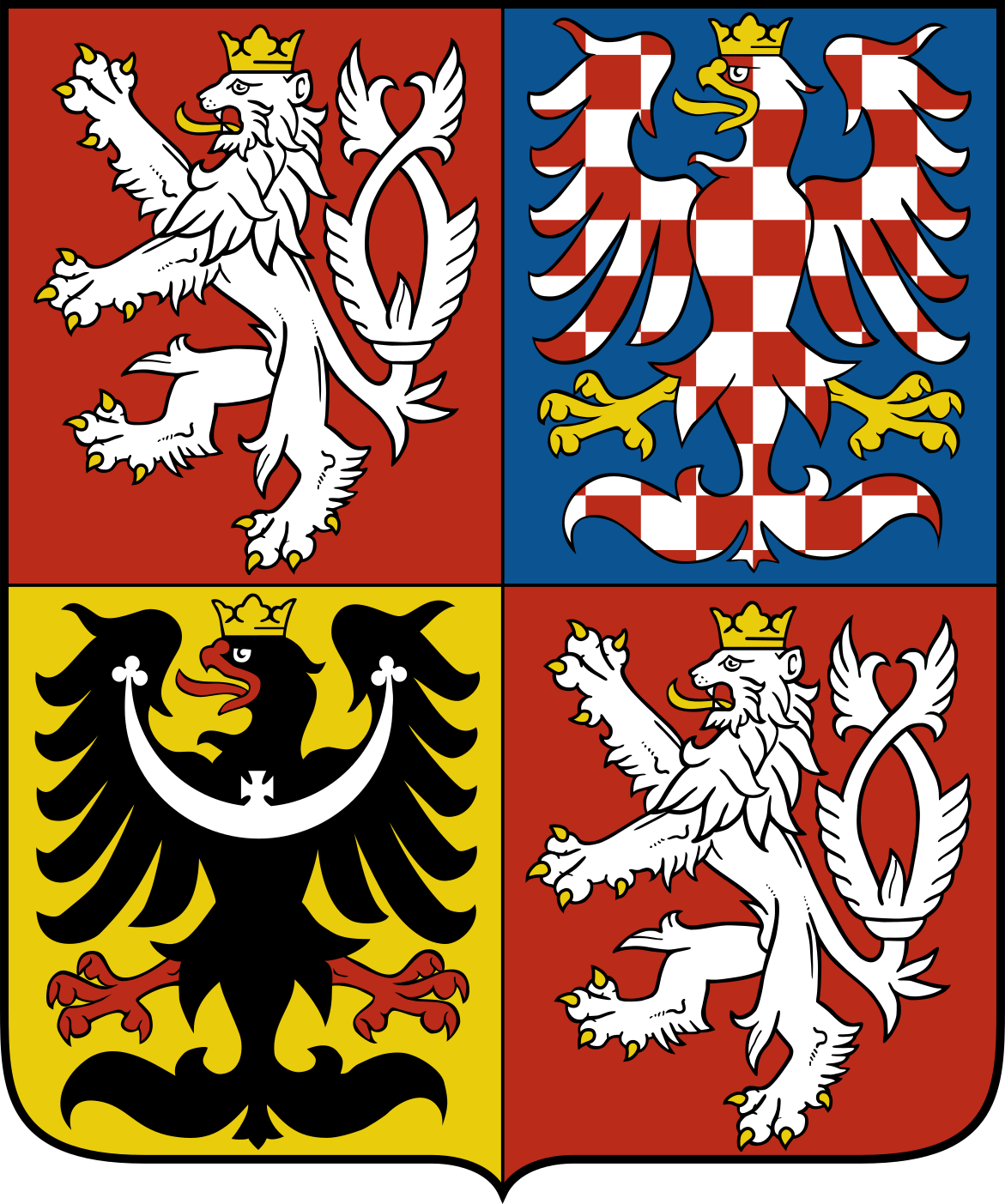

- Capital
- Prague
- Population
- 10,882,341
- Region
Travel guide
Get around
Find your connections on one of following websites: Jízdní řády Seznam Public Transport IDOS (Mobile App)
Both sites cover all Czech trains, buses and city transport and many train and bus lines abroad.
Eat
Like in most other touristy European countries, the main tourist areas are full of tourist trap restaurants serving overpriced and mediocre food. Therefore, it is important that you find pubs and restaurants patronised by Czechs themselves; ask local friends for their recommendations if possible, or try looking at online review sites beforehand. English proficiency can be a hit or miss, and is usually poor to non-existent in more traditional establishments with older waitstaff, so bring along your Czech phrasebook just in case. Also note that service is usually brusque by American standards in pubs and restaurants that primarily serve a local clientele.
In a vast majority of better restaurants located in major cities, you can pay by credit card (ElectronCard/Mastercard, Visa), but don't be surprised if a few will not accept them. Check the door for respective card logos when entering the restaurant or ask the waiter before ordering if you don't carry cash. Czechs sometimes use special meal tickets (stravenky) to pay in some restaurants — these are tax-preferred and subsidised by employers. You won't get these tickets unless you get a job in the Czech Republic; just don't be surprised when you see them.
Many local restaurants serve a "daily menu" (denní menu), which is essentially a two to three-course lunch special at a discounted price. The menus for these will usually be in Czech only, as they are primarily targeted at the local office workers, and are only available at l…
Stay safe
thumb|Yellow taxis outside a yellow building in PragueThe Czech Republic is a safe country. Violent crime is very rare, but scams and pickpocketing are rampant in touristy areas, particularly during the high season.
In case of an emergency, you may dial 112, the standard EU emergency number. You may also dial 150 for the fire brigade, 155 in a medical emergency or 158 for the police.
Some other things of note: Taxi drivers: negotiate the price before you use taxi or use a reputable company (e.g. Liftago, Uber). Prague taxi drivers are known for taking you the longest possible way to earn more money. Prague City Council has introduced new regulations which will see all legitimate taxis painted yellow. Public transportation is also very cheap, fast and reliable. In Prague, the metro runs up to midnight, and night trams run throughout the night, all of them converging at a central tram stop, Lazarská. Pickpockets: Watch your pockets, especially if there is a crowd (sights, subway, trams, in particular numbers 9, 10 and 22) Watch out for large groups of people jostling you. Beware of a particular pickpocket gangs operating in Prague: they are mainly male, although sometimes there are women too; all are extremely overweight and rely on their sheer size and number to disorientate tourists. They tend to operate on the 9, 10 and 22 trams, as well as the central metro stations, usually just as people are getting on and off, or on the escalators. Don't pull out your tickets unless yo…
Article · Nederlands
Tsjechië (Tsjechisch: Česko), officieel de Tsjechische Republiek (Tsjechisch: Česká republika), is een land in Centraal-Europa. Het land grenst in het westen en noordwesten aan Duitsland, in het noorden aan Polen, in het oosten aan Slowakije en in het zuiden aan Oostenrijk. Sinds 1 januari 1993 vormt Tsjechië een zelfstandig land, daarvoor was het het westelijke deel van Tsjecho-Slowakije.
Abstract from DBpedia / Wikipedia · CC BY-SA
Gallery (16)
On the map
2 mapped locations
Connections
Categories
Central EuropeCountries in EuropeCzech RepublicLandlocked countriesMember states of NATOMember states of the Council of EuropeMember states of the European UnionMember states of the Three Seas InitiativeMember states of the United NationsOECD membersRepublicsStates and territories established in 1993