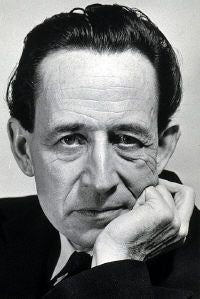
Dane Rudhyar
Sign in to saveAlso known as Daniel Chennevière
French-born American author, composer, and humanistic astrologer (1895–1985)
Person · Open Library
- Born
- March 23, 1895
- Died
- September 13, 1985
- Works
- 119
Top works
- Art, as release of power
- ha-Maḥazor ha-yereḥi
- Le roc enflammé
- New mansions for new men
- The rebirth of Hindu music
via Open Library + Wikidata
Listeners · Last.fm
- Listeners
- 932
- Total plays
- 5,734
Tags
Dane Rudhyar (March 23, 1895, in Paris – September 13, 1985, in San Francisco), né Daniel Chennevière, was a modernist composer and humanistic astrologer. He was the pioneer of modern transpersonal astrology. Rudhyar's own compositions tend to employ dissonant harmony, emphatically not of a systematic variety such as Charles Seeger's—Rudhyar was philosophically opposed to such a rigid approach. His musical thought was influenced by Henri Bergson and theosophy <a href="https://www.last.fm/music/
Described at
Rudhyar, Dane – American Composers Alliance
Explore and purchase sheet music for musical works by composer Dane Rudhyar.
composers.com →Born in Paris, on March 23, 1895, Dane Rudhyar moved to the United States in 1916, where he soon became known as a ultra-modern composer whose ideas about dissonant harmony influenced such composers as Ruth Crawford Seeger, Henry Cowell and Carl Ruggles. Rudhyar was also a painter, philosopher, and author of many books about astrology, psychology, and the cyclical nature of civilization. At age twelve, a severe illness and surgery disabled him and he turned to music and intellectual development to compensate for his lack of physical agility. He studied at the Sorbonne, University of Paris (graduating at age 16) and at the Paris Conservatoire. His early ventures into philosophy and association with the artistic community in Paris led to his conviction that all existence is cyclical in character. His music led him to New York City in 1916, where he composed some of the first polytonal music performed in the United States. He also met Sasaki Roshi, one of the early Japanese Zen teachers in America, who led him in the study of Oriental philosophy and occultism. His interest was further stimulated by his association with Theosophy, which began when he was asked to compose music for a production at the society's headquarters in Los Angeles in 1920. Rudhyar became a naturalized citizen of the United States in 1926. He stayed in California (often commuting to New York) through the 1920s and in 1930 married Marla Contento, secretary to independent Theosophist Will Levington Comfort. Comfort introduced Rudhyar to Marc Edmund Jones, who in turn introduced him to astrology. Over the next two decades Rudhyar continued to write and lecture on astrology, but while he was honored within the astrological community he was little known outside of it. It was not until the 1970s, as the New Age movement emerged, that major publishing houses discovered him and began to publish his writings: among the first was The Practice of Astrology , published in 1970 by Penguin Books. In 1969 Rudhyar founded the International Committee for Humanistic Astrology , a small professional society that would work on the development of his perspective. He began one of the most fruitful periods of his life, turning out several books a year for the next decade. He began to absorb the insights of transpersonal astrology, which concentrated on exploring altered and exalted states of perception, and by the mid-1970s had moved beyond humanistic astrology to what he termed "transpersonal astrology." He also began to reflect upon the New Age movement and wrote several of the more sophisticated volumes on planetary consciousness and New Age philosophy.
Excerpt from a page describing this subject · 18,779 chars · not written by Vinony
Wikidata facts
- Instance of
- human
- Gender
- male
- Citizenship
- France
- Place of birth
- 11th arrondissement of Paris
- Place of death
- San Francisco
- Occupation
- astrologer
- Languages spoken
- English language
- Genre
- classical music
- Image
- Dane Rudhyar.jpg
Show 5 more facts
- date of birth
- 1895-03-23
- date of death
- 1985-09-13
- described at URL
- composers.com/dane-rudhyar
- birth name
- Daniel Léon Chennevière
- name in native language
- Dane Rudhyar
via Wikidata · CC0