Darbhanga
AI overview
I don't have any context provided to write an overview of Darbhanga. Could you please share the context you'd like me to base the overview on?
AI-generated from the Wikipedia summary — may contain errors.
Weather now
cached 30h ago33°clear sky
56% 4.8 m/s OpenWeatherMap
7-day forecast
via Open-Meteo
Place details
- Locality
- Darbhanga
- Region
- Bihar
- Country
- India
- Population
- 296,039
- Timezone
Travel guide
Understand
Darbhanga (duhr-bhung-gah) is a place known for its cultural traditions in music and it is home to the well-known Darbhanga tradition of Dhrupad singing. Some of the important artistes from this tradition include Pt. Ramchatur Mallik, Pt. Siyaram Tiwari, Pt. Vidur Mallik and others. Most of the famous singers of this ancient classical tradition now stay in the bigger Indian cities and there is not much you can do to explore this heritage.
Darbhanga is also known for its mangoes, especially Maldah variety. It is said that Mughal emperor Akbar planted around 50,000 mango trees Darbhanga and it started a tradition of mango plantation in this region. Not much of the mango produce is exported from here and you can still find fresh succulent mangoes directly picked from orchards.
Maithili is the language spoken in this part of the world and it's a member of Indo-European family. Maithili is one of the 22 official national languages of the country and spoken by around 32 million people in Bihar and the Terai region of Nepal.
Get in
Darbhanga is well connected to other parts of India and Bihar through railway and roads.
Get around
Most reliable and easily available local transport is cycle rickshaw. You can also get shared three-wheelers and buses from the railway and bus terminal. Darbhanga is not a small city and you have to take any means of transport around and see places of attraction.
See
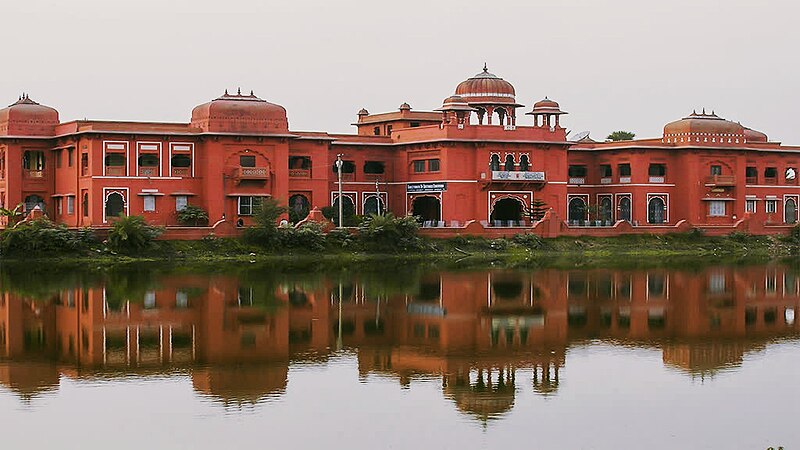
Palaces built by Maharajah of Darbhanga are the most important attractions in Darbhanga. Just a kilometer from bus and train terminal, most of the palaces are located inside a walled campus. There are plenty of temples dedicated to mother Goddess (primarily Kali and Durga) built by erstwhile kings of Darbhanga. Major temples include Shyama Kali Temple and Kankali Temple.
Some of the important palaces are now converted into universities (Lalit Narayan Mithila University and Kameshwar Singh Sanskrit University). Despite decay and chaos all around, you will encounter one of the best examples of Indo-European architectural traditions followed in building these palaces.
Darbhanga Fort is another attraction for outsiders coming to the city. Not much was built inside the fort except a few temples and a house for family deity. Successors of Darbhanga royal clan still stay inside the fort in an almost ruined house surrounded by mango trees.
Gallery (26)
On the map
3 mapped locations