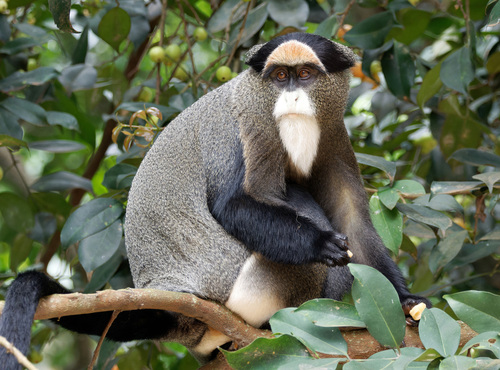
(c) Zoltan BAGOSI, some rights reserved (CC BY-NC), uploaded by Zoltan BAGOSI · cc-by-nc
OverviewAI-generated
De Brazza's monkey, scientifically known as *Cercopithecus neglectus*, is a species of mammal classified within the guenon group. It is also referred to by the common names De Brazza's Guenon, Cercopiteco de Brazza, and Cercopithèque de Brazza. The species was named after Pierre Savorgnan de Brazza.
According to the IUCN Red List, the conservation status of this primate is Least Concern, a designation recorded in 2019. The maximum longevity observed for the species is 30.8 years, which occurred in captivity.
Synthesized by Vinony from 20 facts across 5 sources: Wikidata, iNaturalist, IUCN Red List, Encyclopedia of Life, Vinony graph. Generated from structured data (not the Wikipedia text) and checked against those facts — may still contain errors.
Species
Least ConcernDe Brazza's Monkey
species
Maximum longevity: 30.8 years (captivity)
via IUCN
Wikidata facts
- Instance of
- taxon
- Parent taxon
- Guenon
- Named after
- Pierre Savorgnan de Brazza
- Image
- Brazzameerkatze 1790-2-2.jpg
Show 8 more facts
- taxon rank
- species
- IUCN conservation status
- Least Concern
- taxon name
- Cercopithecus neglectus
- Commons category
- Cercopithecus neglectus
- Commons gallery
- Cercopithecus neglectus
- taxon common name
- سعدان دي برازا
- longest observed lifespan
- 30.8
- short name
- C. neglectus
Sources (2)
via Wikidata · CC0
Article · Français
Cercopithèque de Brazza Cet article est une ébauche concernant les primates. Vous pouvez partager vos connaissances en l’améliorant (comment ?) selon les recommandations du projet primates. Cercopithecus neglectus Cercopithèque de Brazza Espèce Cercopithecus neglectusSchlegel, 1876 Statut de conservation UICN LC : Préoccupation mineure Statut CITES Annexe II , Rév. du 04/02/1977 Le cercopithèque de Brazza ou singe de Brazza (Cercopithecus neglectus) est un singe de l'Ancien Monde qui tire son nom de l'explorateur français Pierre Savorgnan de Brazza. Connu localement comme le singe des marais, ils se trouvent souvent dans les zones humides en Afrique centrale. Il est très difficile à observer en raison de sa forte capacité au camouflage et ainsi il n'existe pas de compte exact de l'espèce.
Abstract from DBpedia / Wikipedia · CC BY-SA