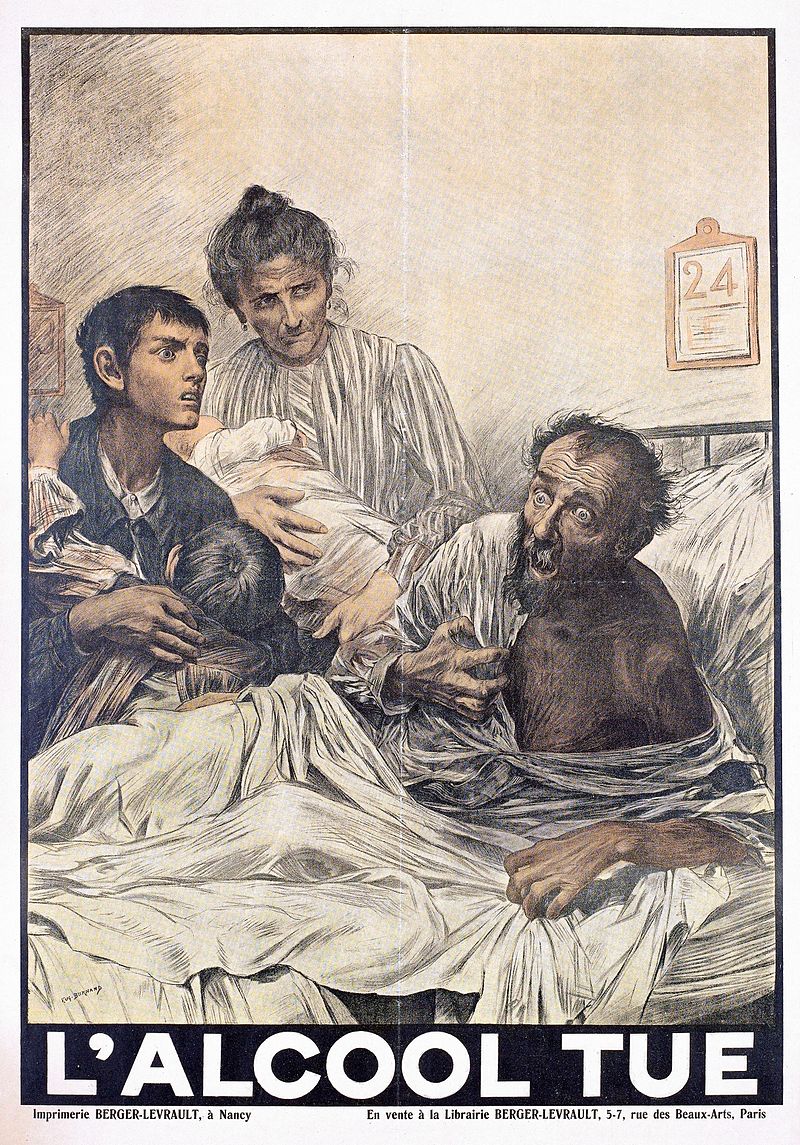
File:An_alcoholic_man_with_delirium_Wellcome_L0060780_(level_correction).jpg · Wikimedia Commons · See Wikimedia Commons
delirium
Sign in to saveAlso known as acute confusional state
Delirium (formerly acute confusional state, an ambiguous term that is now discouraged) is a specific state of acute confusion attributable to the direct physiological consequence of a medical condition, effects of a psychoactive substance, or multiple causes, which usually develops over the course of hours to days. As a syndrome, delirium presents with disturbances in attention, awareness, and higher-order cognition. People with delirium may experience other neuropsychiatric disturbances including changes in psychomotor activity (e.g., hyperactive, hypoactive, or mixed level of activity), disr
OverviewAI-generated
Delirium is a medical condition classified under the ICD-10 name “Delirium due to known physiological condition.” It is associated with the ICPC 2 code P71 and the NCI Thesaurus identifier C2981. The condition is also linked to the SYMP_0000021 ontology term.
Research on delirium is extensive, with 30,607 records found in PubMed and 1,619 entries in ClinicalTrials.gov. The subject is referenced by 691 other encyclopedia articles. A Commons category titled “Delirium syndrome” exists for related media.
Synthesized by Vinony from 11 facts across 5 sources: Wikidata, PubMed, ClinicalTrials.gov, Medline, Vinony graph. Generated from structured data (not the Wikipedia text) and checked against those facts — may still contain errors.
Key facts
- Medical condition.name
- Delirium
- Medical condition.specialty
- Intensive care medicine, neurology, psychiatry, geriatrics
- Medical condition.caption
- Delirium is an acute disturbance of cognition
- Medical condition.symptoms
- Agitation, confusion, drowsiness, hallucinations, delusions, memory problems
- Medical condition.onset
- Any age, but more often in people aged 65 and above
- Medical condition.duration
- Days to weeks, sometimes months (several hours when caused by anticholinergic medications, like dicyclomine, diphenhydramine, doxylamine, promethazine)
- Medical condition.types
- Hyperactive, hypoactive, mixed level of activity
- Medical condition.causes
- Inconclusive
- Medical condition.risks
- Infection, chronic health problems, certain medications, neurological problems, sleep deprivation, surgery, hospitalization at an intensive care unit
- Medical condition.differential
- Dementia
- Medical condition.treatment
- Treating underlying cause, symptomatic management with medication
- Medical condition.medication
- Depending on the underlying cause
via Wikipedia infobox
Health references
- ICD-10
- F05 — Delirium due to known physiological condition
- MedlinePlus
- Consumer health page →
Research
30,607 papers- Delirium.Annals of internal medicine · 2020
- Predisposing and Precipitating Factors Associated With Delirium: A Systematic Review.JAMA network open · 2023
- Delirium in the Elderly.Clinics in geriatric medicine · 2020
- Delirium in hospitalized older adults.Hospital practice (1995) · 2020
- The inter-relationship between delirium and dementia: the importance of delirium prevention.Nature reviews. Neurology · 2022
via PubMed
Clinical Trials
1,619 registered- PHASE4COMPLETEDComparison of Postoperative Delirium in Patients Anaesthetised With Isoflurane and Desflurane During Spinal SurgeryPost Graduate Institute of Medical Education and Research, Chandigarh · NCT02925611
- PHASE3COMPLETEDThe MENDS2 Study, Maximizing the Efficacy of Sedation and Reducing Neurological Dysfunction and Mortality in Septic Patients With Acute Respiratory FailureVanderbilt University Medical Center · NCT01739933
- PHASE4TERMINATEDRisperidone and Zotepine in the Treatment of DeliriumChanghua Christian Hospital · NCT00622011
- PHASE3ACTIVE_NOT_RECRUITINGTranexamic Acid to Reduce Delirium After Gastrointestinal Surgery: the TRIGS-D TrialBayside Health · NCT05470816
- NAUNKNOWNA Software to Prevent Delirium (PREVEDEL) in Hospitalized Older AdultsUniversity of Chile · NCT05108207
- PHASE2/PHASE3NOT_YET_RECRUITINGMInimizing Delirium With Nasal Dexmedetomidine-InducEd Sleep (MIDDIES)Sixth Affiliated Hospital, Sun Yat-sen University · NCT07538284
Wikidata facts
- Instance of
- symptom or sign
- Subclass of
- mental confusion
Show 8 more facts
- health specialty
- psychology
- ICPC 2 ID
- P71
- WordLift URL
- data.medicalrecords.com/medicalrecords/healthwise/delirium_pdq__supportive_care_-_patient_information_nci
- exact match
- purl.obolibrary.org/obo/SYMP_0000021
- NCI Thesaurus ID
- C2981
- described by source
- Encyclopædia Britannica 11th edition
- Commons category
- Delirium syndrome
- drug or therapy used for treatment
- trazodone
via Wikidata · CC0
~42 min read
Encyclopedic overview
29 sectionsContents
- Definition
- Signs and symptoms
- Causes
- Predisposing factors
- Precipitating factors
- Pathophysiology
- Animal models
- Cerebrospinal fluid
- Neuroimaging
- Neurophysiology
- Neuropathology
- Diagnosis
- General settings
- Intensive care unit
- Differential diagnosis
- Prevention
- Non-pharmacological
- Pharmacological
- Treatment
- Multidomain interventions
- Medications
- Prognosis
- Dementia in ICU survivors
- Epidemiology
- Society and culture
- Costs
- References
- Further reading
- External links
Delirium (formerly acute confusional state, an ambiguous term that is now discouraged) is a specific state of acute confusion attributable to the direct physiological consequence of a medical condition, effects of a psychoactive substance, or multiple causes, which usually develops over the course of hours to days. As a syndrome, delirium presents with disturbances in attention, awareness, and higher-order cognition. People with delirium may experience other neuropsychiatric disturbances including changes in psychomotor activity (e.g., hyperactive, hypoactive, or mixed level of activity), disrupted sleep–wake cycle, emotional disturbances, disturbances of consciousness, or altered state of consciousness, as well as perceptual disturbances (e.g., hallucinations and delusions), although these features are not required for diagnosis.
Diagnostically, delirium encompasses both the syndrome of acute confusion and its underlying organic process, known as an acute encephalopathy. The cause of delirium may be either a disease process inside the brain or a process outside the brain that nonetheless affects the brain. Delirium may be the result of an underlying medical condition (e.g., infection or hypoxia), side effect of a medication such as diphenhydramine, promethazine, and dicyclomine, substance intoxication (e.g., opioids or hallucinogenic deliriants), substance withdrawal (e.g., alcohol or sedatives), or from multiple factors affecting one's overall health (e.g., malnutrition, pain, etc.). In contrast, the emotional and behavioral features due to primary psychiatric disorders (e.g., as in schizophrenia, bipolar disorder) do not meet the diagnostic criteria for 'delirium'.
Excerpted from Wikipedia’s “delirium” article, available under the CC BY-SA 4.0 licence.