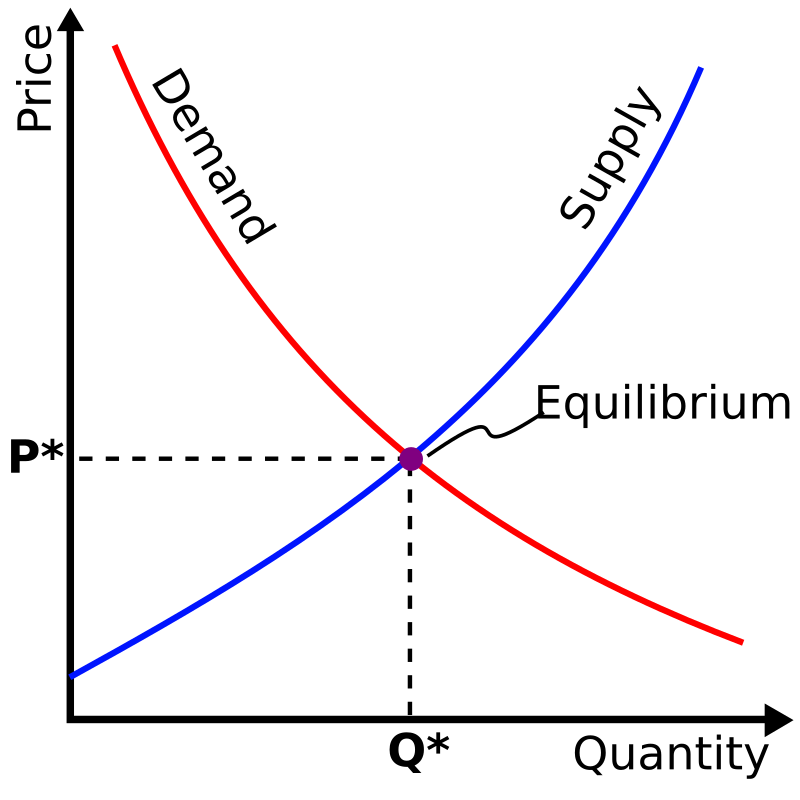
File:Supply-demand-equilibrium.svg · Wikimedia Commons · See Wikimedia Commons
In economics, demand is the quantity of a good that consumers are willing and able to purchase at various prices during a given time. In economics "demand" for a commodity is not the same thing as "desire" for it. It refers to both the desire to purchase and the ability to pay for a commodity.
Demand is the amount of a good that people are willing and able to buy at different prices during a certain period—it's not just about wanting something, but having the money to actually purchase it. Understanding demand matters because it helps explain how prices and availability of products are determined in the marketplace.
AI-generated from the Wikipedia summary — may contain errors.
Wikidata facts
- Part of
- supply and demand
Show 4 more facts
- topic's main category
- Category:Demand
- opposite of
- supply
- equivalent class
- schema.org/Demand
- Commons category
- Demand
Sources (2)
via Wikidata · CC0
Article · العربية
في الاقتصاد، الطلب (بالإنجليزية: Demand)، مجموع الكميّة المراد استهلاكُها من قِبل المستهلكين للخدمات والبضائع خلال فترة زمنية معينة بالتزامن مع ثباتِ مدى تأثير العوامل المؤثرة في الاستهلاك، كما يمكن تعريف الطلب بأنّه تلك الرغبة المؤكدة لدى المستهلك في شراء منتج ما، وتعزيز القدرة الشرائية لدى المؤسّساتٍ سعياً للحصول على كميّةٍ معيّنة من السلع عندَ بلوغِها سعر ما خلال فترةٍ زمنيةٍ معينة. من أبرز العوامل المؤثرة في الاستهلاك في فرضية الطلب، الدخل للفرد، مدى توفر البدائلَ للبضاعة المطلوبة من قبل المستهلكين ومكملاتها، بالإضافة إلى أنّ حجم السوق الفعال يؤثر بذلك بشكل كبير، كما يلعب توزيع الدخل بين أفراد المجتمع دوراً في ذلك، والتركيبة الديموغرافية، والعوامل الموسميّة، والتنبؤات المستقبليّة ضمن حالةٍ معينة.
Abstract from DBpedia / Wikipedia · CC BY-SA