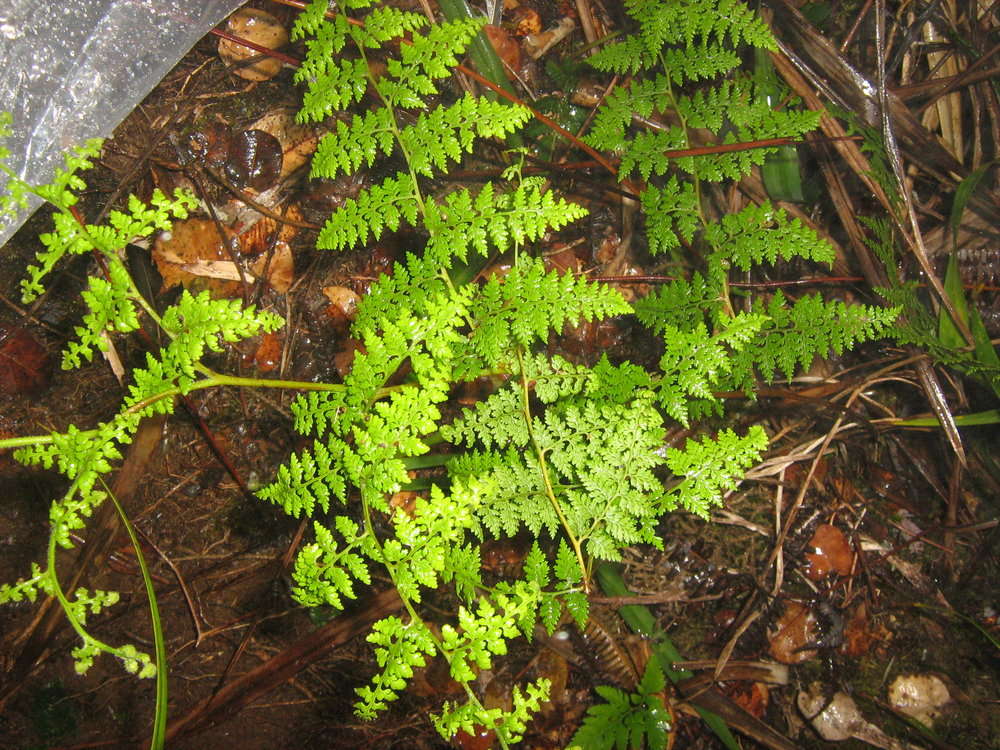
Encyclopedia of Life · EOL (see source)
Dennstaedtiaceae
Sign in to saveAlso known as Hypolepidaceae
Dennstaedtiaceae is one of fifteen families in the order Polypodiales, the most derived families within monilophytes (ferns). It comprises 10 genera with ca 240 known species, including one of the world's most abundant ferns, Pteridium aquilinum (bracken). Members of the order generally have large, highly divided leaves and have either small, round intramarginal sori with cup-shaped indusia (e.g. Dennstaedtia) or linear marginal sori with a false indusium formed from the reflexed leaf margin (e.g. Pteridium). The morphological diversity among members of the order has confused past taxonomy, bu
Species
FAMILY
- KingdomPlantae
- PhylumTracheophyta
- ClassPolypodiopsida
- OrderPolypodiales
- FamilyDennstaedtiaceae
コバノイシカグマ科 ワラビ 分類 界 : 植物界 Plantae 門 : シダ植物門 Pteridophyta 綱 : シダ綱 Pteridopsida 目 : シダ目 Pteridales 科 : コバノイシカグマ科 Dennstaedtiaceae 学名 Dennstaedtiaceae Lotsy タイプ属 Dennstaedtia Bernh. [1] 和名 コバノイシカグマ科 属 Adectum Blotiella Cincinalis Dennstaedtia コバノイシカグマ属 Emodiopteris Filix-foemina Histiopteris ユノミネシダ属 Hypolepis イワヒメワラビ属 Leptolepia Microlepia フモトシダ属 Monachosorum オオフジシダ属 Oenotrichia Paesia Paradennstaedtia Patania Pteridium ワラビ属 [2] コバノイシカグマ科 Dennstaedtiaceae は、シダ植物の科の1つ。胞子嚢群が葉の縁か近くに着き、比較的原始的な群と考えられる。 目次 1 特徴 2 分布と生育環境 3 系統と分類 4 出典 5 参考文献 特徴[編集] 中型から大型のシダ類[3]。根茎は横に長く伸びて管状中心柱を持つものと、直立して網状中心柱を持つものとがある。根茎には毛があるが、鱗片を持つものもある。大半の属では葉柄の基部に1-数個の腋外芽が形成され、これは伸び出すことで根茎が分枝をする[4]。葉と根茎の間には関節はなく、葉には毛がある。葉は単羽状から数回羽状複葉まであり、葉質は様々だが多肉質にはならない。葉脈は羽状に分枝して遊離するが、稀に遊離小脈のない網状脈を作る。胞子嚢群は葉脈の先端に生じ、葉の縁に出るか、葉の縁近くの面に出る。包膜はコップ状のものが多いが、包膜のないものもあり、また葉の縁が反転して偽包膜を作るものもある。胞子嚢は基部が輪から次第に成熟する順熟か、成熟時期がバラバラの混熟で、側糸が混じる例もある。 イシカグマの根茎毛が生えているのが見える コップ状の包膜フモトシダ(フモトシダ属) 葉の縁沿いに伸びた胞子嚢群Pteridium arachnoideum(ワラビ属) 分布と生育環境[編集] 世界の熱帯を中心に分布し、9属200種程がある[5]。ほとんどが地上性で、ごく一部に岩の上に出るものがある[6]。 系統と分類[編集] 古くは他のいくつかの群と併せてイノモトソウ科に含めた[7]。これを細分するに関しては田川(1959)に若干の解説がある[8]。ワラビ属やユノミネシダ属については、その胞子嚢群の特徴からその後にもイノモトソウ科に含める見解がある。タカワラビ科に近いものであり、小型化して根茎が横に這うようになったものとの
via GBIF · Kew POWO
Museum specimens
- Specimen records
- 260
- With media
- 116
- Family
- Dennstaedtiaceae
- Collections
- TENN, NHA, CAS, NY, MEL, TAES
- Recorded in
- United States, Bolivia, Papua New Guinea, Australia, Brazil, Brasil, Malaysia, Japan
Research
193 papers- The complete chloroplast genome sequence of Histiopteris incisa (Dennstaedtiaceae).Mitochondrial DNA. Part B, Resources · 2018
- A new insight on the genus Pteridium (Dennstaedtiaceae) in Europe based on a revision in the flora of Slovakia.Botanical studies · 2024
- New insights into the evolution of the fern family Dennstaedtiaceae from an expanded molecular phylogeny and morphological analysis.Molecular phylogenetics and evolution · 2020
- Does invasion by Pteridium aquilinum (Dennstaedtiaceae) affect the ecological succession in Atlantic Forest areas after a fire?Environmental science and pollution research international · 2022
- Untying the Gordian knot of plastid phylogenomic conflict: A case from ferns.Frontiers in plant science · 2022
via PubMed
Wikidata facts
- Instance of
- taxon
- Image
- Fern dsc06699.jpg
Show 6 more facts
- taxon name
- Dennstaedtiaceae
- taxon rank
- family
- topic's main category
- Category:Dennstaedtiaceae
- Commons category
- Dennstaedtiaceae
- taxon common name
- 碗蕨科
Sources (1)
via Wikidata · CC0
~4 min read
Encyclopedic overview
5 sectionsContents
- Distribution of genera
- Classification
- Phylogeny
- Interesting species within Dennstaedtiaceae
- References
Dennstaedtiaceae is one of fifteen families in the order Polypodiales, the most derived families within monilophytes (ferns). It comprises 10 genera with ca 240 known species, including one of the world's most abundant ferns, Pteridium aquilinum (bracken). Members of the order generally have large, highly divided leaves and have either small, round intramarginal sori with cup-shaped indusia (e.g. Dennstaedtia) or linear marginal sori with a false indusium formed from the reflexed leaf margin (e.g. Pteridium). The morphological diversity among members of the order has confused past taxonomy, but recent molecular studies have supported the monophyly of the order and the family. The reclassification of Dennstaedtiaceae and the rest of the monilophytes was published in 2006, so most of the available literature is not updated.
==Distribution of genera== Generally, the family is pantropical, but due to the distribution of Pteridium (the most widespread fern genus), Dennstaedtiaceae can be found worldwide. Pteridium is a well adapted early successional genus, generally described as a weed because of its ease of spread. The spore is light and robust, so it can travel relatively far and colonise open, disturbed environments easily. Dennstaedtia is mostly tropical to warm-temperate, but not well represented in the Amazon or Africa. Oenotrichia is in New Caledonia. Leptolepia is in New Zealand, Queensland (Australia), and in New Guinea. Microlepia is in the Asiatic-Pacific. Paesia occurs in tropical America, Asia, and the western Pacific. Hypolepis is tropical and south-temperate. Blotiella is strongly centered in Africa. Histiopteris is generally Malesian, with one pantropic to south-temperate species. The extinct genus Krameropteris is known from remains found in Cenomanian aged Burmese amber. Some older fossils are known from the Jurassic of Eastern India .
Excerpted from Wikipedia’s “Dennstaedtiaceae” article, available under the CC BY-SA 4.0 licence.