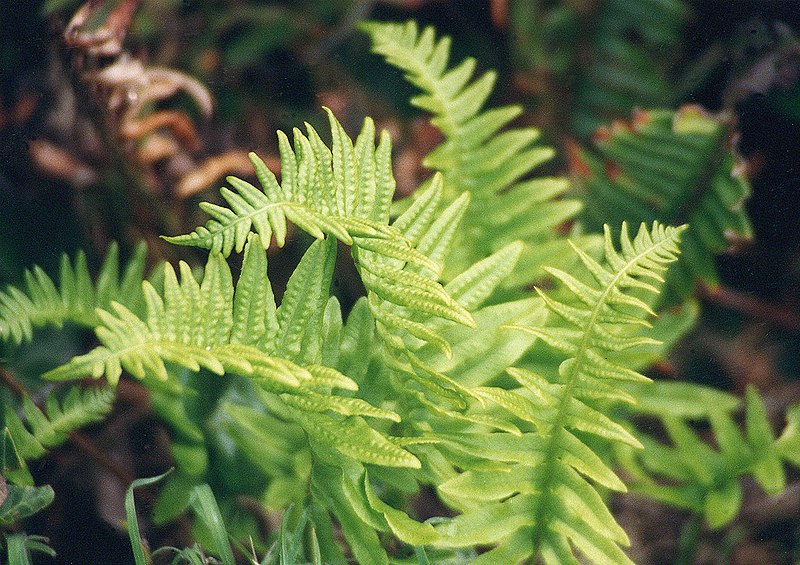
File:California_Arena_Point_fern.jpg · Wikimedia Commons · See Wikimedia Commons
Polypodiales
Sign in to saveThe order Polypodiales encompasses the major lineages of polypod ferns, which account for more than 80% of today's fern species. They are found in many parts of the world including tropical, semitropical and temperate areas.
Species
ウラボシ目
ORDER
- KingdomPlantae
- PhylumTracheophyta
- ClassPolypodiopsida
- OrderPolypodiales
水龍骨目(學名:Polypodiales)是真蕨綱中的一個主要分支,包含有超過80%的现存蕨類物種。它們分布于熱帶、亞熱帶和溫帶等地區。 水龍骨目被認為是蕨類最晚分歧出來的目,基於最近的基因分析。它們大約在一億年前形成且分歧出來,大概是接在被子植物門分歧之後。
via GBIF
Wikidata facts
- Instance of
- taxon
- Parent taxon
- Polypodiidae
- Image
- California Arena Point fern.jpg
Show 6 more facts
- taxon rank
- order
- Commons category
- Polypodiales
- taxon name
- Polypodiales
- topic's main category
- Category:Polypodiales
- taxon common name
- 水龙骨目
- PAEnflowered taxon URL
- www.paenflowered.org/apgii/polypodiales
Sources (1)
via Wikidata · CC0
~11 min read
Encyclopedic overview
9 sectionsContents
- Description
- Taxonomy
- Evolution
- Subdivision
- Phylogeny
- Obsolete families
- Evolution
- References
- Bibliography
The order Polypodiales encompasses the major lineages of polypod ferns, which account for more than 80% of today's fern species. They are found in many parts of the world including tropical, semitropical and temperate areas.
==Description== Polypodiales are unique in bearing sporangia with a vertical annulus interrupted by the stalk and stomium. These sporangial characters were used by Johann Jakob Bernhardi to define a group of ferns he called the "Cathetogyratae"; the Pteridophyte Phylogeny Group has suggested reviving this name as the informal term cathetogyrates, to replace the ambiguously circumscribed term "polypods" when referring to the Polypodiales. The sporangia are born on stalks 1–3 cells thick and are often long-stalked. (In contrast, the Hymenophyllales have a stalk composed of four rows of cells.) The sporangia do not reach maturity simultaneously. Many groups in the order lack indusia, but when present, they are attached either along the edge of the indusium or in its center.
Excerpted from Wikipedia’s “Polypodiales” article, available under the CC BY-SA 4.0 licence.