
Devilman
Sign in to saveAlso known as Devil Man, Devilman: The Birth, Devilman: Demon Bird Sirene
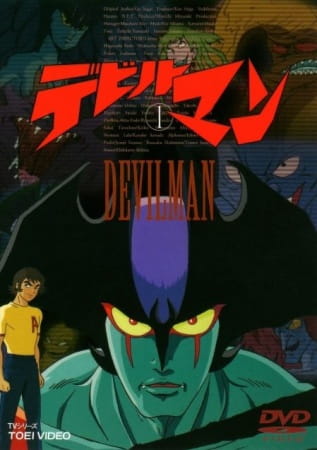
is a Japanese manga series written and illustrated by Go Nagai. The manga focuses on a high school student named Akira Fudo who absorbs the powers of the demon called "Amon" with help of his friend Ryo Asuka in order to battle creatures hidden in human society, thus calling himself the "Devilman" in the process. The series was originally ordered by Toei Animation as a toned-down anime version of Nagai's previous manga series, Demon Lord Dante, although Devilman ended up having a darker tone which reflected Nagai's anti-war sentiments.
Anime · MyAnimeList
- Score
- 6.53/10 (8,794 votes)
- Rank
- #7565
- Popularity
- #4193
- Type
- TV
- Episodes
- 39
- Status
- Finished Airing
- Aired
- 1972–1973
- Season
- Summer 1972
- Studios
- Toei Animation
Devilman features Akira Fudo, a shy and timid teenager who has gone mountain climbing in the Himalayas with his father. While in the middle of the expedition, both father and son are killed in a tragic accident. Akira's body is found and possessed by the demon soldier Devilman, w…
via Jikan · MyAnimeList
Key facts
- Animanga/Header.image
- Devilman Volume 1.png
- Animanga/Header.caption
- First volume cover, featuring Akira Fudo (foreground) and Devilman (background)
- Animanga/Header.ja_kanji
- デビルマン
- Animanga/Header.ja_romaji
- Debiruman
- Animanga/Print.type
- manga
- Animanga/Print.author
- Fujihiko Hosono
- Animanga/Print.publisher
- Kodansha
- Animanga/Print.magazine
- Monthly Young Magazine
- Animanga/Print.first
- January 23, 2023
- Animanga/Print.last
- June 20, 2023
- Animanga/Print.volumes
- 1
- Animanga/Print.volume_list
- List of Devilman volumes
- Animanga/Video.type
- ova
- Animanga/Video.writer
- Masaki Tsuji
- Animanga/Video.music
- Kenji Kawai
- Animanga/Video.studio
- Oh! Production
- Animanga/Video.network
- ANN (NET)
- Animanga/Video.first
- July 8, 1972
via Wikipedia infobox
Wikidata facts
- Instance of
- manga
- Author
- Go Nagai
- Country of origin
- Japan
- Director
- Tomoharu Katsumata
- FilmAffinity ID
- 876553
- Platform
- Nintendo Entertainment System
Show 9 more facts
- title
- デビルマン
- Commons category
- Devilman
- topic's main category
- Category:Devilman
- publication date
- 1989-04-25
- different from
- Devilman
- language of work or name
- Japanese
- social media followers
- 18587
- intended public
- shōnen
- number of parts of this work
- 5
Sources (7)
via Wikidata · CC0
~21 min read
Encyclopedic overview
16 sectionsContents
- Plot
- Manga
- Anime
- Production
- Media
- Manga
- Spin-offs
- Animated adaptations
- Films
- Music
- In other media
- Reception
- Legacy
- References
- Further reading
- External links
is a Japanese manga series written and illustrated by Go Nagai. The manga focuses on a high school student named Akira Fudo who absorbs the powers of the demon called "Amon" with help of his friend Ryo Asuka in order to battle creatures hidden in human society, thus calling himself the "Devilman" in the process. The series was originally ordered by Toei Animation as a toned-down anime version of Nagai's previous manga series, Demon Lord Dante, although Devilman ended up having a darker tone which reflected Nagai's anti-war sentiments.
Devilmans 39-episode anime series was developed by Toei Animation in 1972, while Nagai began the Devilman as a manga in Kodansha's Weekly Shōnen Magazine, barely a month before the anime series started. The manga was published between June 1972 and June 1973, while multiple publishers have released it in collected volumes (). Seven Seas Entertainment published the English translation of the original manga in two volumes in 2018. The series has since spawned numerous OVAs, manga, novels, films, and a sequel. Devilman and other characters from the series have shown up in cameo appearances numerous times in Go Nagai's other works. The most notable is Tomoharu Katsumata's 1973 feature film Mazinger Z vs. Devilman, which features Devilman teaming up with Nagai's titular robot to fight Dr. Hell. In 2018, a remake titled Devilman Crybaby directed by Masaaki Yuasa was created showing an alternate more modern-like retelling of the manga.
Excerpted from Wikipedia’s “Devilman” article, available under the CC BY-SA 4.0 licence.