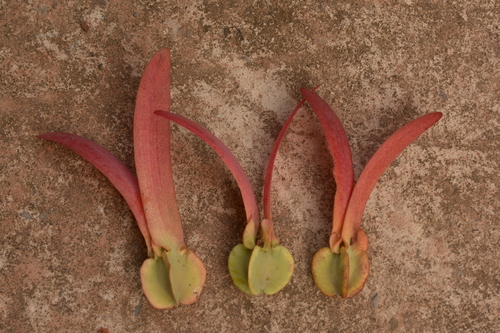
(c) Wangworn Sankamethawee, some rights reserved (CC BY-NC), uploaded by Wangworn Sankamethawee · cc-by-nc
Dipterocarpus
Sign in to saveright|thumb|Dipterocarpus retusus|D. retusus in Köhler Dipterocarpus is a genus of flowering plants and the type genus of family Dipterocarpaceae.
OverviewAI-generated
Dipterocarpus is a genus of plants within the family Dipterocarpaceae. It belongs to the kingdom Plantae, phylum Tracheophyta, class Magnoliopsida, and order Malvales. The genus produces nuts as its fruit type. Common names for the group include bijusam, 龙脑香属, 双翅香属, and dipterokarp. The species Dipterocarpus costatus serves as the taxonomic type for the genus.
Records of Dipterocarpus have been documented in Vietnam, Malaysia, Sri Lanka, Thailand, and Cambodia. These records are held by institutions including A, MO, ASU, RSA, and BRIT. The genus has 13,222 occurrence records, 296 records, and 244 media items associated with it. Additionally, 514 observations have been logged.
Synthesized by Vinony from 33 facts across 7 sources: Wikidata, GBIF, iNaturalist, Gbif Occ, Plants of the World, iDigBio, Vinony graph. Generated from structured data (not the Wikipedia text) and checked against those facts — may still contain errors.
Species
GENUS
- KingdomPlantae
- PhylumTracheophyta
- ClassMagnoliopsida
- OrderMalvales
- FamilyDipterocarpaceae
Die Pflanzengattung Zweiflügelfruchtbäume (Dipterocarpus), auch Zweiflügelnüsse oder wie andere Gattungen auch Flügelfruchtbäume genannt, gehört zur Familie der Flügelfruchtgewächse (Dipterocarpaceae). Die etwa 70 Arten sind in Südostasien verbreitet. Von einigen Arten wird das Holz genutzt. Inhaltsverzeichnis 1 Beschreibung 1.1 Erscheinungsbild und Blätter 1.2 Blütenstände und Blüten 1.3 Früchte und Samen 2 Verbreitung 3 Systematik 4 Nutzung 5 Literatur 6 Weblinks 7 Einzelnachweise Beschreibung Borke von Dipterocarpus costatus Illustration von Dipterocarpus baudii Abgeworfene Blüten von Dipterocarpus baudii Erscheinungsbild und Blätter Bei Dipterocarpus-Arten handelt es sich meist um immergrüne bis laubabwerfende, hohe, aufstrebende Bäume. An der Stammbasis sind oft kräftige Brettwurzeln vorhanden. Die gräulich-braune bis orangefarbene Borke besitzt erhabene Lentizellen, ist rissig und blättert ab. Das Harz ist aromatisch, ölig und weiß. Das Kernholz ist braun bis rot braun bis gelb braun bis grün, das Splintholz ist farblich deutlich vom Kernholz abgesetzt.[1] Die Laubblätter sind wechselständig an den Zweigen angeordnet. Die ledrigen Blattspreiten sind einfach. Der Blattrand ist
via GBIF · Kew POWO
Museum specimens
- Specimen records
- 296
- With media
- 244
- Family
- Dipterocarpaceae
- Collections
- A, MO, ASU, RSA, BRIT, MICH
- Recorded in
- Vietnam, Malaysia, Sri Lanka, Thailand, Cambodia, Philippines, Indonesia, Malaysia/Sabah
Wikidata facts
- Instance of
- taxon
- Parent taxon
- Dipterocarpaceae
- Image
- Dipterocarpus retusus - Köhler–s Medizinal-Pflanzen-054.jpg
Show 9 more facts
- taxon rank
- genus
- taxon name
- Dipterocarpus
- Commons category
- Dipterocarpus
- topic's main category
- Category:Dipterocarpus
- Commons gallery
- Dipterocarpus
- has fruit type
- nut
- taxonomic type
- Dipterocarpus costatus
- taxon common name
- dipterokarp
Sources (1)
via Wikidata · CC0
~6 min read
Encyclopedic overview
4 sectionsContents
- Uses
- Accepted species
- References
- External links
right|thumb|Dipterocarpus retusus|D. retusus in Köhler Dipterocarpus is a genus of flowering plants and the type genus of family Dipterocarpaceae.
Dipterocarpus is the third-largest and most diverse genus among the Dipterocarpaceae. The species are well known for timber, but less acknowledged for use in traditional herbal medicine. The genus has about 70 species, occurring in South Asia and Southeast Asia, from Sri Lanka and India to the Philippines. It is an important component of dipterocarp forests. Its generic name comes from Greek and means "two-winged fruits".
Excerpted from Wikipedia’s “Dipterocarpus” article, available under the CC BY-SA 4.0 licence.