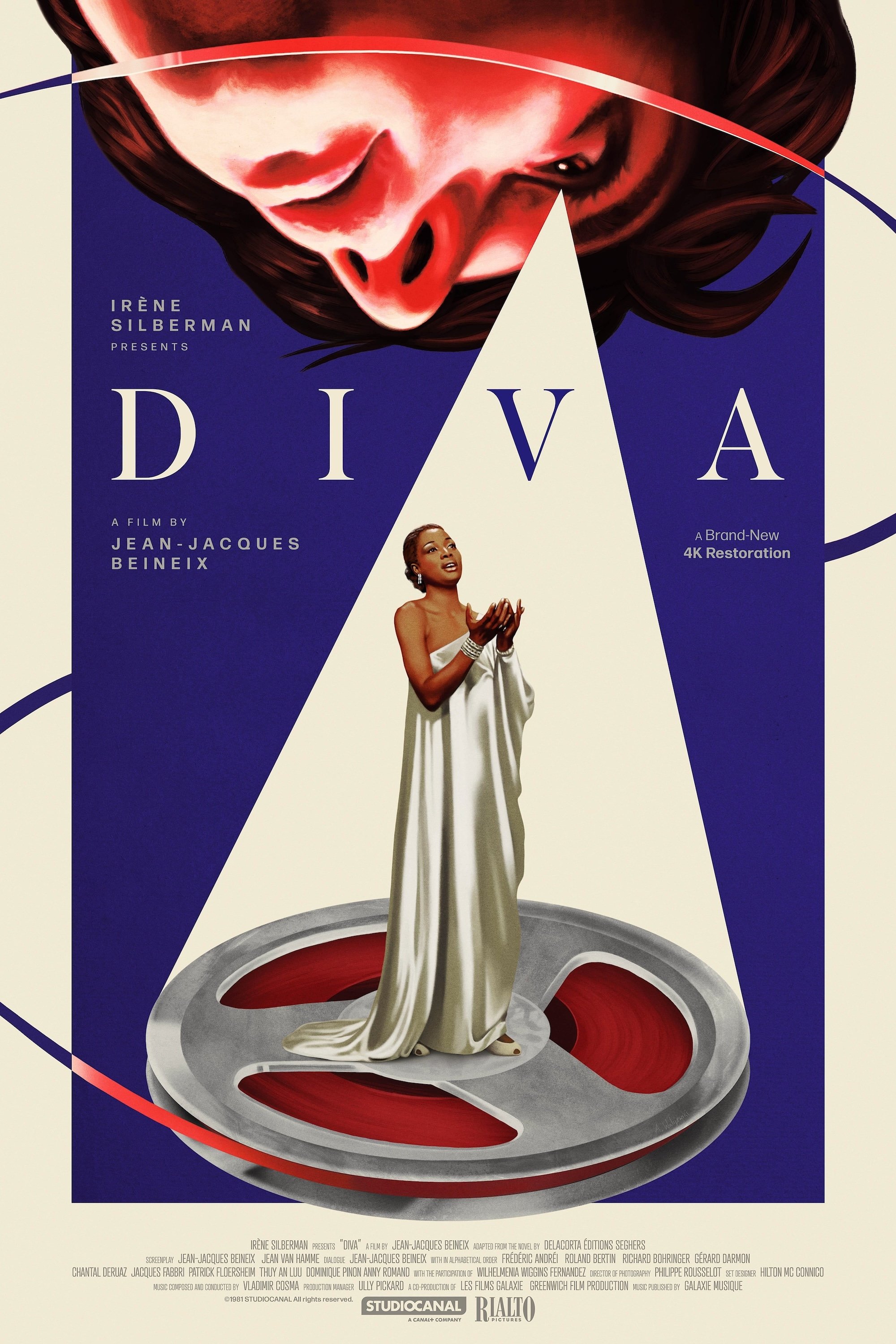
Poster from TMDB
Diva
Sign in to savefilm français de Jean-Jacques Beineix, sorti en 1981
Film · TMDB
6.7Jules, a young Parisian postman, secretly records a concert performance given by the opera singer Cynthia Hawkins, whom he idolises. The following day, Jules runs into a woman who is being pursued by armed thugs. Before she is killed, the woman slips an audio cassette into his mail bag...
Cast
- Frédéric Andréi as Jules
- Richard Bohringer as Gorodish
- Roland Bertin as Weinstadt
- Wilhelmenia Fernandez as Cynthia Hawkins
- Thuy An Luu as Alba
- Chantal Deruaz as Nadia
Themes
- paris, france
- mistake in person
- subway
- diva
- postman
- moped
- singer
- police corruption
- recording
- opera singer
This product uses the TMDB API but is not endorsed or certified by TMDB.
Wikidata facts
- Instance of
- film
- Genre
- drama film
- Country of origin
- France
- Original language
- English language
- Director
- Jean-Jacques Beineix
- Screenwriter
- Daniel Odier
- Composer
- Vladimir Cosma
- Producer
- Claudie Ossard
- Cinematographer
- Philippe Rousselot
- Narrative location
- Paris
- Duration
- 114
- FilmAffinity ID
- 558336
- Distribution format
- video on demand
Show 7 more facts
- title
- Diva
- publication date
- 1983-03-25
- film editor
- Marie-Josèphe Yoyotte
- after a work by
- Daniel Odier
- distributed by
- Netflix
- assessment
- Bechdel test
- review score
- 8.2/10
Sources (12)
via Wikidata · CC0
Article · Français
Diva est un film français réalisé par Jean-Jacques Beineix, sorti en 1981. Premier long métrage du réalisateur, le scénario est adapté d'un roman homonyme de Daniel Odier (sous pseudonyme de Delacorta). À l'instar des réalisations contemporaines de Luc Besson ou Arthur Joffé (Alberto Express), il est l'un des premiers films français laissant cours à l'esthétique de l'image de type publicitaire ou clip musical en vogue durant les années 1980. Divisant la critique à sa sortie, le film ne totalise que 300 000 entrées au bout d'un an mais grâce à quatre récompenses lors de la cérémonie des Césars, il connaîtra alors un véritable succès populaire et atteindra plus de deux millions d'entrées.
Abstract from DBpedia / Wikipedia · CC BY-SA