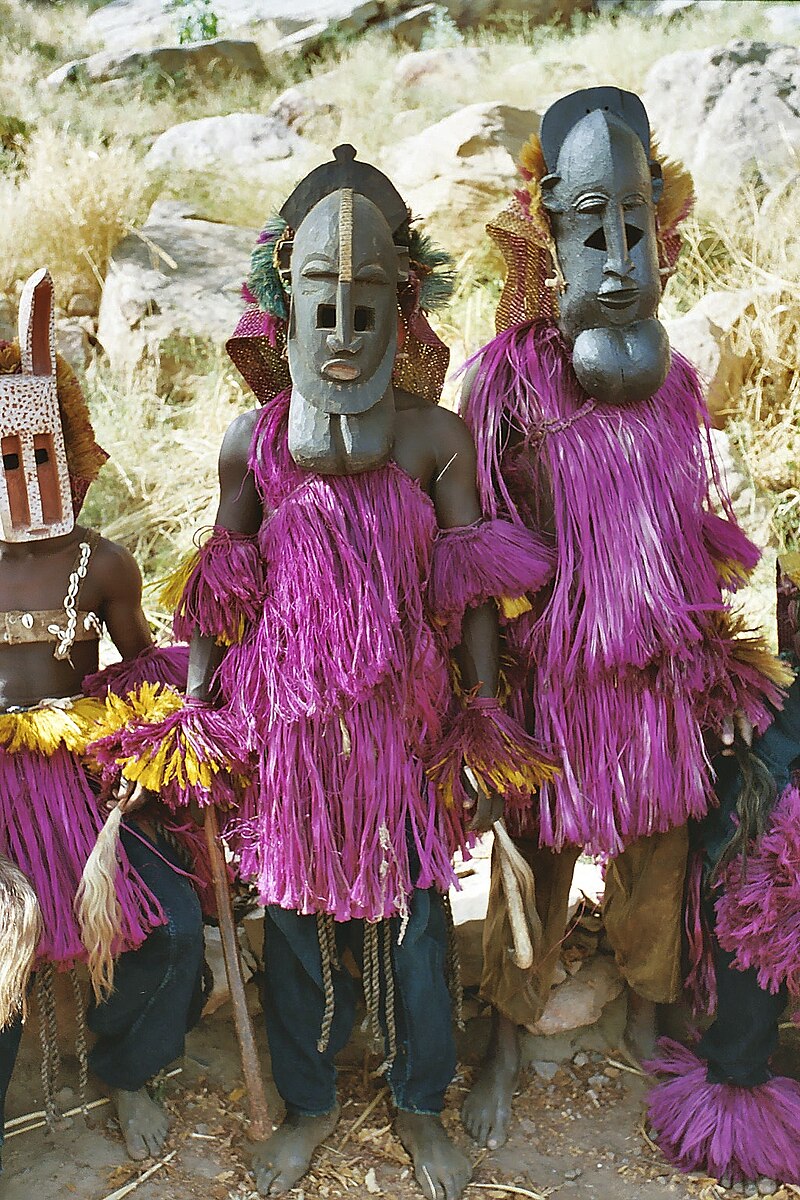
File:Dogon12.jpg · Wikimedia Commons · See Wikimedia Commons
Dogon people
Sign in to saveAlso known as Dogon, Dogo, Dogom, Habbé, Habe, Kibissi, Tombo, Kaado
ethnic group indigenous to Mali
Key facts
- Mali
- 1,751,965 (8.7%)
via Wikipedia infobox
Wikidata facts
- Instance of
- ethnic group
- Country
- Burkina Faso
- Located in
- Mopti Region
- Image
- ASC Leiden - W.E.A. van Beek Collection - Dogon portraits 01 - Young man just returned from Abidjan, with his radio, Tireli, Mali 1985.jpg
Show 2 more facts
- Commons category
- Dogon
- topic's main category
- Category:Dogon
Sources (1)
via Wikidata · CC0
~39 min read
Encyclopedic overview
The Dogon are an ethnic group indigenous to the central plateau region of Mali, in West Africa, south of the Niger bend, near the city of Bandiagara, and in Burkina Faso. The population numbers between 400,000 and 800,000. They speak the Dogon languages, which are considered to constitute an independent branch of the Niger–Congo language family, meaning that they are not closely related to any other languages.
The Dogon are best known for their religious traditions, their mask dances, wooden sculpture, and their architecture. Since the twentieth century, there have been significant changes in the social organisation, material culture and beliefs of the Dogon, in part because Dogon country is one of Mali's major tourist attractions.
Excerpted from Wikipedia’s “Dogon people” article, available under the CC BY-SA 4.0 licence.