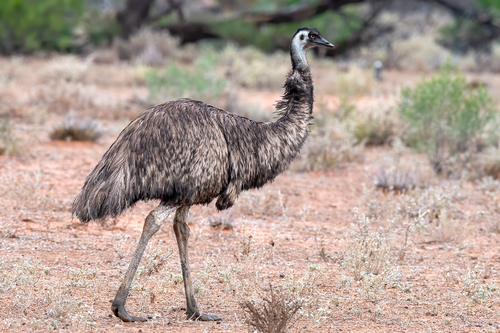
(c) David Cook, some rights reserved (CC BY-NC) · cc-by-nc
Dromaius
Sign in to saveDromaius (from Ancient Greek δρομαῖος; "swift one", "runner") is a genus of ratite present in Australia. There is one extant species, Dromaius novaehollandiae, commonly known as the emu.
OverviewAI-generated
Dromaius is a genus of birds within the family Dromaiidae. It belongs to the class Aves, order Casuariiformes, and phylum Chordata in the kingdom Animalia. The genus is endemic to Australia. While iNaturalist lists the common name Emu for this taxon, it is classified as a species on that platform, whereas other sources identify it as a genus.
Records of Dromaius are held by several institutions, including UCMP, ABS, CUMV, MVZ, and ANSP. These records originate from Australia and the United States. The taxon is not considered extinct.
Synthesized by Vinony from 27 facts across 6 sources: Wikidata, GBIF, iNaturalist, Gbif Occ, iDigBio, Vinony graph. Generated from structured data (not the Wikipedia text) and checked against those facts — may still contain errors.
Species
Emu
GENUS
- KingdomAnimalia
- PhylumChordata
- ClassAves
- OrderCasuariiformes
- FamilyDromaiidae
Die Emus (Dromaius) sind eine Gattung flugunfähiger Laufvögel aus Australien. Die Gattung umfasst neben dem bekannten Großen Emu drei seit der Mitte des 19. Jahrhunderts ausgestorbene Unterarten, welche auf Tasmanien, King Island und Kangaroo Island vor der Küste von South Australia lebten.
via GBIF
Museum specimens
- Specimen records
- 18
- With media
- 10
- Family
- Dromaiidae
- Collections
- UCMP, ABS, CUMV, MVZ, ANSP, MZLU
- Recorded in
- Australia, United States
Wikidata facts
- Instance of
- taxon
- Parent taxon
- Casuariidae
- Image
- Emoe.jpg
Show 5 more facts
- taxon name
- Dromaius
- taxon rank
- genus
- Commons category
- Dromaius
- topic's main category
- Category:Dromaius
- endemic to
- Australia
Sources (2)
via Wikidata · CC0
~4 min read
Encyclopedic overview
2 sectionsContents
- Species and subspecies
- References
Dromaius (from Ancient Greek δρομαῖος; "swift one", "runner") is a genus of ratite present in Australia. There is one extant species, Dromaius novaehollandiae, commonly known as the emu.
In his original 1816 description of the emu, Louis Pierre Vieillot used two generic names; first Dromiceius, then Dromaius a few pages later. Which label is correct has been a point of contention ever since; the latter is more correctly formed, but the convention in taxonomy is that the first name given stands, unless it is clearly a typographical error, as argued by W.B. Alexander. For names published on the same day, or in the same publication, the International Code of Zoological Nomenclature states that both names have equal precedence, and that the Principle of First Reviser (Article 24.2 ) determines which name is to be used. Most modern publications, including those of the Australian government, use Dromaius, with Dromiceius mentioned as an alternative spelling. Misspellings of both forms by later authors have produced further synonyms. The Dromiceius spelling was the basis for Dale Russell's 1972 naming of the dinosaur Dromiceiomimus.
Excerpted from Wikipedia’s “Dromaius” article, available under the CC BY-SA 4.0 licence.