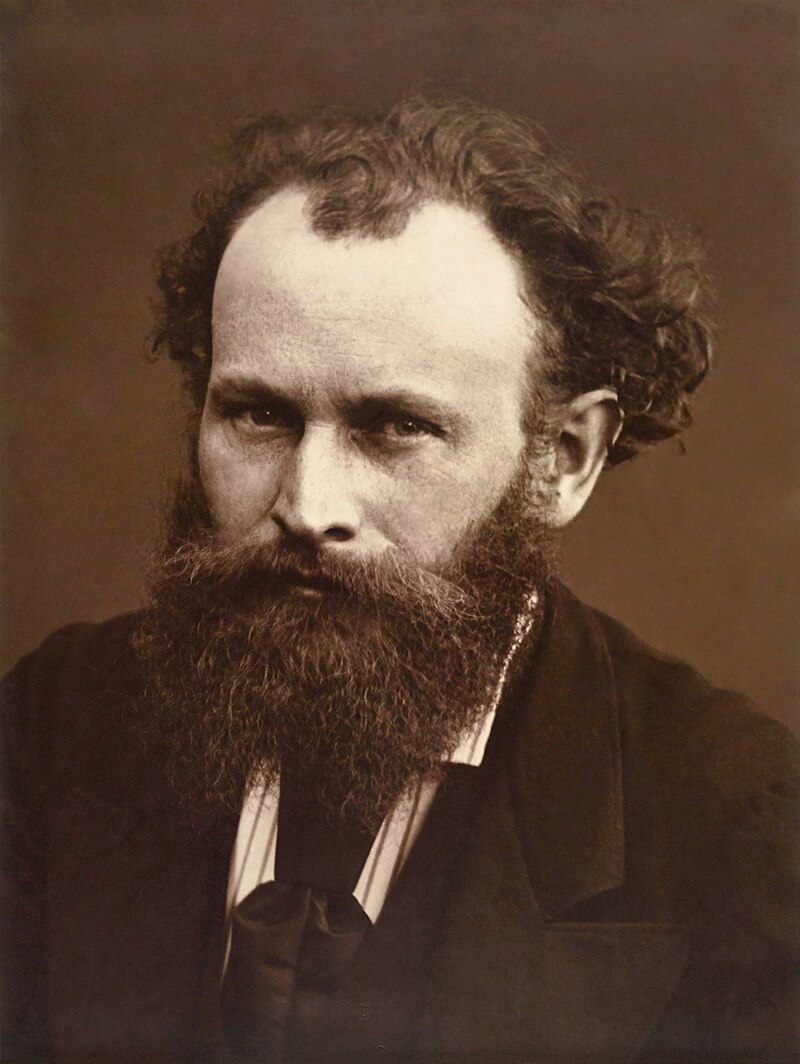
File:Édouard_Manet,_en_buste,_de_face_-_Nadar.jpg · Wikimedia Commons · See Wikimedia Commons
Édouard Manet
Sign in to saveAlso known as Edouard Manet, Éduard Manet, Eduard Manė, Eduard Manet, Manet, e. manet, manet e., ed. manet
French painter (1832–1883)
Édouard Manet was a French painter who lived from 1832 to 1883 and is considered a pivotal figure in art history for challenging traditional painting conventions and helping to bridge Realism and Impressionism. His bold approach to depicting everyday scenes and his innovative use of color and brushwork influenced the development of modern art in the late 19th century.
AI-generated from the Wikipedia summary — may contain errors.
Wikidata facts
- Instance of
- human
- Given name
- Édouard
- Gender
- male
- Citizenship
- France
- Place of death
- Paris
- Spouse
- Suzanne Manet
- Sibling
- Eugène Manet
- Occupation
- artist
- Languages spoken
- French
- Notable work
- Olympia
- Field of work
- painting
- Genre
- religious painting
- Movement
- Impressionism
- Conflict
- Franco-Prussian War
- Image
- Édouard Manet.jpg
- Work location
- Zaltbommel
- Residence
- 8th arrondissement of Paris
Show 16 more facts
- on focus list of Wikimedia project
- Wikipedia:Vital articles/Level/4
- place of burial
- Passy Cemetery
- Commons category
- Édouard Manet
- Commons gallery
- Édouard Manet
- date of birth
- 1832-01-01
- date of death
- 1883-01-01
- topic's main category
- Category:Édouard Manet
- Commons Creator page
- Édouard Manet
- student
- Eva Gonzalès
- name in native language
- Édouard Manet
- manner of death
- natural causes
- influenced by
- Thomas Couture
- writing language
- French
- start of work period
- 1859-01-01
- end of work period
- 1882-01-01
- relative
- Julie Manet
Sources (7)
via Wikidata · CC0
Works in European collections
36 objects attributed to Édouard Manet, held across European museums, libraries & archives · via Europeana
Singer Faure as Hamlet
The Amazon
The Monk
Roses and tulips in dragon decorated vase
Still Life with Ham
Portrait of a Boy, peeling
Woman with black neck
Shooting/Platzende Granate
Christ is mocked by the soldiers
La maison dans le feuillage
Still Life with Carp
asparagus
Portrait of Carolus-Duran
The Bardame of the “Folies bergères”
Child with cherries
Writer Henri Rochefort
Nana
Autumn
Bernerstraße, flagged/La rue de Berne aux drapeaux
The Port of Bordeaux
Portrait of Théodore Duret
Bar aux Folies-Bergère
Breakfast in the studio
Breakfast in the studio
Chez le Père Lathuille
La barricade
The Lilac bouquet/Lilas blanc dans un vase de verre/Vase de fleurs, lilas blancs
The Festival II
The bubbles
Female breast image
Copy of the self-image of Tintoretto
Brigant scene
Émile Guillaudin on horses
Reading
Country house in Rueil/La maison à Rueil/La maison de Manet
Portrait of the Mademoiselle Legouvé
~37 min read
Encyclopedic overview
Édouard Manet ( UK: /ˈmæneɪ/, US: /mæˈneɪ, məˈ-/; French: [edwaʁ manɛ]; 23 January 1832 – 30 April 1883) was a French modernist painter. He was one of the first 19th-century artists to paint modern life, as well as a pivotal figure in the transition from Realism to Impressionism.
Born into an upper-class household with strong political connections, Manet rejected the naval career originally envisioned for him; he became engrossed in the world of painting. His early masterworks, The Luncheon on the Grass (French: Le Déjeuner sur l'herbe) and Olympia, premiering in 1863 and '65, respectively, caused great controversy with both critics and the Academy of Fine Arts, but soon were praised by progressive artists as the breakthrough acts to the new style, Impressionism. These works, along with others, are considered watershed paintings that mark the start of modern art. The last 20 years of Manet's life saw him form bonds with other great artists of the time; he developed his own simple and direct style that would be heralded as innovative and serve as a major influence for future painters.
Excerpted from Wikipedia’s “Édouard Manet” article, available under the CC BY-SA 4.0 licence.
Gallery (12)
Available in 101 languages
- Español
- Français
- Deutsch
- 中文
- 日本語
- Русский
- Português
- Italiano
- العربية
- Afrikaans
- Albanian
- Aragonese
- Armenian
- Arpitan
- Asturian
- Aymara
- Azerbaijani
- Bahasa Indonesia
Show 82 more
- Bangla
- Bashkir
- Basque
- be_x_old
- Belarusian
- Bishnupriya
- Bosnian
- Breton
- Bulgarian
- Burmese
- Catalan
- Croatian
- Czech
- Danish
- Egyptian Arabic
- Esperanto
- Estonian
- Fiji Hindi
- Finnish
- Galician
- Georgian
- Greek
- Haitian Creole
- Hebrew
- Hungarian
- hyw
- Icelandic
- Ido
- Irish
- Kazakh
- Latin
- Latvian
- Lithuanian
- Low German
- Luxembourgish
- Macedonian
- Malagasy
- Malay
- Malayalam
- Māori
- Mazanderani
- Mingrelian
- Mongolian
- Nederlands
- Newari
- Norwegian
- Norwegian Nynorsk
- Occitan
- olo
- Pampanga
- Piedmontese
- Polski
- Punjabi
- Quechua
- Romanian
- Rusyn
- Saterland Frisian
- Scots
- Serbian
- Serbian (Latin)
- Sicilian
- Silesian
- simple
- Slovak
- Slovenian
- Svenska
- Swahili
- Tamil
- Tiếng Việt
- Türkçe
- Ukrainian
- Urdu
- Waray
- Welsh
- Western Frisian
- Western Panjabi
- Wu Chinese
- zh_min_nan
- zh_yue
- فارسی
- ไทย
- 한국어
via Wikidata sitelinks · CC0