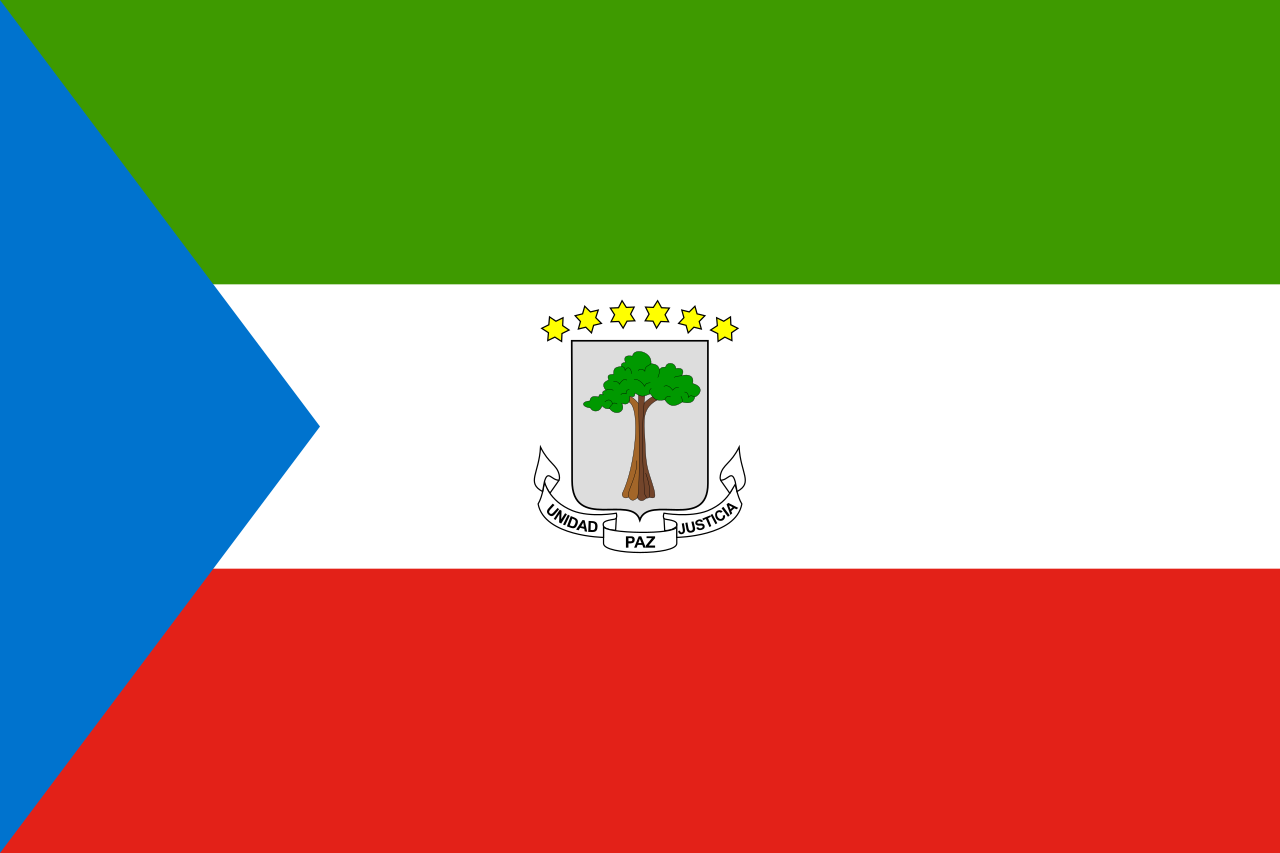
Guiné Equatorial
Also known as Republic of Equatorial Guinea, gq, GEQ
país de África
AI overview
Equatorial Guinea is a Central African country on the west coast with a population of approximately 1.9 million people, formerly colonized by Spain and named for its location near the Equator. The country is ethnically dominated by the Fang people and is transitioning its capital from Malabo to Ciudad de la Paz in 2026.
AI-generated from the Wikipedia summary — may contain errors.
Weather now
cached 4h ago20°overcast clouds
95% 1.0 m/s OpenWeatherMap
7-day forecast
via Open-Meteo
Country
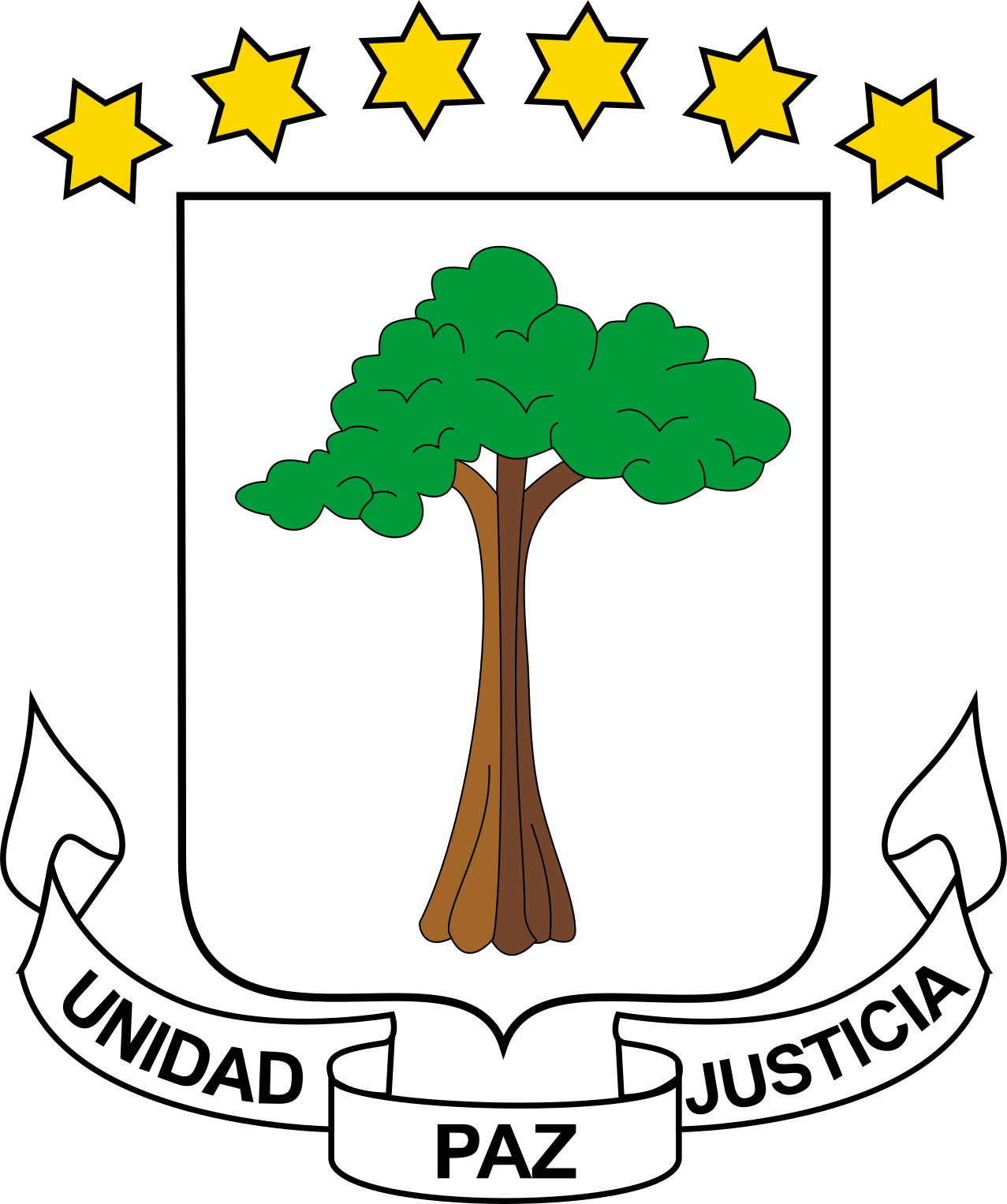
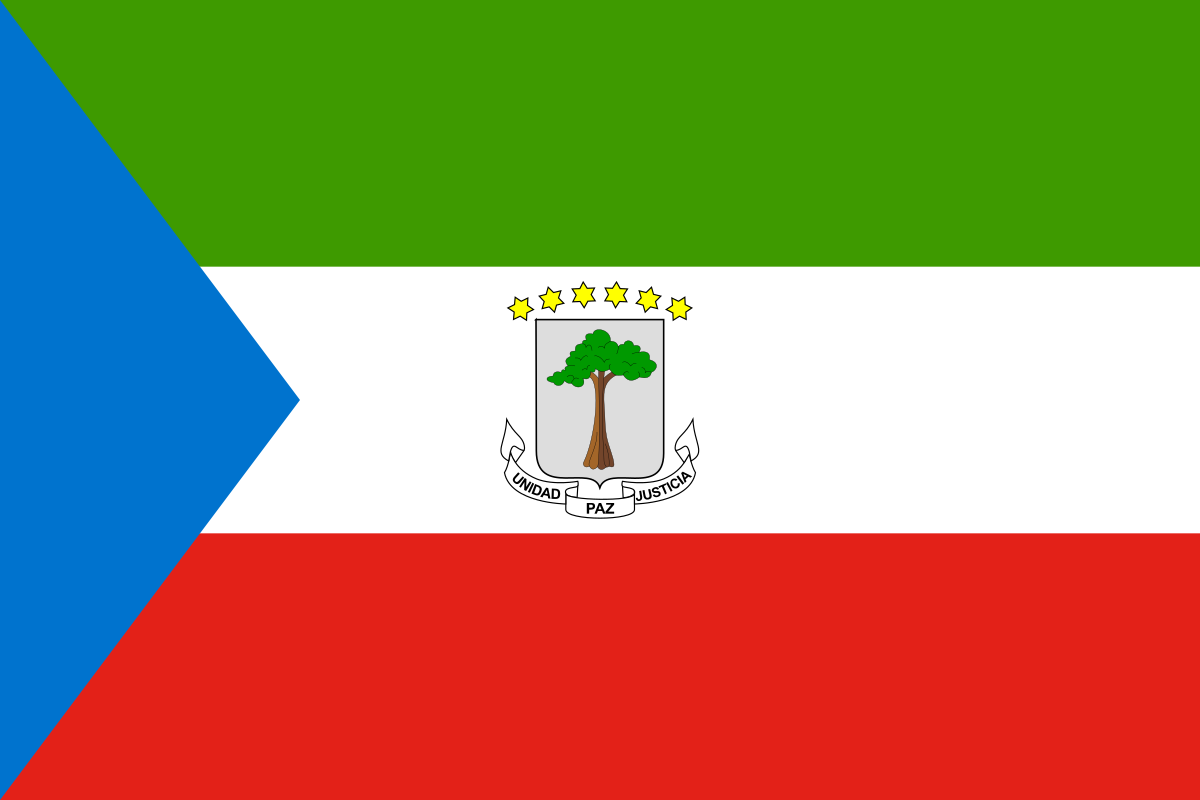
- Capital
- Ciudad de la Paz
- Population
- 1,668,768
- Region
Travel guide
Understand
For visitors, Equatorial Guinea is infamous for its high prices and hard-to-get visas for most. This is nominally a police state, akin to Turkmenistan and North Korea (minus the minders and organized persecution of its inhabitants). As a result, tourist infrastructure is sparse and it is not a high priority for the government. You are likely to face harassment by police forces curious of what you are doing in the country as a "tourist". Since the oil companies operating here are mostly American, Americans may receive marginally better treatment compared to other nationalities (e.g. visa-free entry, less suspicion by police).
Since the discovery of oil, Equatorial Guinea has—at least on paper—one of the highest per-capita incomes on the planet. Despite this, income and day-to-day life for many Equatorial Guineans has improved little, due to the endemic corruption siphoning off oil revenue into the hands of a small wealthy elite. However, there has been progress, and new infrastructure and modernization projects are under construction or even finished, especially on Bioko and around Malabo. A new city called Ciudad de la Paz (City of Peace) has been built deep in the jungles of the mainland, officially becoming the capital in 2026. In spite of the impressive-looking new infrastructure, few Equatorial Guineans have access to it, and while the government throws billions of dollars at new construction, less than half the country's population (of fewer than 700,000) have access to…
Get in
thumb|375px|A map showing the visa requirements of Equatorial Guinea, with countries in dark green having visa-free access
Obtaining a visa for Equatorial Guinea has historically been notoriously expensive and difficult. Tourism is not a priority of the government, and visitors without obvious business or family reasons are viewed with grave suspicion.
See
thumb|Children enjoying nature
There are lots of beaches. Take the precautions listed in the 'Stay Safe' category.
Eat
There are several good places to eat, particularly in Malabo. The coffee shop at Hotel Sofitel (across from the Cathedral along the north coast) offers French cuisine. Hotel Bahia's main restaurant is also a favorite destination for locals and expats. For pizza and pasta, the Pizza Place is the best place in the city. For Asian cuisine, Restaurante Bantu offers Chinese cuisine. For Moroccan and European food, try La Luna. Try Equatorial Guinean cuisine such as smoked beef with a black pepper. There is also a roast duck with cheese and onion leaf.
Article · Português
A Guiné Equatorial, oficialmente República da Guiné Equatorial, é um país da África Central dividido em vários territórios descontínuos no Golfo da Guiné: um continental, Mbini (antiga colónia espanhola de Rio Muni), e outros insulares. As ilhas são Bioco (antiga Fernando Pó), no norte do Golfo do Biafra, Ano Bom, a sul de São Tomé e Príncipe, e Corisco, Elobey Grande e Elobey Pequeno (e ilhotas adjacentes) na baía de Corisco, ao largo do Gabão. Além do Gabão e São Tomé e Príncipe, a Guiné Equatorial tem fronteiras com os Camarões e com a Nigéria. A capital do país é a cidade de Malabo, antigamente conhecida como Santa Isabel, mas está prevista a inauguração da Cidade da Paz no decorrer da década de 2020, uma cidade planejada para ser a futura capital. Desde meados dos anos 1990, a Guiné Equatorial tornou-se um dos maiores produtores de petróleo do sub-Saara. Com uma população de 798 807 habitantes, é o país com o maior produto interno bruto per capita do continente Africano, e o 69º do mundo. No entanto, a riqueza é distribuída de forma muito desigual e poucas pessoas foram beneficiadas com as riquezas do petróleo. O país ocupa a 144ª posição em 2014 do Índice de Desenvolvimento Humano da Organização das Nações Unidas. A ONU diz que menos de metade da população tem acesso à água potável e que 20% das crianças morrem antes de completar cinco anos. O regime autoritário no poder na Guiné Equatorial tem um dos piores registos de direitos humanos no mundo, e consegue se manter como o "pior do pior" no ranking da pesquisa anual da Freedom House de direitos políticos e civis. Repórteres classificam o presidente Teodoro Obiang Nguema Mbasogo um dos "predadores" da liberdade de imprensa. O tráfico de pessoas é um problema significativo, de acordo com o "US Trafficking in Persons Report", de 2012, que afirma que "a Guiné Equatorial é uma fonte e destino para mulheres e crianças vítimas de trabalho forçado e tráfico de sexo." No dia 23 de Julho de 2014, a Guiné Equatorial entrou na Comunidade dos Países de Língua Portuguesa e em 2017 as Nações Unidas deixou de designar o país como subdesenvolvido e o elevou ao status de país em desenvolvimento.
Abstract from DBpedia / Wikipedia · CC BY-SA
Gallery (16)
On the map
2 mapped locations
Connections
Categories
1968 establishments in AfricaCountries and territories where French is an official languageCountries and territories where Portuguese is an official languageCountries and territories where Spanish is an official languageCountries in AfricaCountries in Central AfricaEquatorial GuineaFormer least developed countriesFormer Portuguese coloniesFormer Spanish coloniesMember states of OPEC