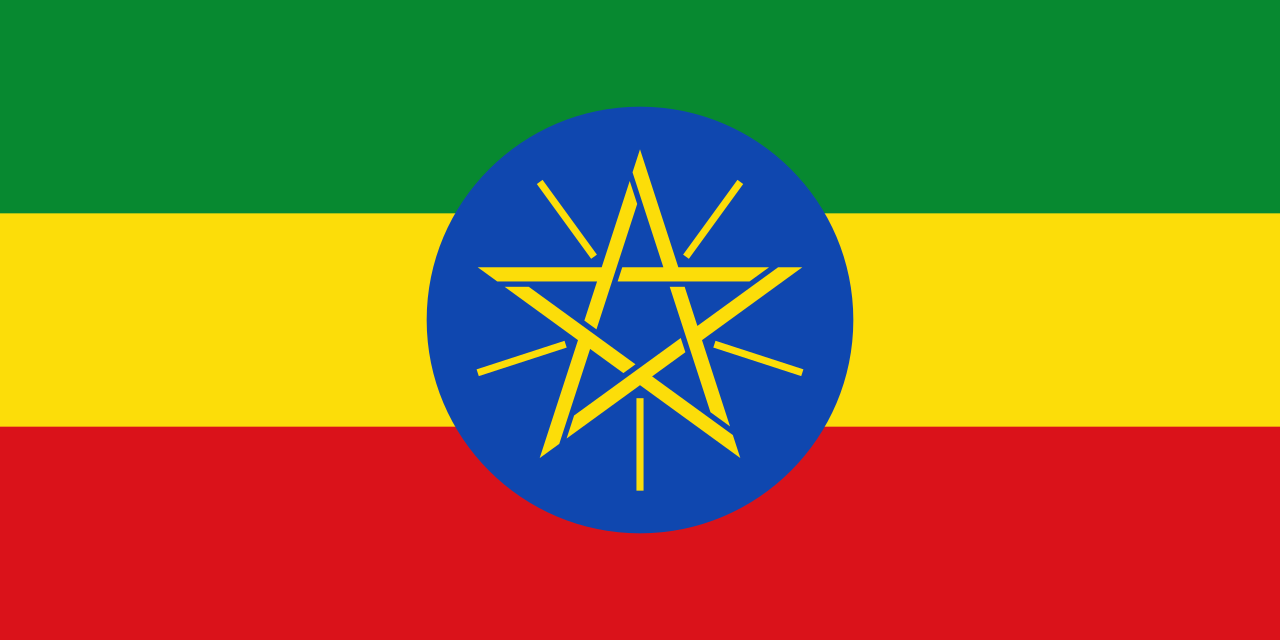
Éthiopie
Also known as Federal Democratic Republic of Ethiopia, et
pays d'Afrique de l'Est
AI overview
Ethiopia is a large, landlocked country in East Africa that borders six nations and is home to approximately 135 million people, making it the 14th-most populous country in the world. Its capital and largest city, Addis Ababa, is strategically located near the East African Rift, a major geological feature that divides the country along tectonic plate boundaries.
AI-generated from the Wikipedia summary — may contain errors.
Weather now
cached 8h ago20°overcast clouds
50% 2.8 m/s OpenWeatherMap
7-day forecast
via Open-Meteo
Country

- Capital
- Addis Ababa
- Population
- 111,652,998
- Region
Travel guide
Get in
thumb|375px|A map showing the visa requirements of Ethiopia
See
thumb|Tomb of Adam, [[Lalibela]] Huge obelisks in Axum Historic routes, churches and mosques Lalibela, Axum, Gondar, Harar Volcanic lake Danakil Depression and Erta Ale Rift Valley lakes Wonchi crater lake, Langano, Tana National Parks such as Menengesha Churches, including many beautiful ones in Addis Ababa Rock-hewn churches in Lalibela Castles in Gondar
Do
Tribal region safari in the Lower Omo Valley Trekking in Dodolla, Bale Siemien Mountains National Park Bird watching in Rift Valley lakes See the gelada ("baboons") at Debre Sina near Addis Ababa White water rafting in the Omo River Attend a traditional coffee ceremony. Visit an azmari bet (azmari bar) to listen to azmari musicians and singers. For where to go to see Ethiopia's wildlife, all images taken by Wikimedia Commons user Charlesjsharp have precise geolocation information [1].
The images can be found in galleries of mammals [2] and birds [3] etc.
Eat
thumb|Injera with various kinds of stews
Injera is ubiquitous in Ethiopia. It is a spongy, tangy-tasting bread made from the grain teff, which grows in the highlands of Ethiopia. It looks and feels akin to a crepe or pancake. It's eaten with wot (or wat), traditional stews made with spices and meat or legumes. Popular wats are doro (chicken) wat, yebeg (lamb) wat and asa (fish) wat. Pork is rare in Ethiopia as both the Ethiopian Church and Islam prohibit the consumption of pork by their followers.
The injera sits directly on a large round plate or tray and is covered with wat placed symmetrically around a central item. The various wats are eaten with other pieces of injera, which are served on a side plate. Injera is eaten with the right hand - rip a large piece of injera from the side plate and use it to scoop up one of the flavours of wat on the main platter. Eating with the left hand is considered disrespectful, as it is the hand traditionally used for personal hygiene and is thus considered unclean. Another popular injera dish is firfir: fried, shredded injera. It can be served with or without meat or with all sorts of veggies.
If you prefer vegetarian food, try the shiro wat, which is an oily bean stew served with injera. Shiro is common on Ethiopian "fasting days", in which devout Ethiopians eat an essentially vegetarian diet.
Article · Français
L'Éthiopie, en forme longue la république démocratique fédérale d'Éthiopie (en amharique Ītyōṗṗyā , ኢትዮጵያ et ye-Ītyōṗṗyā Fēdēralāwī Dīmōkrāsīyāwī Rīpeblīk , የኢትዮጵያ ፌዴራላዊ ዲሞክራሲያዊ ሪፐብሊክ) est un État de la Corne de l'Afrique. L'Éthiopie a des frontières communes avec l'Érythrée (ancienne province) au nord, la Somalie à l'est-sud-est, le Soudan au nord-ouest, le Soudan du Sud à l'ouest-sud-ouest, le Kenya au sud et la république de Djibouti au nord-est. Depuis l'indépendance de l'Érythrée en 1993, l'Éthiopie n'a plus d'accès à la mer. Deuxième pays d'Afrique par sa population, derrière le Nigeria, avec 110 871 031 habitants, l'Éthiopie est le dixième pays du continent par sa superficie (1 127 127 km2). Essentiellement constitué de hauts plateaux, s'étendant de la dépression de Danakil à −120 m jusqu'aux sommets enneigés du mont Ras Dashan à 4 543 m, le pays possède un environnement très diversifié traversé par six zones climatiques. La capitale, Addis-Abeba, située à 2 400 m d'altitude, est la quatrième capitale la plus élevée au monde et la première en Afrique. Considérée comme l'un des berceaux de l'humanité, l'Éthiopie est, avec le Tchad, le Maroc et le Kenya, l'un des pays où l'on retrouve les plus anciens hominidés. On y a découvert Lucy en 1974 et, en 2003, les plus anciens spécimens d'Homo sapiens. Au sein de l'Afrique, l'Éthiopie se caractérise comme l'un des pays à avoir conservé sa souveraineté lors du partage de l'Afrique au XIXe siècle : de ce fait, ses couleurs symbolisent souvent l’Afrique et ont été adoptées par plusieurs autres États africains, dans des configurations différentes. L'Éthiopie, aujourd'hui constitutionnellement laïque, est un pays où de nombreuses croyances coexistent. Après l'Arménie, c'est la deuxième plus ancienne nation chrétienne au monde, le christianisme s'y étant implanté vers l'an 330. S'y trouvent aujourd'hui des orthodoxes orientaux, des catholiques et des protestants. Par ailleurs, un tiers de ses habitants est musulman et des minorités religieuses comme les Beta Israel juifs ou des animistes y vivent aussi. Sur le plan international, l'Éthiopie est signataire de la déclaration des Nations unies dès 1942 et devient l'un des 51 États membres fondateurs de l'ONU. Addis-Abeba est aujourd'hui le siège de la Commission économique pour l'Afrique (CEA) et de l'Union africaine.
Abstract from DBpedia / Wikipedia · CC BY-SA
Gallery (59)
On the map
6 mapped locations