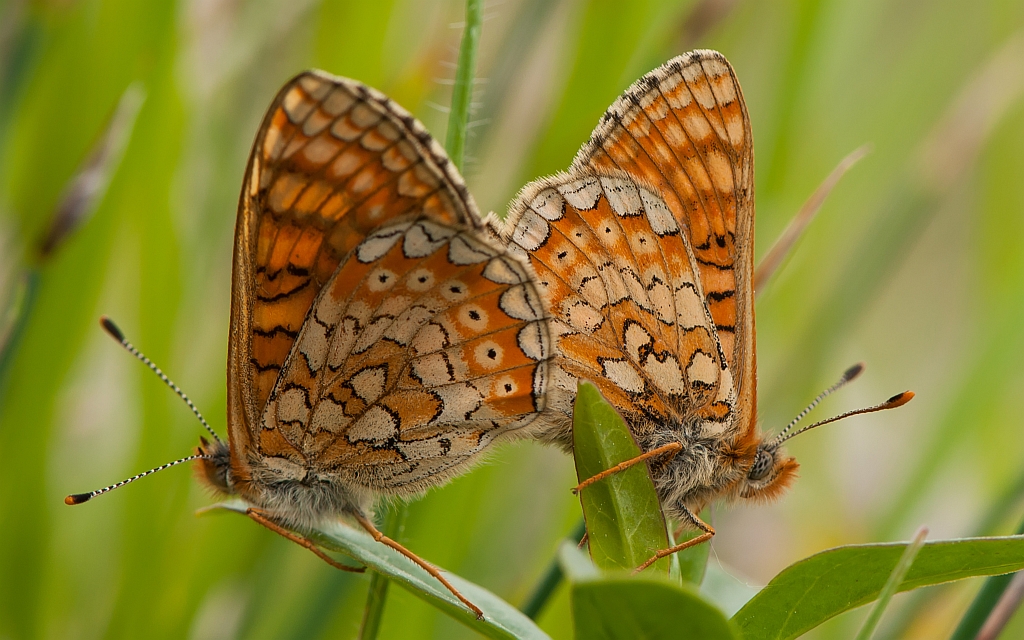
Image from GBIF · CC BY-NC
OverviewAI-generated
*Euphydryas aurinia* is a species of butterfly belonging to the family Nymphalidae. It is classified within the order Lepidoptera, class Insecta, phylum Arthropoda, and kingdom Animalia. The species is part of the genus *Euphydryas*. Common names for this organism include britheg y gors, moerasparelmoervlinder, hnědásek chrastavcový, and мочуришен шаренец.
Records of *Euphydryas aurinia* have been documented in Spain, Macedonia, China, the United Kingdom, and Switzerland. The species has a regional conservation status of Vulnerable. Its host plants include *Succisa pratensis*, field scabious, *Scabiosa columbaria*, and *Dipsacus*.
Synthesized by Vinony from 25 facts across 6 sources: Wikidata, GBIF, Gbif Occ, Encyclopedia of Life, iDigBio, Vinony graph. Generated from structured data (not the Wikipedia text) and checked against those facts — may still contain errors.
Species
SPECIES
- KingdomAnimalia
- PhylumArthropoda
- ClassInsecta
- OrderLepidoptera
- FamilyNymphalidae
Шашечница Авриния (Euphydryas aurinia) — дневная бабочка из семейства Nymphalidae.
via GBIF
Museum specimens
- Specimen records
- 5,582
- With media
- 10,869
- Family
- Nymphalidae
- Collections
- UMNH, RBINS-SCIENTIFIC HERITAGE, YPM
- Recorded in
- Spain, Macedonia, China, United Kingdom, Switzerland, Bulgaria
Wikidata facts
- Instance of
- taxon
- Parent taxon
- Euphydryas
- Image
- Marsh fritillary (Euphydryas aurinia) female underside.jpg
Show 8 more facts
- Commons category
- Euphydryas aurinia
- taxon rank
- species
- taxon name
- Euphydryas aurinia
- Commons gallery
- Euphydryas aurinia
- taxon common name
- Skabiosen-Scheckenfalter
- has host
- Lonicera etrusca
- short name
- E. aurinia
- regional conservation status
- Vulnerable
via Wikidata · CC0
~23 min read
Encyclopedic overview
The marsh fritillary (Euphydryas aurinia) is a butterfly of the family Nymphalidae. Commonly distributed in the Palearctic region, the marsh fritillary's common name derives from one of its several habitats, marshland. The prolonged larval stage lasts for approximately seven to eight months and includes a period of diapause over the winter. The larvae are dependent on the host food plant Succisa pratensis not only for feeding but also for hibernation, because silken webs are formed on the host plant as the gregarious larvae enter hibernation. Females lay eggs in batches on the host plant and are, like other batch-layers, selective about the location of oviposition because offspring survivorship levels for batch-layers are more tied to location selection than they are for single-egg layers.
As of 2019 the butterfly's global conservation status is considered of least concern, but it has faced rapid decline and is considered regionally vulnerable or endangered over much of its range.
Excerpted from Wikipedia’s “Euphydryas aurinia” article, available under the CC BY-SA 4.0 licence.