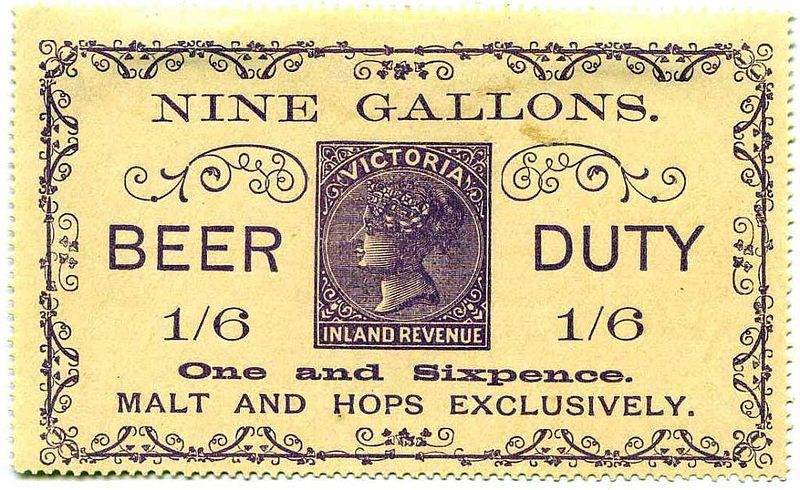
File:Victoria_1892_beer_duty_revenue_stamp.jpg · Wikimedia Commons · See Wikimedia Commons
Also known as tax in rem, in rem, excise tax, Excise Tax
製造時を基準として課される間接税の総称
An excise is a tax that a government places on specific goods produced or sold within the country, such as the beer tax shown on this 1892 stamp. It matters because it allows governments to raise revenue and can be used to discourage consumption of certain products by making them more expensive.
AI-generated from the Wikipedia summary — may contain errors.
Wikidata facts
- Subclass of
- consumption tax
Show 1 more fact
- topic's main category
- Category:Excises
Sources (3)
via Wikidata · CC0
Article · 日本語
物品税(ぶっぴんぜい、英:Excise, Excise tax)は、特定の製品に対して、販売時ではなく製造時(製造会社の出荷時)を課税標準として賦課される租税(間接税)の総称。国境を超えた時に課される関税と対比され、販売時に掛かる売上税(英:Sales tax)や付加価値税(VAT)などと区別される。 日本では1940年から1989年までを対象とした物品税法が施行されたことにより、一般に物品税といった場合には奢侈税(しゃしぜい、英:Sumptuary tax)の一種と認識されるが、日本国外のもので物品税と和訳されるものが贅沢品に限定された租税を指しているとは限らない。例えば健康増進策や環境負荷対策として設けられたものも定義に沿えば物品税(Excise tax)に含まれる(いわゆる悪行税などを含む)。
Abstract from DBpedia / Wikipedia · CC BY-SA
Gallery (7)
Available in 63 languages
- Español
- Français
- Deutsch
- 中文
- 日本語
- Русский
- Português
- Italiano
- العربية
- हिन्दी
- Albanian
- Armenian
- Azerbaijani
- Bahasa Indonesia
- Bangla
- Bashkir
- Basque
- be_x_old
Show 44 more
- Belarusian
- Bulgarian
- Croatian
- Czech
- Danish
- Esperanto
- Estonian
- Filipino
- Finnish
- Greek
- Hebrew
- Hungarian
- Ido
- Kannada
- Kara-Kalpak
- Kazakh
- Kyrgyz
- Latvian
- Lithuanian
- Macedonian
- Marathi
- Nederlands
- Nepali
- Norwegian
- Polski
- Romanian
- Serbian
- Silesian
- simple
- Sindhi
- Slovenian
- Svenska
- Tajik
- Tatar
- Telugu
- Tiếng Việt
- Ukrainian
- Uzbek
- Venetian
- Wu Chinese
- zh_yue
- فارسی
- ไทย
- 한국어
via Wikidata sitelinks · CC0